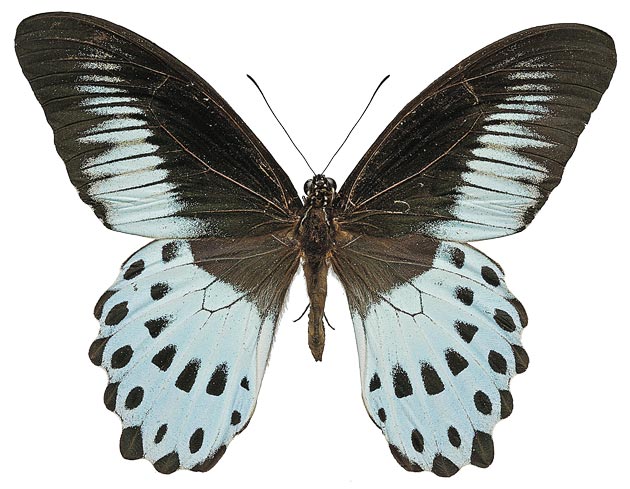
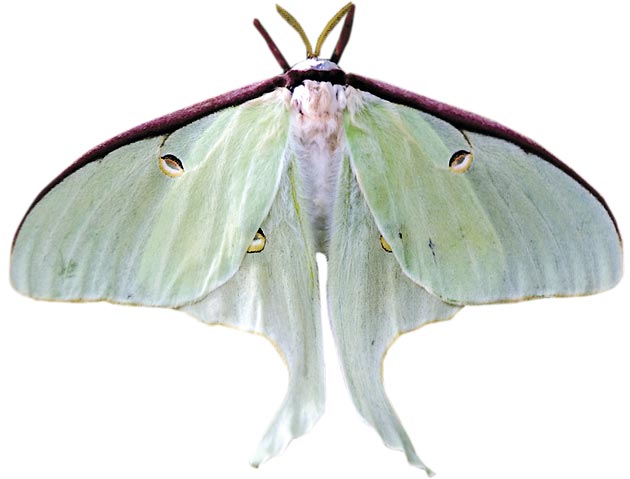
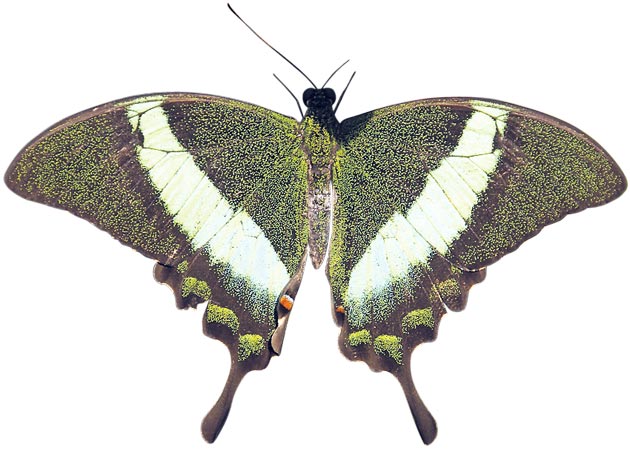
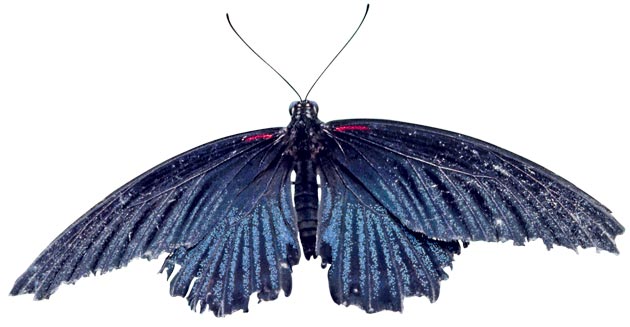
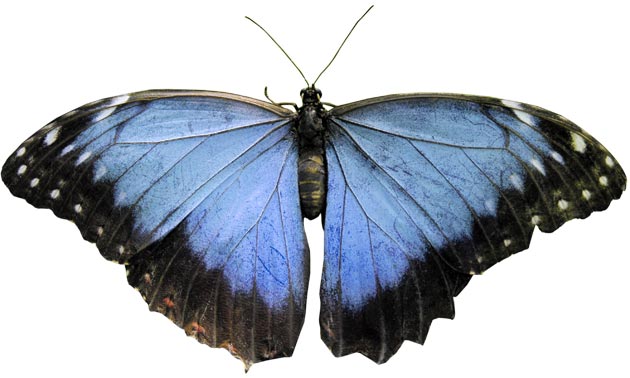
A large butterfly, the Blue Peacock - also known as Blue Mormon - is found in southern India, Sri Lanka and western Java, in forests and urban areas. It has a greater tolerance to humans than most butterflies and the male is known to bask in the sun. It periodically raids thicker forest patches, in search of females to mate with and frequents flowers such as jasminePhotograph: Natural History MuseumA pale-green moth, the American Moon has tails on its hindwings, which are twisted and spin in flight, making the moth appear larger than it really is. Found in north-east America, the moths measure up to 12cm, this species usually inhabits forests, gardens and parksPhotograph: William Perry/istockphoto.comThe banded peacock is one of the very few green butterflies, this species is also referred to as emerald peacock, emerald swallowtail or green-banded peacock swallowtail. Its flight is fast and it is usually found in the forests of south-east AsiaPhotograph: Natural History Museum
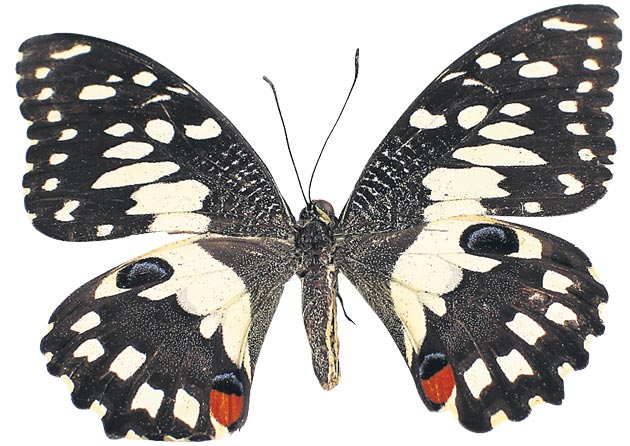
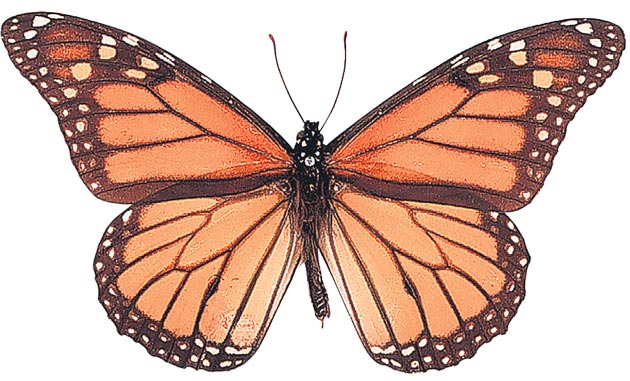
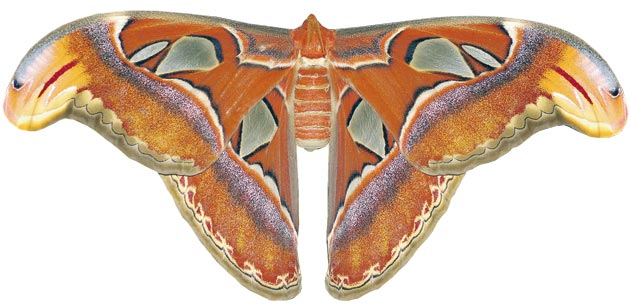
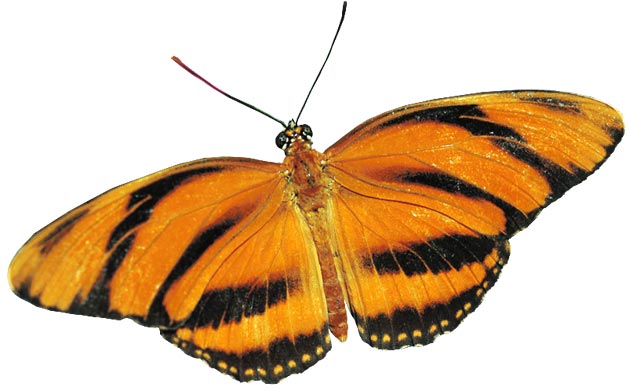
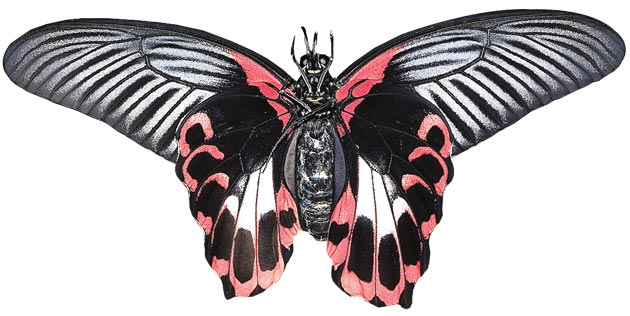
Unlike many Swallowtails, the Common Lime does not have a prominent tail, Perhaps the most widely distributed swallowtail in the world, this species is found throughout southern Asia, from Iraq to ChinaPhotograph: Natural History MuseumThe Great Mormon is a common species found in India, China and south-east Asia. Females show a variety of patterns that mimic other, distasteful butterflies, to avoid being eaten by predators. Once a jungle butterfly, it is now seen in gardens and cultivated areasPhotograph: istockphoto.comMonarchs are noted for their lengthy annual migration across North America to Mexico, when tens of millions of the species spend winter. A few turn up in the south-west of the UK when the wind conditions are right, and also in New ZealandPhotograph: Natural History MuseumOne of the largest moths in the world, the Atlas moth can have a wingspan of 24cm. The species is found in forests, gardens and urban areas in south-east Asia. Atlas moths can spend up to two years in the cocoon, but adults live just a few daysPhotograph: Natural History MuseumRelatively small, at between 86 and 89mm, the Banded Orange Tiger butterfly has developed the habit of communal roosting, and is commonly seen in groups in open areas and roads sides in Mexico and BrazilPhotograph: istockphoto.comThe Blue Morpho flies in a characteristically lazy, bouncing style. This, combined with its contrasting dull brown underside, means that the butterfly is seen one moment and seems to disappear the next, thought to confuse bird predators. Unusually it eats fruit and is found in the tropical forests of Central and South AmericaPhotograph: istockphoto.comFound in Taiwan, the Philippines and parts of eastern Indonesia, this species inhabits a wide range of environments, from coastal lowlands to mountains. The males patrol regular routes along forest edges, streams and cliffsPhotograph: Natural History Museum
Sign up to read this article
Read news from 100’s of titles, curated specifically for you.