Amateur astronomers using a Nasa-funded project called Backyard Worlds: Planet 9 have discovered a new world about 100 light years from Earth.
Four different users spotted a “curious object” in the sky just six days after the launch of the website, and details of the findings were published in the Astrophysical Journal Letters, Science Daily reported.
It was found to be a 'brown dwarf', a planet-like object often compared to a failed star.
Dr Jackie Faherty, a senior scientist in the American Museum of Natural History’s Department of Astrophysics said: “I was so proud of our volunteers as I saw the data on this new cold world coming in.
"It was a feel-good moment for science.”
The project launched in February and gives people the chance to access Nasa’s Wide Field Infrared Survey Explorer (WISE), a spacecraft which takes multiple images of objects close to the Earth.
All users need is a computer and an Internet connection,to access the images.
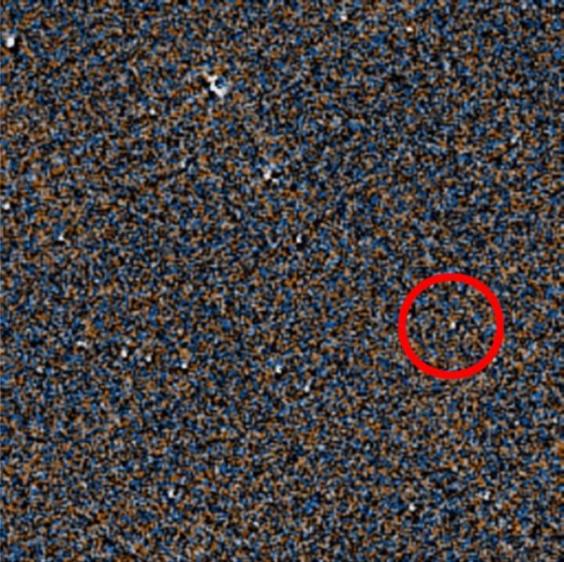
Bob Fletcher, a teacher from Tasmania, identified a slow-moving, dull object moving across images taken from WISE. Shortly thereafter, three other amateur scientists – from the United States, Russia and Serbia – also reported the same object.
The research team investigated, initially calling it “Bob’s dwarf”, before Dr Faherty visited Hawaii’s Nasa Infrared Telescope Facility where she confirmed that the brown dwarf had been previously unknown.
Brown dwarfs are much cooler than red dwarfs, a type of star. They are described as failed stars because they don't have enough mass to maintain nuclear fusion.
However they retain enough heat to glow in the infrared part of the light spectrum.
"Brown dwarfs are strikingly similar to Jupiter so we study their atmospheres in order to look at what weather on other worlds might look like," said Jonathan Gagné, a Backyard Worlds team member.
Dr Faherty hopes this discovery is one of many which will serve as markers in the map of our "solar neighbourhood".
Professor Ian McLean, of University of California, Los Angeles, believes brown dwarfs are the “missing link” between gas giants like Jupiter, and low-mass stars.
He theorises that if large numbers of brown dwarfs exist, they "could make a small, but significant contribution to dark matter", the so-called "missing mass" in the universe.