My first garden was under a fig that grew against a brick wall. It had a semi-circular bed edged with bricks and I think my mum probably gave it to me because nothing much was ever going to grow there. My first act of gardening was to jump on my new space. I used to climb the fig and thump down into my territory. I can’t remember much of what grew there other than the fig. Some sort of lamium, I think, and perhaps some potentilla. Anyway, it was the sort of garden that could take my desire to climb and descend at great speed. I liked this space, but I was aware it was just a sliver of someone else’s ground. I badgered my mother for my own spot.
Several years later, I got my way. It would take me another 30 years before I would get a similar-sized spot once more. My eight-year-old self knew little of this privilege, but I did love that garden. It was behind a dilapidated summerhouse that had once swung on an axis so you could track the sun. It had a low privet hedge with a hawthorn at one end and a willow tunnel leading to its small gate. It was rectangular and had two beds and some sort of bird bath or concrete plinth at the bottom.
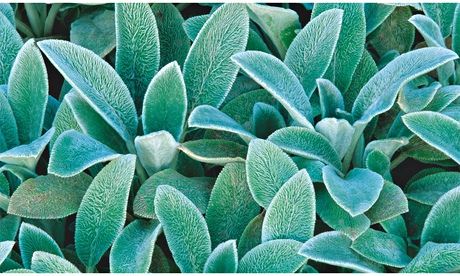
I was allowed to go to the garden centre and choose what I wanted to put in my plot. I bought a lambs’ ears (Stachys byzantina) and spent endless amounts of time stroking its leaves. I would put a few in my pocket for later, when I was up a tree perhaps, or bored in class. Once the patch grew, I would carefully lay my head down in the middle and eyeball the fine hairs on the leaves.
Lambs’ ears (aka rabbits’ ears) comes from Iran, Turkey and Armenia. Its thick, furry leaves help protect it against losing moisture. It’s a hardy, tough perennial, though it will often shed its leaves in winter, returning with a new flush in spring. It can be grown in sun or part-shade and does best in very free-draining, poor, thin soil. The flowers are much loved by bees. In Brazil, the leaves are used as an edible herb, though from memory it’s a little like chewing a perfumed cotton wool ball.
My adult crush on this genus is Stachys affinis, the Chinese artichoke. The tubers look a little like maggots, but taste delicious – nutty with a hint of artichoke heart, and crunchy like water chestnuts. It doesn’t mind sun or part-shade, and once happy will spread far and wide. It is low-growing and looks much like mint, with coarse, bright green leaves. You may not want to lie down in it, but it works as its own weed suppressor, so is a good low-maintenance vegetable. Much like Jerusalem artichokes, all you have to do is dig some up in autumn and leave some to resprout next year.