My mother believes you shouldn’t go away in England’s finer months, and because she is a gardener, that period extends from the first OK day in March right through to the first stormy day of autumn. She has to be dragged from her garden, and counts every hour she’s away from it.
This is admirable, but it has had the reverse effect on me, for as a child I longed to go to the seaside, and we never seemed to do enough of that. I am not complaining; it’s just that if you even whisper, “Fancy a day by the sea?” to me, I’ll drop all my weeding duties and be there in a flash.
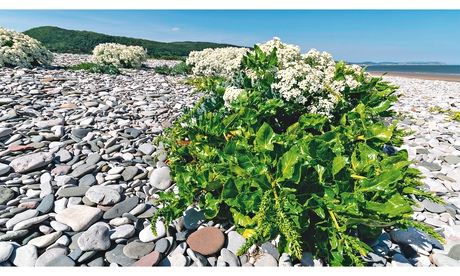
While you’re at the beach, there are three things worth foraging above the tideline: sea beet (Beta vulgaris subsp maritima, the ancestor of our beetroot, which has pleasingly beetroot-tasting leaves; pictured), mallows and wild rocket. The mallows are all going to seed and are ready for picking now. If you peel back the hairy seed coat, you will find a perfect cheese of seed inside, cut into triangular wedges that taste sweet and nutty when green and fresh.
Wild rocket (Diplotaxis tenuifolia) is not native, but has naturalised, and you can find it everywhere, from roadsides to old walls, waste grounds, docks and beaches. It’s the same rocket you get in fancy salad bags. When grown commercially it is mildly peppery, but its feral self is wildly hot. The lobed leaves are greyish-green to dark green. The flowers are brassica-like, cupped and pale yellow, on a long, thin stalk. When in flower you can’t mistake it for groundsel or ragwort, both of which will give you a stomach ache and smell deeply unpleasant when picked. Wild rocket smells distinctly peppery.
Plenty of wild rocket grows in the sort of spots where foraging your tea is inadvisable: it’s also at a perfect pee height for dogs, so choose wisely. The safest bet is to take a little seed (never take all the seed from one plant, but harvest across a few to ensure there’s plenty left for reseeding) and sow that at home. The seed is ripe if the seeds are yellow and the seedpods dry and brittle.
Annual salad rocket (Eruca sativa) has a post-harvest dormant period of around six weeks, which means the seed will not germinate during this time. In my experience, wild rocket does the same, so if you collect seed now, store it somewhere dry and cool before you think about sowing. Bought seed has none of these issues, and can be sown now. In fact, it’s the perfect time for sowing both types of rocket. Started now, in the warm soils of summer, they will quickly germinate and give you leaves right the way into autumn and early winter, if you make a few successional sowings.
Light is very important for germination in wild rocket, so don’t bury the seeds – merely scatter them across the soil and perhaps ever so lightly rake them in.
The caption on the picture above was edited on October 1 2015 to include reference to sea kale.