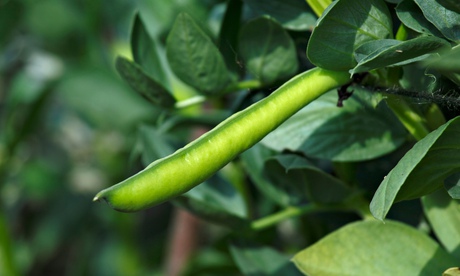
On a slow meander back from the allotment, poking about the woods to see what was stirring, I came across a rat in its hole. I don’t much like rats, but this one, with its new spring coat and bright beady eyes, sitting in the most picturesque of woodland rat holes, looked splendid. The hole was decorated with ivy and the rat looked pleased with its setting. If I were someone of a more fanciful nature, I’d say that the rat looked almost as if it were inviting me in for tea. Then I remembered; that rat looks plump and lovely because it has been eating all my broad beans.
I am a fan of sowing broad beans in October, particularly the field bean ‘Wizard’. This is a sturdy, hardy bean that dries exceptionally well and makes excellent ful medames, falafels and the like. It’s such a reliable crop, it became a winter staple. I sowed them a little late last year – it was almost November but the weather was mild.
However, Ratty found a way in and ate the best part of my crop. By the time I noticed the damage it was too late to resow.
I’ve patiently waited till now. It’s actually the best plan with broad (fava) beans; sow some in October and some now, to hedge your bets. You can sow until the end of March; any later and plants tend to be too soft and sappy, and get swamped by blackfly.
Sow the beans 2-3cm deep, 20cm apart in each direction. It’s tempting to put them much closer together, but if chocolate spot (a rusty orange fungus that affects the leaves and eventually the beans) strikes, cramped conditions make the situation worse.
‘Aquadulce Claudia’ is the king of broad beans, but one that is toppled in high winds. ‘Bunyard’s Exhibition’ is another giant, perhaps with better flavour. If you’re readily blown or short on space, ‘The Sutton’ is a dwarf variety that’s sturdy and tasty. I always make a late February sowing of ‘Red Epicure’ for its beautiful velvet-red, heavenly scented flowers. This one I reserve for the garden because it’s so very handsome and tastes so fine.
Rats, mice, squirrels and inquisitive blackbirds will all have a go at the sprouting seeds, so cover until the shoots are 10cm or so in height. If your conditions are mild, particularly if you are using containers in sheltered courtyards or patios that you can cover with cloches or fleece, make an early sowing of hardy peas to pick in May. Round peas tend to be hardier than wrinkled varieties. ‘Feltham First’ is a very hardy, reliable, low-growing variety, as is ‘Meteor’. Both of these grow only 45cm high, so can easily be fleeced or cloched. It’s still worth using short pea stick supports, though, as anything that sits on the soil tends to get munched by slugs.
• Follow Alys on Twitter