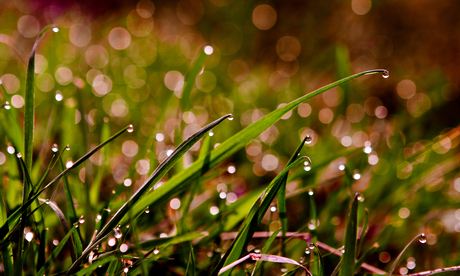
The sky is darkening like a stain, Something is going to fall like rain, and it won’t be flowers,” wrote WH Auden in his poem The Witnesses (also called The Two). I hear the pat, pat, pat of water on dry earth and smell the soil release its petrichor. This is the earthy scent of rain on dry soil, caused in part by oils released by plants into the soil during dry periods.
These oils are thought to slow down germination and early plant growth when conditions may not be quite right. They are absorbed by the soil and when soft, slow summer rain hits them, small bubbles appear and float to the surface, releasing scents: some of these are plant oils, others are bacteria, viruses and other compounds. It’s thought that we love this smell because our ancestors learned to recognise it; dry soils need summer rain for crops to flourish. It’s a long-ago Proustian moment, a madeleine from tens of thousands of years past.
We’re not the only ones to exploit this gain. Petrichor bubbles are believed to also help certain soil-based diseases spread. Scientists are slowly unlocking the mechanism for the way in which this happens. Microbes from the soil can be found high up in the atmosphere; this is how they often move about, via bubbles that appear from rain hitting dry ground. Microbes bounce up from the stagnant soil layer into the turbulent upper air layer where they can then float to new homes. This doesn’t change much in your garden, but it adds another layer to its complexities, a sensory note to this extraordinary place.
And perhaps it offers a little more insight into the way that disease spores are spread. Blight (Phytophthora infestans), for instance, is caused by a fungus-like organism. The spores are transported either by wind, rain or both. It typically starts as chocolate-brown splodges on the edges of leaves, which then widen and eventually spread down the stem and into the fruit. In potatoes, this means slimy, brown patches that rot the tuber, and in tomatoes it causes blackened fruit. In both cases, the results mean an inedible crop.
Blight is always worst in wet years; whether 2015 is going to be a wet summer is yet to be revealed, but the late, rather cool summer means outdoor tomatoes, in particular, may not do all that well. If and when the wet does arrive, the tomatoes will not be mature enough to have much fruit before the rot sets in. One way around this is to grow early-maturing varieties of both tomatoes and potatoes. Growing tomatoes under cover also prevents blight, because the spores are spread by rain. If you have outdoor tomatoes, by far your best option is to build them some sort of shelter or, better still, move them into a greenhouse or polytunnel.
If your plants do go down with blight, it’s important to remove all infected material as soon as possible. This means finding all those volunteer potatoes in the soil. Either bury the infected material in a hot compost system or dispose of it. Do not leave it lying around. Reducing what infected material remains this year is your best way of ensuring that next year remains blight-free.