This was the week Google finally admitted the unthinkable – that it can’t do everything. With the launch of its new holding company, Alphabet, Google has reorganised itself into multiple companies, separating its highly profitable search and advertising businesses from its newer moonshot projects.
But was this enormous corporate overhaul really such a good thing for the company? If you look at it from the perspective of Google’s management and its relationship with the city, then the short answer is yes.
As Google has grown and branched outwards, its original mission statement has been stretched. It made sense to organise the company’s business interests, from driverless car technology to smart robotics, into a coherent structure, creating a family of independent companies. With Alphabet now overseeing all operations, Google can now refocus on its core mission: to “organise the world’s information and make it universally accessible and useful”.
At the same time, the creation of the new companies – each with its own CEO – will open up leadership opportunities for Google’s most precious asset – the great minds in the business. Google has pulled off a classic future-proofed brand strategy and architecture which speaks to a mindset of cool logic and sound management.
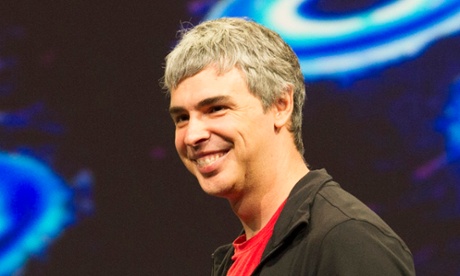
But, while this will no doubt speak well to investors, there are other things to consider in any corporate brand strategy. With any new company or brand, it’s crucial that it has the power to inspire its people, by far Google’s most important asset. So, where is the belief and pioneering attitude we expect? In Larry Page’s statement to the world, he talked about “being cleaner, more accountable” and “more management scale”. He said, “our model is to have a strong CEO who runs each business, with Sergey and me in service to them as needed. We will rigorously handle capital allocation and work to make sure each business is executing well.”
At no point did he talk about their vision or how they see their role in the world (not the business). Yes, they conceded at the end of the statement that they want to make the world a better place. But who doesn’t?
Compare what we’ve heard this week to the character and spirit Google has become famous for and it leaves a lot to be desired. Google has always had the power to make us believe anything is possible. The company spawned belief statements learned by heart by brand strategists, and copied by businesses across the world.
Alphabet’s strategy seems to indicate a commitment to shares, to the city and a commitment to running smart businesses and that’s about it. Spend time searching for what employees are saying about the restructuring and most of the language is focused on share price – that’s not the culture we want to believe Google has or what most employees want to see reflected in their company. People need purpose. So, if Google is now a smaller part of something bigger: Alphabet … then what does Alphabet stand for?
And, finally, to the name itself. Alphabet is a brilliant play on bringing a finite order to the massive complexity of Google. The word alpha means to outperform; spot on for the city.
But is it another warning sign that they have chosen constructed order over a Google of infinite possibilities, restlessly innovating and pushing the boundaries? Now that would be shame.
To get weekly news analysis, job alerts and event notifications direct to your inbox, sign up free for Media & Tech Network membership.
All Guardian Media & Tech Network content is editorially independent except for pieces labelled ‘Brought to you by’ – find out more here.