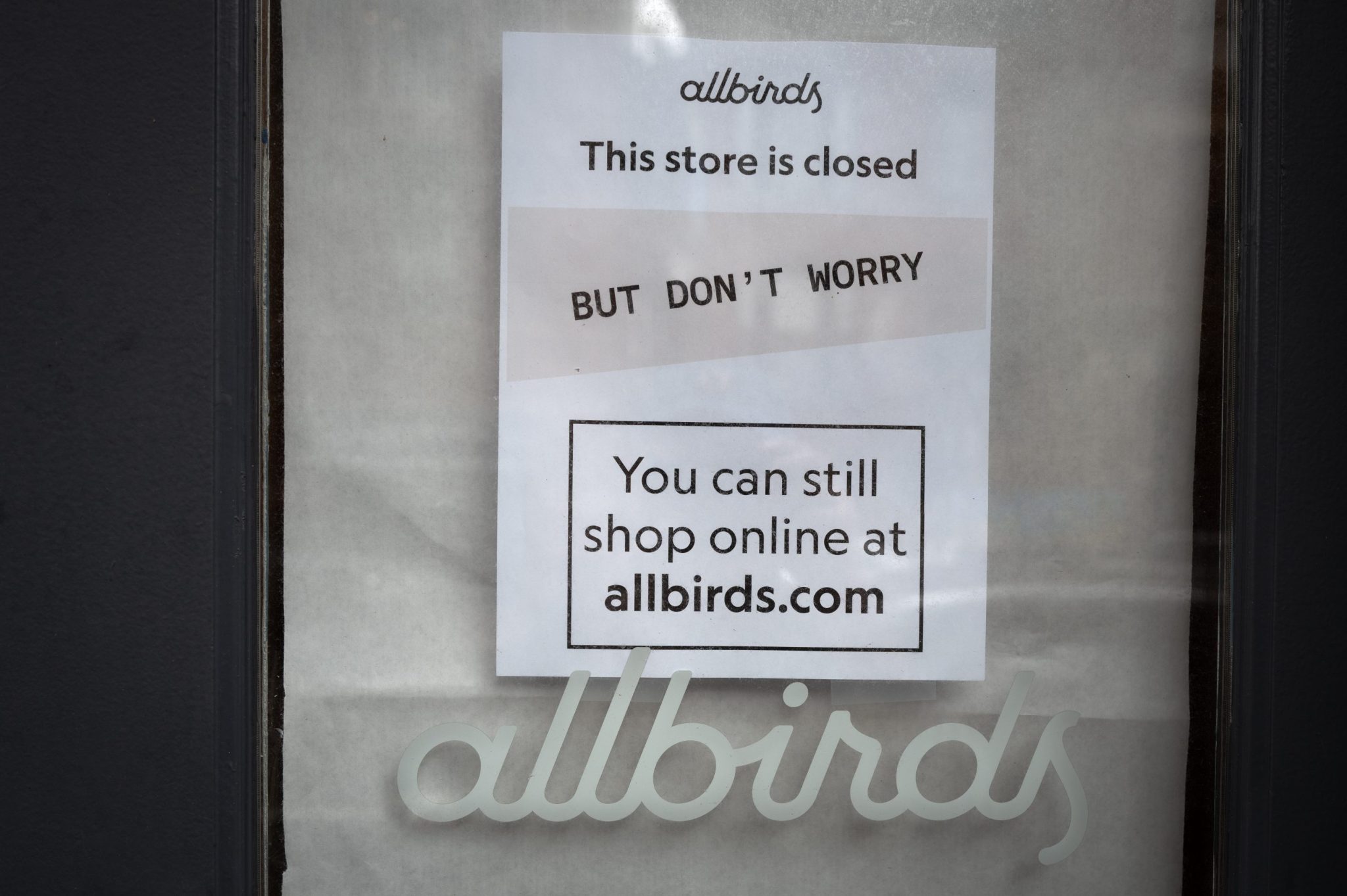
Two weeks ago, Allbirds was a cautionary tale. The maker of the wool sneakers seemingly glued to the feet of every Patagonia-vested VC in 2019, once worth $4 billion, had a humiliating fire sale on April Fools’ Day and sold itself to a brand management company for $39 million—roughly 1% of its peak valuation. It had already closed every full-price store in the U.S.
The obituaries abounded as analysts pitied yet another darling that mistook a Silicon Valley fad for a real brand. Today, the same ticker is up more than 700% as Allbirds pivots to AI. That’s not a joke.
That’s because Allbirds, the shoe company, is no longer a shoe company. Taking the Silicon Valley label on the nose, on Wednesday, it announced it is pivoting entirely to artificial intelligence compute infrastructure and renaming itself NewBird AI. The new entity has lined up $50 million in funding, expected to close in the second quarter, which it plans to spend on “high-performance, low-latency AI compute hardware” leased out to customers that “spot markets and hyperscalers are unable to reliably service.” Basically: It’s buying GPUs and renting them out, and would like to perhaps be named in the same sentence as Nvidia, please.
The whiplash is something to behold. Just eight months ago, cofounder Tim Brown sat down with Fortune for the brand’s 10-year anniversary and laid out a comeback plan rooted in the basics. “This moment is about going back to the beginning and back to those core principles that had been lost as we had so much growth and expansion,” he said, quoting a Maori proverb about walking backward into the future. “This is a brand worth fighting for, with principles that have never felt more full of potential and important in this moment.”
The principles, it turns out, were negotiable.
CEO Joe Vernachio, brought in to save the company, was at the time pitching smaller, cozier stores with books and plants and couches and candles, and reframing the brand’s eco-pitch around the word “nature” instead of “sustainability,” which, he joked, “sounds like a chore, like sorting your garbage.” By April, Vernachio was the one announcing the $39 million fire sale, telling shareholders the deal “sets up the brand to thrive in the years ahead.” The brand will indeed continue, under new ownership at American Exchange Group.
The amazing surge has drawn comparisons to a time in the late 2010s, when any company could slip the word “blockchain” into a new strategy and the stock would soar. Particularly, it looks a lot like Long Island Iced Tea’s bizarre 2017 shift from iced tea toward the “exploration of and investment in opportunities that leverage the benefits of blockchain technology.” That move initially sent the stock surging, closing up more than 180%. The company was delisted only months later.