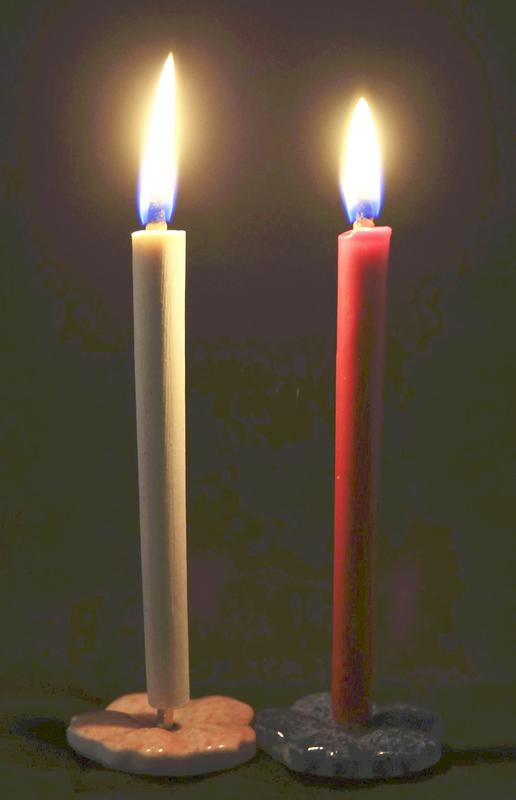
KYOTO -- Warosoku, or traditional Japanese candles, were once an everyday source of lighting, and they are still placed at Shinto or Buddhist altars set up in people's homes. However, fewer and fewer people are using them today, partly because fewer families have such altars.
Nevertheless, the gentle light of warosoku -- "wa" means Japanese and "rosoku" is candle -- has a timeless charm and can bring comfort and warmth to the modern lifestyle.
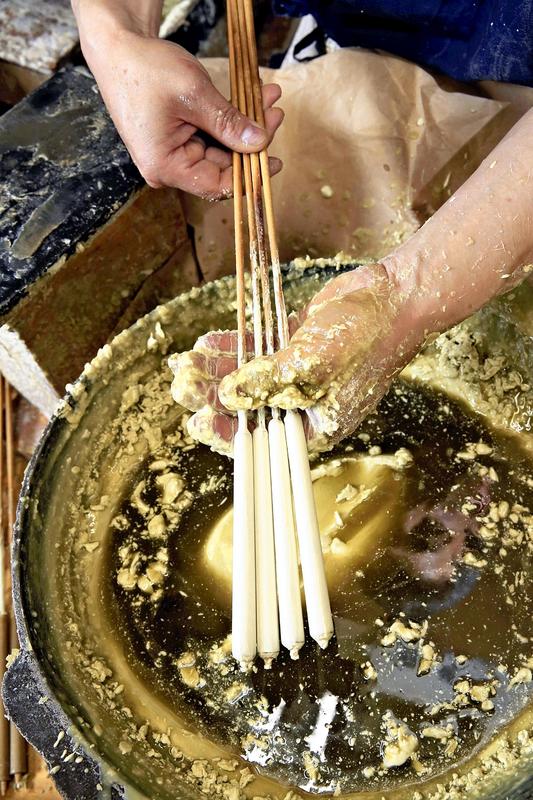
Nakamura Rosoku is a warosoku manufacturer established in 1887 in Kyoto. During a recent visit by The Yomiuri Shimbun, the shop was filled with a scent evoking a somewhat nostalgic feeling. Hirokazu Tagawa, the fourth-generation head of the business, was coating candle wicks with melted wax in layers to make them thicker.
The manufacturer, which supplies candles for many shrines and temples, mainly in Kyoto, uses plant-based ingredients for its products.
The wax is made mainly from an oil extracted from haze, a Japanese wax tree that grows in the wild in Wakayama Prefecture and the Kyushu region. To make a candle wick, a thin piece of washi paper is rolled into a tube and wound with one or more central stalks of mat rush to cover the entire surface.
Unlike Western candles that use paraffin-based wax, warosoku produce little smoke and hardly drip, and their soot is less sticky, according to Tagawa.
"It's easy to wipe away the soot," the craftsman said. "Even if wax sticks to Buddhist altar articles or other hard surfaces, you can wash it away with hot water."
The use of warosoku varies depending on the candles' colors and shapes, Tagawa said.
White ones, for example, are meant for daily lighting, as well as for funerals and memorial services for people who passed away in recent years. Red ones are used for New Year's celebrations, the Bon festival to honor the spirits of ancestors, memorial services for those who passed away some time ago, and also when you pray for something to come true.
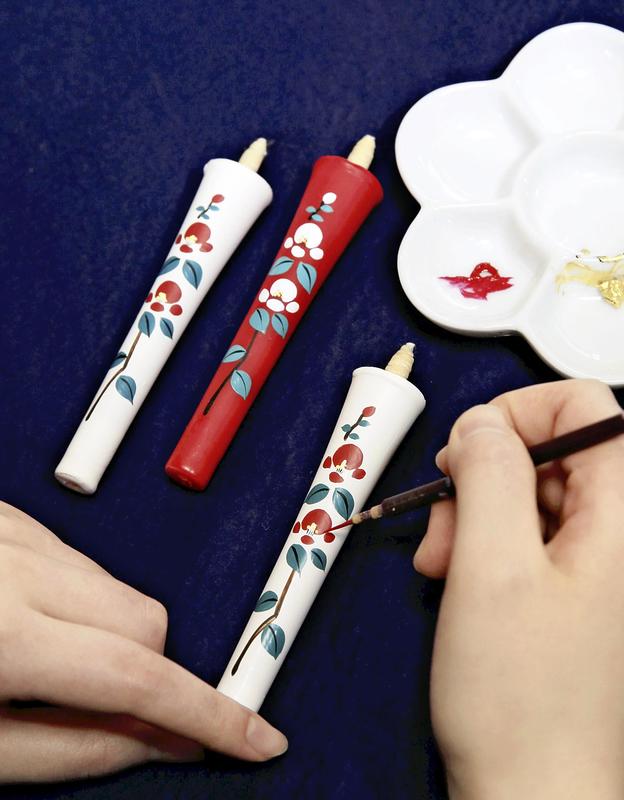
Candles decorated with painted images of seasonal flowers can be offered on altars in place of fresh flowers. They are usually not lit, and this artistic type is gaining popularity as an item for interior decoration, according to Tagawa.
Warosoku are measured by a traditional unit called monme. One monme is equivalent to approximately 3.75 grams. A standard candle is 3 monme, which measures about 1 centimeter wide at the bottom and about 13 centimeters tall, and can burn for about an hour.
To make a candle, a wick is placed into a wooden mold, into which melted wax is poured. The wax is then left until it cools enough to solidify. Once removed from the mold, the base is then coated with more melted wax by scooping up the wax with one's palm and layering it across the entire surface of the candle. The melted wax, of course, is quite hot.
"It's no problem if you can get used to it," Tagawa said with a smile. "My hands are so smooth thanks to the wax."
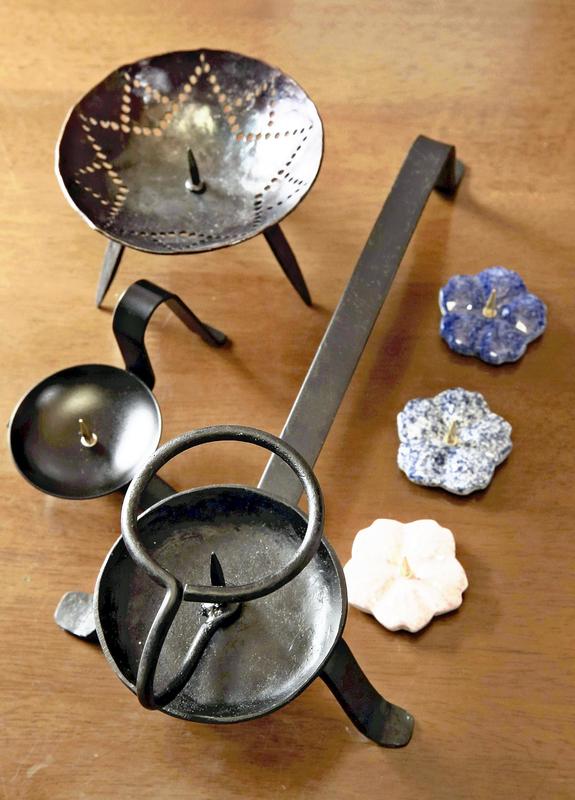
Nakamura Rosoku also sells candle stands of varying designs and made with various materials, such as iron and ceramic.
Tagawa let this writer light a candle, the flame of which swayed gently but broadly thanks to the air flowing through the hollow in the wick. The dark orange flame looked comforting and endearing.
"The warosoku's lighting gives delicate nuance to Buddhist statues and paintings on hanging scrolls," Tagawa said. "It also enhances the beauty of maiko [apprentice geisha] by making their white makeup look flesh-pink. This is an elegant and tasteful flame, and it is deeply associated with Japanese culture."
The process of making warosoku requires many different craftspeople with different expertise at each stage. Tagawa has also been working to hand down the tradition to the next generation, such as protecting haze-growing areas and training young artisans.
"If we can ensure a stable supply of the ingredients and produce less expensive products in a larger quantity, [this traditional candle] may become closer to people's daily lives once again," Tagawa said. "It's all over if craftspeople in various regions give up on their profession. I want to preserve [this tradition] so it won't be forgotten."
Read more from The Japan News at https://japannews.yomiuri.co.jp/