As drone warfare rapidly transforms modern battlefields from Ukraine to West Asia, India is stepping up efforts to build indigenous systems capable of detecting, jamming and destroying hostile unmanned aerial threats.
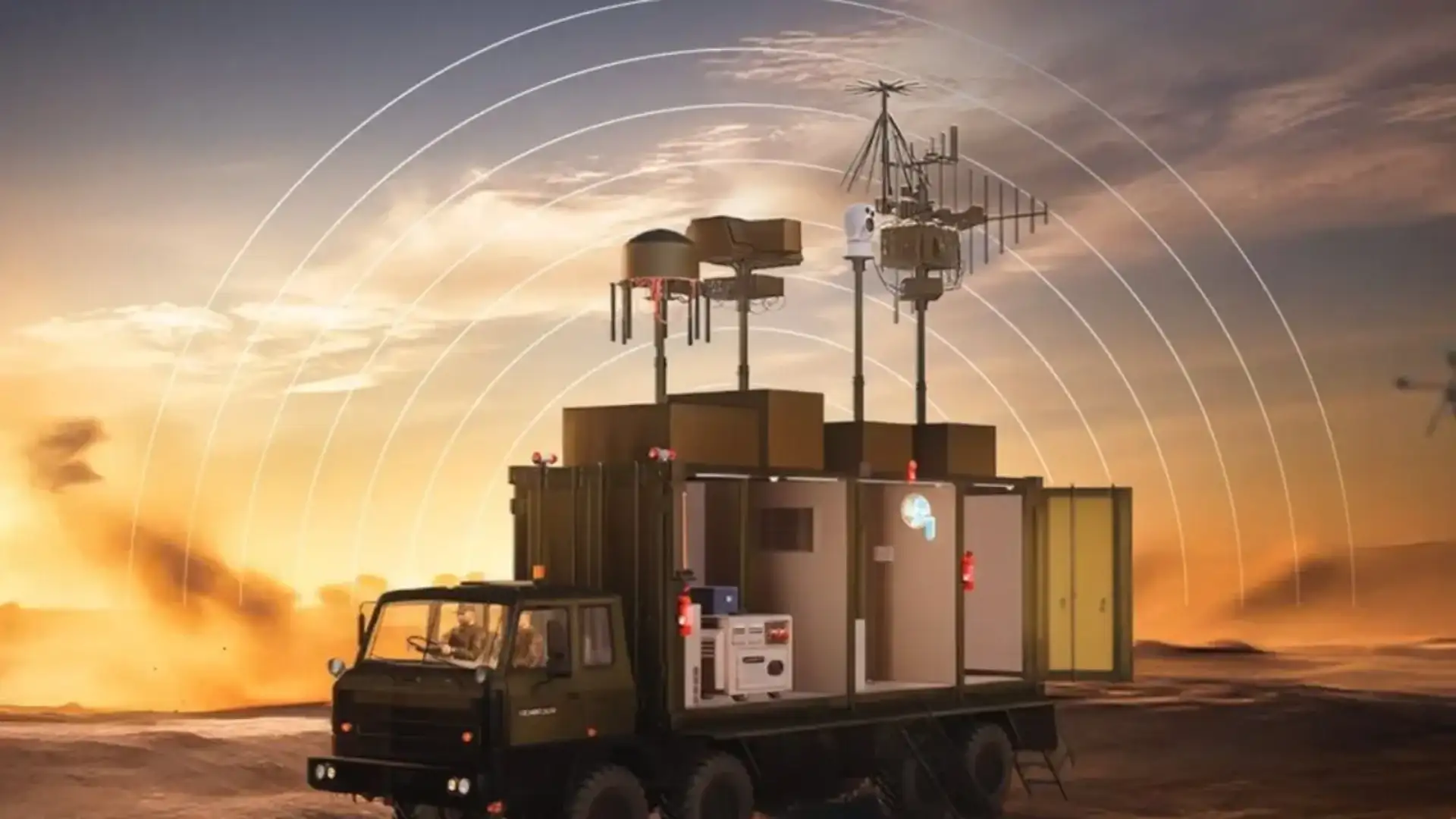
At the North Tech Symposium 2026 in Prayagraj, Hyderabad-based Zen Technologies showcased a new integrated Counter Unmanned Aerial System (CUAS) equipped with AI-enabled tracking, layered jamming systems and kinetic interception capabilities aimed at tackling evolving drone threats.
The platform is being projected as a significant addition to India’s Atmanirbhar Bharat defence initiative, especially as security agencies face growing concerns over drone-based surveillance, cross-border smuggling, infiltration attempts and swarm attacks targeting military infrastructure.
Why anti-drone systems matter for India
The widespread use of low-cost drones in recent global conflicts has exposed serious gaps in traditional air-defence systems. Small unmanned aerial vehicles are increasingly being used for reconnaissance, artillery support, kamikaze attacks and coordinated swarm strikes while remaining difficult to detect through conventional radar systems.
For India, the threat has become more acute along sensitive border regions, where drones have frequently been used to transport narcotics, weapons and ammunition across borders.
Defence planners are also preparing for future combat scenarios in which autonomous drones and AI-enabled unmanned systems could dominate surveillance and battlefield operations.
In this environment, layered anti-drone systems capable of simultaneously detecting, tracking and neutralising multiple aerial threats are emerging as a strategic requirement.
How the system operates
The newly unveiled platform combines both “soft kill” and “hard kill” technologies within a multi-layered architecture designed to counter a wide range of unmanned threats.
The modular system can reportedly be deployed in vehicle-mounted, man-portable or fixed-site configurations depending on operational needs.
According to the company, the system provides wideband coverage between 70 MHz and 12 GHz, allowing it to identify and disrupt multiple drone communication frequencies.
Key components include:
RF-based drone detector: The RF-based detection system scans frequencies ranging from 70 MHz to 12 GHz to identify drone communication signals and reportedly track more than 100 drones simultaneously. This allows operators to detect hostile drones even before they become visible.
Video tracking and identification: The Video-based Drone Identification and Tracking system uses day and night cameras mounted on an automatic servo-based positioning platform. The setup is capable of capturing and tracking drone movement at distances of up to 3 km.
X-band 3D radar: The anti-drone platform also incorporates an indigenous X-band 3D radar developed to detect low radar cross-section drones and autonomous UAVs. Officials said the radar can identify small aerial targets at ranges between 15 and 20 km while providing accurate azimuth and elevation data.
AI-enabled command centre: At the core of the platform is an AI-enabled Data Fusion and Command Centre integrating radar feeds, RF signatures and visual tracking inputs. The command hub uses AI-based algorithms for threat classification, sensor fusion, target tracking, map-based monitoring and automated engagement prioritisation. According to the developers, this enables faster response during swarm attacks involving multiple drones approaching simultaneously from different directions.
Soft kill and hard kill capabilities: The system includes multi-band RF jammers capable of disrupting ISM bands, GPS navigation signals and mobile communication networks used by hostile drones. These “soft kill” measures are designed to disable or confuse drones without physically destroying them.
For direct neutralisation, the platform also includes “hard kill” systems involving kinetic interception mechanisms. These include remotely operated weapon stations fitted with 12.7 mm and 7.62 mm guns capable of automatically aligning and firing at aerial targets. The system can additionally integrate air-defence guns and kamikaze interceptors, while net-based drone capture systems may be deployed in specific situations.
Developed under India’s indigenous defence framework
The company said the platform was developed under the Indigenous Design, Development and Manufacturing (IDDM) framework, enabling India to retain full intellectual property ownership while reducing reliance on imported counter-drone systems.
Company chairman and managing director Ashok Atluri said recent battlefield developments had demonstrated how quickly drone warfare was reshaping military operations.
He said countries unable to adapt to the changing nature of warfare would remain vulnerable to emerging unmanned threats.