In 1912, almost a year before the premiere of The Rite of Spring so famously provoked a riot among the audience in Paris, Stravinsky had played through his new ballet on two pianos with Claude Debussy. What Debussy thought of the work has not survived, but the idea of the two greatest composers of their time tackling the 20th century’s most revolutionary work together remains an extraordinarily potent one, and gives that two-piano version of The Rite a historical significance most such arrangements just don’t carry.
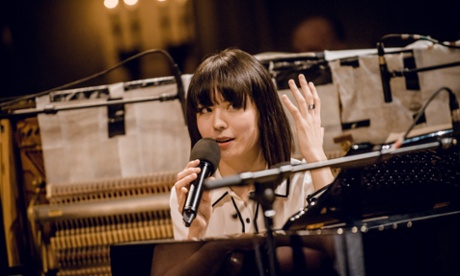
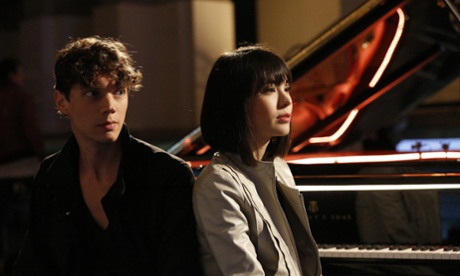
Alice Sara Ott’s recital with pianist-composer Francesco Tristano ended with the historic two-piano version of The Rite, a ferocious, unflinching performance that was enhanced percussively towards the end of the first part by foot-stamping from the two players, and which left their two Steinways badly in need of some care and attention. With all the multicoloured orchestral clothing stripped away, the harmonic and rhythmic guts of the score are exposed, and Ott and Tristano made sure its impact was maximised.
Tristano’s own A Soft Shell Groove Suite had preceded The Rite; its easy-listening combination of Rachmaninov and Terry Riley laid on some harmlessly funky grooves was inoffensive but bland. The first half of the programme, though, had been much more interesting. It opened and closed with Ravel – Tristano’s own, very skilful, very witty two-piano version of Boléro, which drives to its climax in a wild torrent of clusters and glissandi, and the composer’s own arrangement of La Valse, the kind of demonic music that suits Ott’s intensity and quicksilver musical intelligence perfectly. In between, came two of Debussy’s Nocturnes, which were poetically played but do lose some of their magic and mystery in transcription, even when that transcription has been made by Ravel.