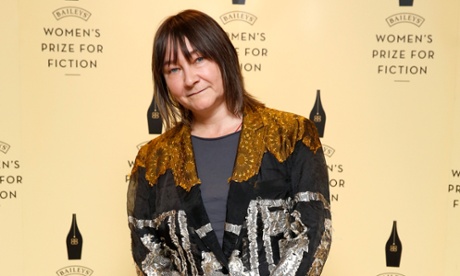
It is 20 years since Ali Smith began her literary career with a sweetly mischievous short story collection, Free Love and Other Stories. The title piece, in which a teenager has a tender first lesbian experience on the Amsterdam sex tourism trail, was an early example of her talent for quiet surprises. All Smith’s work since has played with form and language; this experimental streak combined with a freshness that stops it ever seeming dry.
Whether investigating time and grief through the interlocking stories of different women in 2001’s Hotel World, a novel about death that urges again and again “Remember you must live”, exploring the allure of the uninvited guest in 2005’s The Accidental, or even riffing on literature in her 2013 lecture collection Artful, Smith’s books share an immediacy and a joyful curiosity – about language, love and everything else under the sun.
In a way, the last two decades and the rise of the digital world have only caught up with her concerns. She’s always been interested in the way we construct ourselves through language, and how the sense of the way others see us informs our self-perception. Her characters were genderfluid before the concept took over Tumblr. In How to Be Both, her two heroines – George, a contemporary teenager in mourning for her mother, and Francesco del Cossa, a 15th-century Italian artist – are read by others as both male and female.
And of course the novel itself, through the ingenious device of printing half the copies with George’s perspective first, and half with Francesco’s, manages to “be both” – different from itself, and yet the same. Before she began work on the book, Smith had been thinking about structure in art and literature: about the way frescoes can be lifted off the wall on which they’re painted to reveal the underdrawings that were there, hidden, all along. When she came across the real del Cossa, who painted frescoes for the magnificently named Palazzo Schifanoia or “Palace of Not Being Bored” in Ferrara, Smith found the germ of a character who would help her write a book in which time is not so much chronological as layered – a metaphysical comfort for those who, like George, have lost loved ones or, like Francesco, lost themselves.
Francesco’s consciousness erupts into the 21st century, in a great rush of appropriately stream-of-consciousness prose, to remember a life of gender disguise and artistic endeavours, and observe George, in modern-day galleries, staring back through the centuries at Renaissance art. George’s iPad, with which she can capture and create thousands of images in an hour, seems to Francesco born of a time when pictures were painstakingly created for those who could pay, “a holy votive tablet”. Throughout the book Smith yanks together consciousnesses and sense impressions that are separated by half a millennium, and takes the reader delightedly along with her. It’s a playful, serious, deep and whimsical book, and a wonderful achievement.


.png?w=600)