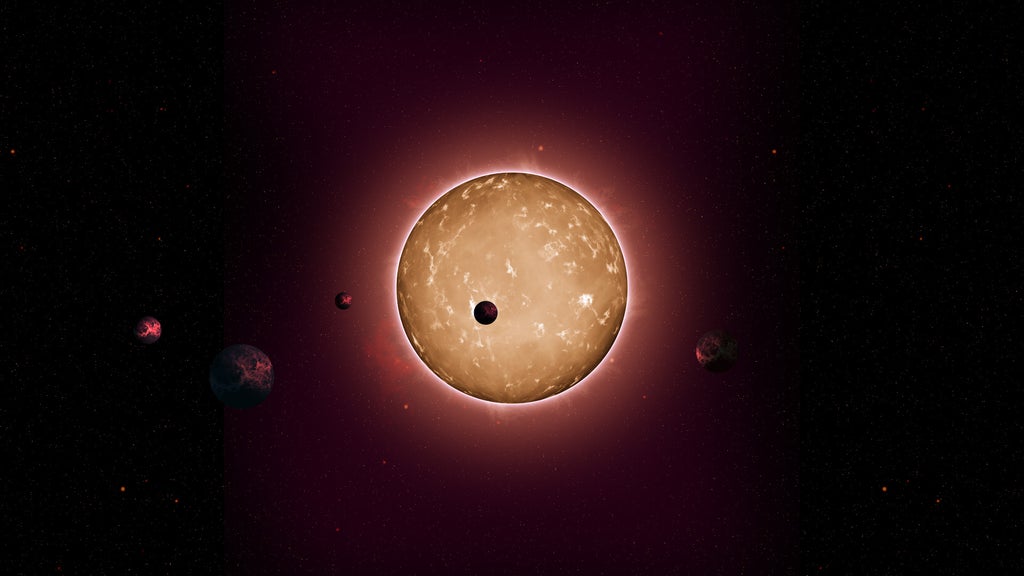
An algorithm has helped astronomers find some 366 possible new exoplanets.
The new collection of distant worlds include a variety of different planetary systems, including one that includes a star and two gas giant planets that are located strangely close to each other.
Astronomers have rapidly increased the number of exoplanets being detected, but are still at less than 5,000 in total. The discovery of more than 300 thus adds a significant number of new worlds to the catalogue of exoplanets.
Scientists hope the size of the new collection could help better classify exoplanets generally.
“Discovering hundreds of new exoplanets is a significant accomplishment by itself, but what sets this work apart is how it will illuminate features of the exoplanet population as a whole,” said Erik Petigura, a UCLA astronomy professor and co-author of the research.
The discoveries were powered by a new algorithm that looks through data from the Kepler space telescope and tries to find indications of a new planet. That has traditionally been time consuming and meant astronomers looking through all of that data – but the algorithm can help reduce the number of plants required for inspection, by looking for those that seem to come from a planet.
The new research is published in the Astronomical Journal.