The campaign was a cliffhanger, but Alexis Tsipras is celebrating a second election victory, won despite months of turbulence and a disastrous policy U-turn which saw him abandon his attempt to defy Brussels and instead sign up for another harsh Brussels bailout.
Despite a strong campaign by its new leader Vangelis Meimarakis, the conservative New Democracy party improved only slightly on its performance in January, and with 50 per cent of the vote counted, was trailing Mr Tsipras’s Syriza by 28 per cent to 35.5 per cent.
Syriza’s share of the vote was slightly down on the last election, but much better than opinion polls – which put the two biggest parties neck and neck – had been predicting.
In their second televised debate on Monday, Mr Meimarakis snarled at his rival: “I don’t envisage you as prime minister or deputy prime minister, nor would I ever want you to be prime minister again. You are on your way out – you brought catastrophe.”
Instead Mr Tsipras has risen from the ashes with his mandate renewed despite seemingly unprecedented low levels of voter turnout. As in January, Syriza was just short of winning an outright majority. But under the Greek system designed to ward against weak governments, it gains a winner’s premium of 50 seats. It was projected this could yield the party 145 seats, only a little short of the 149 it won in January. Greece’s parliament has 300 seats, so Mr Tsipras will still need at least one coalition partner. He was reported to have already made contact with Independent Greek (or Anel) leader Panos Kammenos about re-forming a coalition.
read more: Tsipras triggers election by stepping down
Syriza lead in opinion polls ahead of new general election
Alexis Tsipras purges Syriza rebels for bailout deal
President Prokopis Pavolpolous will now give Mr Tsipras three days to form a coalition.
Greeks will be hoping Mr Tsipras succeeds in cutting a deal that will guarantee enough stability for his administration to ride out the cuts and controls expected from Brussels. Eyebrows were raised back in January when Syriza joined up with a nationalist party, Independent Greeks, whose ideology is worlds away from the Tsipras Marxist roots. But a Syriza official said the partnership worked well. “Their MPs were very solid, and not involved in corruption of any sort. And that’s very important: we want to eliminate the corruption issue once and for all,” he said.
Other potential coalition partners, according to this source, were To Potami (“The River”), a centre-left formation, and the socialist Pasok.
 Greek radical-left Syriza party leader Alexis Tsipras arrives at the election campaign headquarters of the Syriza party in Athens
The darkest aspect of the election result is that the fascist Golden Dawn party increased its share of the vote from 6.28 to 7.1 per cent, consolidating its position as Greece’s third biggest party. A party spokesman told Star TV: “We will have more than 8 per cent. Golden Dawn is a party of governance, of power.”
He predicted that, when Greeks experience the harsh bailout conditions and a surge in illegal immigration, “you will see Golden Dawn will have a radical increase in support”.
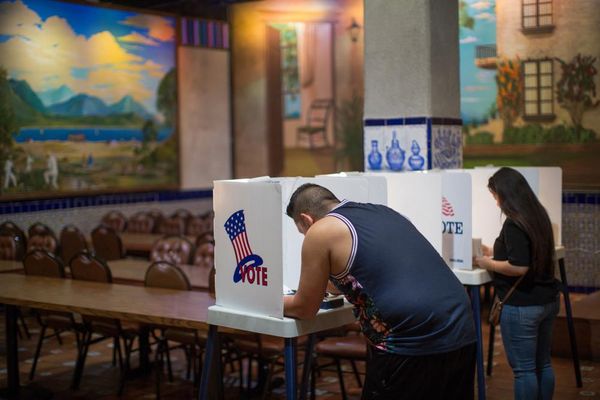
Abstention was high, at nearly 45 percent in an election-weary country with a traditionally high voter turnout.
Mr Tsipras called the snap election six months into his four-year term, in the chaotic debacle that followed July’s referendum on whether or not Greece should accept the tough terms for a new bailout laid down by the so-called “Troika” of the European Commission, the European Central Bank and International Monetary Fund.
Mr Tsipras urged Greeks to vote No, betting that a demonstration of the people’s will would force the Troika to soften their terms. In the end a far greater majority than predicted – 62 per cent – endorsed his position, but in a demonstration of the democratic deficit at the heart of European governance, this only served to harden the determination of finance ministers to have their Greek pound of flesh.
READ MORE: Greeks 'feel nothing will change’ after the election
And it came with interest: the run on banks and the incipient financial panic that accompanied the referendum added, by one calculation, more than €30bn to the Greek debt. The new bailout provides €86bn to keep Greece afloat over the next three years, but only in small tranches, and on condition that the new government does precisely as it is told.
Yanis Varoufakis, Mr Tsipras’s Finance Minister until he was sacked after the referendum, said the purpose of the election was “to nullify the brave No” of the Greek people in the referendum, and to “legalise” Mr Tsipras’s signing of the “humiliating and irrational” bailout deal.