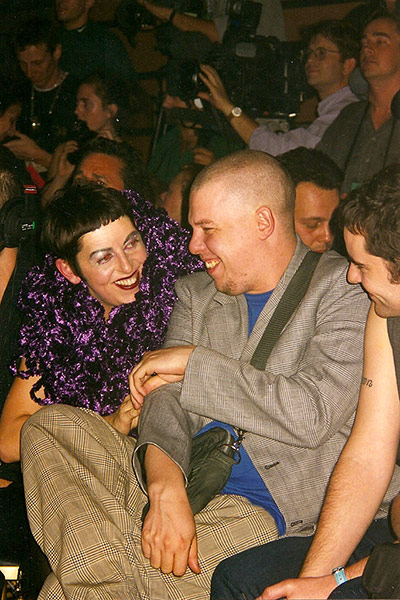
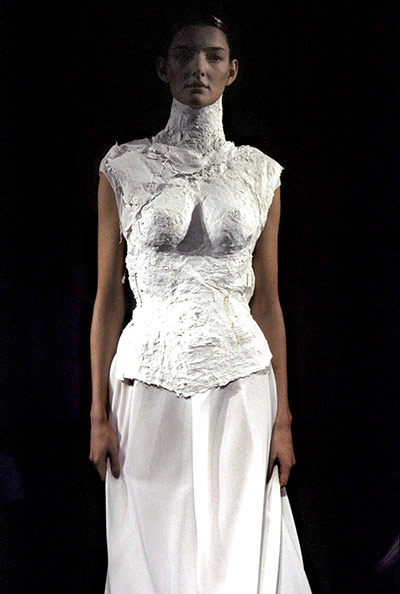
The late Isabella Blow, one of Lee McQueen's closest friends and greatest supporters, front row with the designer at a fashion show in 1996 Photograph: Iain R Wright/Iain R WrightMcQueen's third collection "Banshee", for autumn/winter 1994-5, was inspired by Celtic culture. This look features a plaster of paris corset. The collection was shown at the Cafe de paris in London, and Blow walked the runway while Manolo Blahnik sat front rowPhotograph: CatwalkingHighland Rape of autumn/winter 1995-6 is one of McQueen's most infamous collections. It was also the first time the designer showed at the British fashion council's official tent during London fashion week. Models staggered, looking dazed, as if they had been attacked, while many of the clothes had rips in them. McQueen had wanted to examine the troubled past of Scotland and commemorate the English slaughter of his Scottish ancestors. The designer told the Sunday Times: "It wasn't anti-woman. It was actually anti the fake history of Vivienne Westwood. She makes tartan lovely and romantic and tries to pretend that's how it was. Well, 18th-century Scotland was not about women drifting across the moors in swathes of unmanageable chiffon." This image also showcases McQueen's signature "bumster" trousersPhotograph: Catwalking
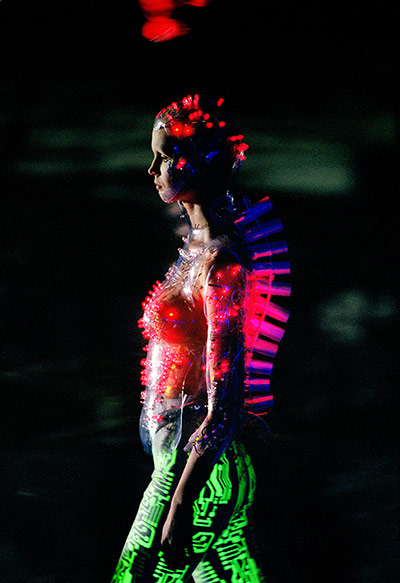
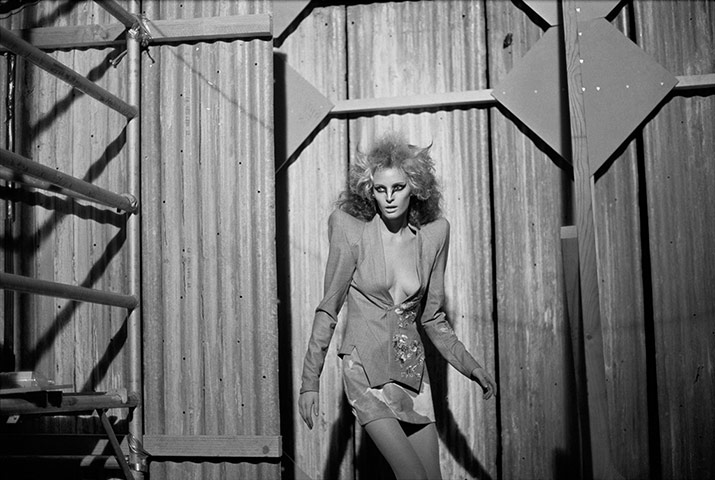
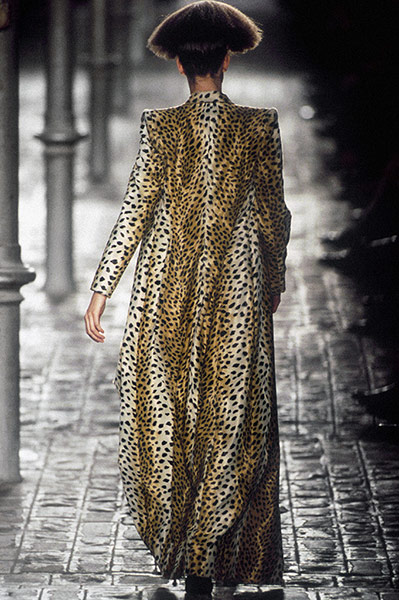
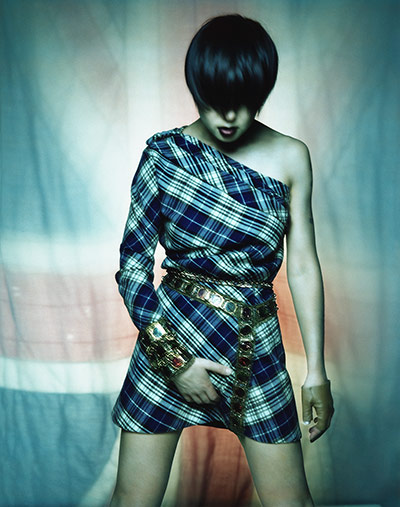
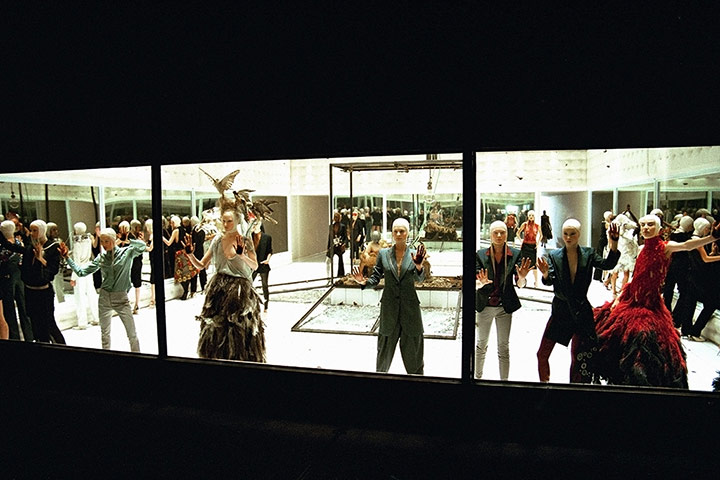
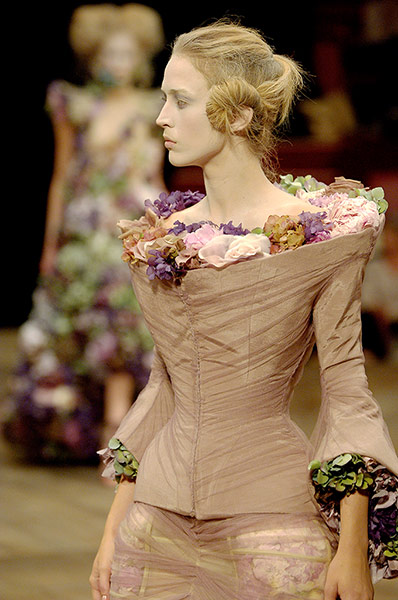
McQueen's tenure as creative director at Parisian house Givenchy – he produced his first collection in January 1997 and his last in March 2001 – was not an easy ride for either party. Many considered McQueen's work to be too edgy, too fantastical. This look, from autumn/winter 1999, complete with circuit-board bodice, is hardly the kind of LBD historically associated with the French couture housePhotograph: Catwalking.com/Catwalking.comFor McQueen's It's a Jungle Out There collection of autumn/winter 1997-8, the designer took his cues from the 1978 film The Eyes of Laura Mars. Collaborator Simon Costin recalls that the pair "chose to imitate the fashion shoot with the car pileup [and models fighting in fur coats, the survival of the fittest]. I scoured salvage yards looking for Mercs used in the famous fashion-shoot scene in New York. We got five of them, smashing the windows. We wanted the atmosphere to be edgy, for people to be unnerved"Photograph: BenStockley/CarltonThis floor-length cheetah coat with McQueen's signature strong shoulder was part of the autumn/winter 1997-8 Givenchy ready-to-wear show Photograph: catwalking.comMcQueen staged his spring/summer 2000 collection in New York. The show, dubbed The Eye, was inspired by the conflict between east and west, Christianity and Islam. A layer of black ink-dyed water filled the 100ft catwalk with the models wading through it. When McQueen took his bow, he dropped his jeans to reveal a pair of stars-and-stripes boxer shortsPhotograph: Catwalking.comKaty England, McQueen's longtime collaborator and stylist, photographed in 2000 in a signature bias-cut tartan Photograph: Zanna TVThere were many McQueen spectacles but one of the most memorable is this scene inside McQueen's fashion sanitarium. Titled Voss, the spring/summer 2001 collection made reference to a Norwegian town famous for wildlife, particularly birds. It is an offering that underlines the designer's interest in nature. The show ran an hour late, opened with Kate Moss, and was staged in a glass chamber that the audience could see into but the models couldn't see out of. There were 76 looks – and 4,000 mussel shells had been collected from Norfolk. Erin O'Connor wore a dress made from painted slide film and red ostrich feathers. For the climax, the sides of a second, smaller box crashed down to reveal writer Michelle Olley, lying naked with tubes in her mouth, a homage to an image by photographer Joel-Peter Witkin. Large moths fluttered around or rested on her body. It was a statement from the designer about the idea of beauty from withinPhotograph: catwalking.comThe skull, one of the label's signature motifs, appears here on a knitted dress that featured in the autumn/winter 2001-2 What a merry-go-round collection. Staged two days after he'd been awarded designer of the year by the British Fashion Council for the third year running, McQueen's references this season were the 1922 vampire film Nosferatu and the 1968 musical Chitty Chitty Bang BangPhotograph: CatwalkingA collaboration between Sam Taylor Wood and McQueen for a fashion shoot in AnOther magazine in 2002Photograph: Sam Taylor WoodLee McQueen photographed by Sam Taylor Wood in 2003Photograph: Sam Taylor WoodA scooped funnel neck festooned with fresh and silk flowers from the spring/summer 2007 Sarabande show. The show notes cited inspirations including Stanley Kubrick's 1975 film Barry Lyndon, European society figure Marchesa Luisa Casati and the artist GoyaPhotograph: catwalking.comMcQueen's thirst for historical references was integral to his vision. The autumn/winter 2007-8 collection, titled In Memory of Elizabeth Howe, Salem, 1692, saw him draw inspiration from a story regarding an ancestor who had been wrongly accused of witchcraft and hanged during the Salem trials. Simultaneously, the designer had been investigating Egyptian music and religion Alexander McQueen, Fashion Visionary is published by Goodman, £30, available to buy online and from all good bookstores Photograph: CATWALKING.COM/CATWALKING.COM
Sign up to read this article
Read news from 100’s of titles, curated specifically for you.










.png?w=600)