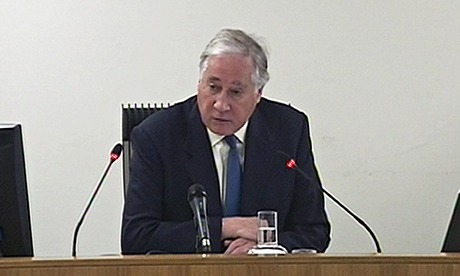
The killing of Alexander Litvinenko gives rise to issues of the “utmost gravity” which have attracted “worldwide interest and concern”, the chairman of the public inquiry into his death has said.
Opening the inquiry on Tuesday, more than eight years after the Russian dissident was murdered in London, Sir Robert Owen vowed to carry out “a full and independent inquiry into the circumstances of the death of Alexander Litvinenko”.
Owen has told previous hearings that he has seen evidence which amounts to a “prima facie case” that Litvinenko was murdered by the Russian state.
He would consider evidence relating to this allegation, he said, but confirmed that it would be heard in closed session because of security sensitivities.
The former Russian secret service agent died 22 days after ingesting the rare isotope polonium-210. The Crown Prosecution Service has sought to prosecute two Russian men, Andrei Lugovoi and Dmitry Kovtun, over the murder, but Russia has refused their extradition. Litvinenko met with both men on the day of his poisoning in a London hotel. Both men deny involvement.
Owen said the two men would be invited to give evidence to the inquiry by video link.
The government originally refused Owen’s request for a public inquiry into the murder, admitting the decision was taken in part for fear of offending Russia. The dead man’s widow Marina Litvinenko challenged the decision in court and in February last year the high court ruled that Theresa May, the home secretary, should reconsider her decision.
The government announced in July that it would grant a public inquiry, under Sir Robert Owen, days after Russia annexed the Ukrainian region of Crimea.