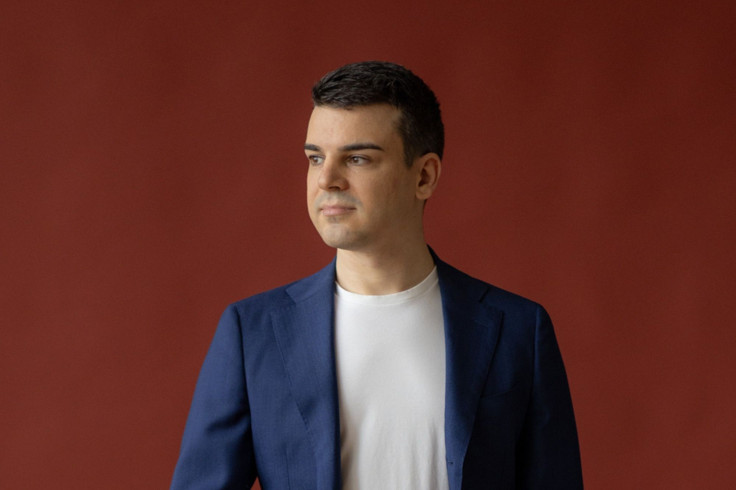
In technology, the biggest opportunities are often hidden in plain sight: large markets, decades-old workflows, and systems so fragmented that inefficiency becomes the norm. Alex Bondarevskyi (Alex Bond), lead architect of GiveSpark, believes U.S. charitable giving is exactly that kind of market—massive, culturally important, and structurally outdated.
Americans donate hundreds of billions of dollars each year. Yet the experience of giving—discovering credible organizations, understanding impact, and deciding where to allocate money—remains surprisingly opaque. For many donors, that uncertainty doesn't lead to more research. It leads to hesitation. Or silence.
GiveSpark is built around a simple premise: donors don't need more causes. They need clarity.
A Career Built Around Fixing Inefficiency
Alex's professional identity is direct: he builds products. But the origin of that instinct stretches back to his teenage years in Kyiv, where he began coding at 13 or 14. Working with limited resources—sometimes even limited electricity—he taught himself through experimentation. He built websites for films, starting with a rudimentary page dedicated to War of the Worlds. These early efforts were grounded in a genuine curiosity of exploring possibilities.
That curiosity quickly turned into paid work. Production and distribution companies in Ukraine noticed what he was building and hired him. Within a year, Alex was building regional film sites for major releases—work that earned early recognition and shaped his understanding of how products scale when they are genuinely useful.
In his twenties, he ran a consultancy that, at its peak, employed roughly 40 people globally. The work was lucrative and technical: large ERP systems, CRMs, and enterprise software. But by 2018, a defining moment reframed his career. After spending two years building a major project, an executive leadership change resulted in the entire initiative being canceled shortly before launch.
This event, rather than being merely frustrating, was clarifying for Alex.
"I spent two years on something that would never see the light of day," he says. "No users. No impact. No voice in what happened next."
The conclusion was obvious: if he wanted to build things that mattered, he needed to build products that lived in the world—not internal systems that could be erased by politics.
Proof of Scale: 800,000 Contractors
That shift led him into fintech, including a role as the first engineering hire at Blueacorn, a platform that supported contractors during the COVID lending surge. The company ultimately served more than 800,000 contractors across the U.S. during one of the most chaotic financial moments in recent history.
But Alex doesn't cite the number as the most meaningful proof point. He cites the feedback loop.
At one point, users created a subreddit about the platform without the company's involvement. When Alex deployed a small workflow improvement—a minor field change, a better page step—someone posted about it almost immediately.
"Five minutes later, it was on Reddit," he says. "That was the moment I knew: this is real. People are using it. They notice. They care."
It's an engineer's version of product-market validation—quiet, unglamorous, and unmistakable.
The Nonprofit Market's Structural Problem
GiveSpark started with a simple realization—one that seems obvious in hindsight.
Alex's colleague, Noah, experienced the problem firsthand during a personal moment. His daughter wanted to donate to cancer research. They began searching for organizations, only to find it surprisingly difficult to access clear, transparent, and comparable information.
What felt like a minor frustration at the time wasn't just an inconvenience—it was a signal that something fundamental was missing.
"What surprised us," Alex says, "was how hard it is to answer basic questions: Who is doing work in this category? Where does the money go? What is the organization actually focused on? And how do you know it's legitimate?"
The U.S. has roughly 1.8 million nonprofits, but the data is uneven. A large portion of organizations either file limited information, file inconsistently, or operate with minimal public presence. Smaller nonprofits often rely on word of mouth or local trust rather than marketing and visibility. Many don't have modern websites. Some exist primarily on social platforms. Others are effectively invisible.
In venture-backed markets, the incentives are the opposite. Startups proactively publish information because visibility attracts capital, talent, and customers. The nonprofit ecosystem, by design, rewards program spending—not communications, data hygiene, or marketing investment. Transparency becomes a cost center, even when it should be infrastructure.
Trust Is the Bottleneck
Alex believes the long-term risk is bigger than inconvenience: it is the erosion of trust. Donation rates are drifting downward, he argues, not because people are less generous, but because they are less confident.
Even highly engaged donors can be misled by optics and branding. Alex uses a personal example. He donated to Wikipedia for years, then later learned the Wikimedia Foundation's financial position was far stronger than he assumed, while other public-good institutions (like the Internet Archive) were facing real strain.
"It's not that someone did something wrong," he says. "It's that donors don't have a clean way to see reality."
When crises occur—hurricanes, wildfires, humanitarian events—donors usually default to familiar names. Those organizations may do meaningful work. But the outcome is predictable: local and specialized nonprofits, often closest to the ground, remain underfunded because donors don't know they exist.
GiveSpark's goal is to close that gap by making nonprofit discovery and evaluation as intuitive as choosing a product or researching a company—without turning trust into a paywalled privilege.
A Conservative View of AI
While many startups market artificial intelligence as the solution to information complexity, Alex takes a more conservative stance. He believes founders routinely underestimate the downside of AI in contexts where precision drives real-world decisions.
"AI can be 80% accurate and look impressive," he says. "But in decision systems, that remaining 20% is where the damage happens."
GiveSpark uses automation, but its philosophy is less "move fast and break things" and more "move carefully and be right," especially when donors may allocate money based on the platform's interpretation of an organization's mission or impact.
In Alex's view, the job isn't just to generate summaries. It's to create confidence.
The Long View: Infrastructure, Not Attention
Alex is candid about what motivates him now. In his twenties, he wanted recognition—the kind founders are taught to chase: Forbes lists, press, signals of status. That has changed.
"I used to want things like 30 Under 30," he says. "Now, I want proof that something we built created real impact—that it made decisions better."
It's a subtle but telling shift: from visibility to durability.
Instead of being positioned as a charity, GiveSpark is positioned as infrastructure—the kind of system that makes a large market work better by improving information flow and trust. If it succeeds, donors make smarter decisions, smaller nonprofits gain visibility, and a significant amount of capital moves more efficiently toward real outcomes.
In a world captivated by novelty, Alex is building something older, harder, and more valuable: a trust layer for giving.