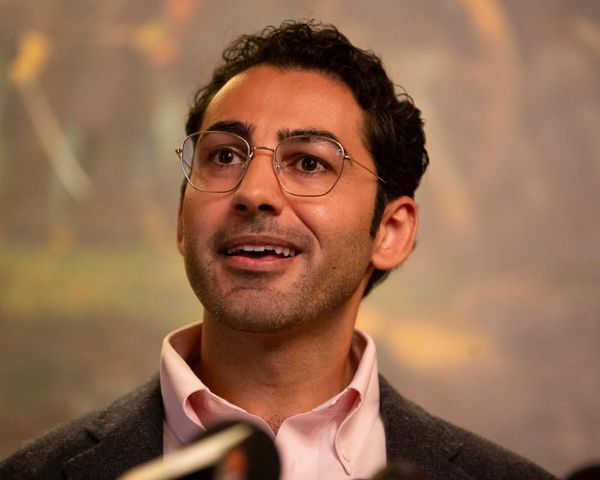
I’ve been living and working in Aleppo since last December. It’s a city that has seen death and destruction on a grand scale, with a long-suffering population who are weary after years of war.
From the beginning of the Syrian war this ancient city, inhabited for over 4,000 years, has been one of the frontlines of the confrontation. But the people here are remarkably resilient. Every day I am amazed by their ability to carry on.
We are currently trying to access communities in eastern Aleppo. We have not been able to access that part of the city since April. Around 20,000 people have fled the intense fighting there over the past 48 hours. Front lines are changing rapidly and people are desperately trying to find safety.
For those left behind, the situation is dire. Few healthcare facilities still function properly and even if they do – many people are too scared to go to them for fear these buildings will be attacked.
Schools are under fire (they are in Western Aleppo too) and as temperatures drop there is a daily struggle to find food. Winter is really closing in.
Our office is in western Aleppo and things are bad here too. The big upsurge in fighting here over recent weeks has left us all in shock. Frightening explosions mean the noise, the smell, the ferocity of the conflict is inescapable. It is all around us. This is why, from the moment you wake up, you never quite know what the day will hold.
After a quick breakfast I go to work at around 08.30. We have a planning meeting to review ongoing activities and decide what the main priorities are for the days and weeks ahead.
I’ve been with the International Committee of the Red Cross (ICRC) for around ten years. I work on projects that provide food and essential needs to families across the city, on both sides of the front lines.
I might pay a morning visit to one of Aleppo’s collective kitchens, mostly run by local charities but supported by the ICRC and our national society partner in this country, the Syrian Arab Red Crescent (SARC).
These kitchens are a sight to behold. Hot and busy, they are full of energetic staff, working flat out to feed many of Aleppo’s people on an industrial scale.
Some kitchens can feed up to 30,000 people a day, a vital service in a city where the basics like milk, meat and cheese are more of a dream than a reality for many. The meals are cooked and then dispatched to distribution points further afield.
I recently talked to a young boy at one of the kitchens. About 13 years old, he stood there quietly, hoping for some hot food for his family.
He managed a brief smile, speaking softly as he told me about his ‘new’ family home: One of the many collective shelters in Aleppo, in schools, mosques or unfinished buildings.
No electricity or gas means no heating or light. There are sometimes two or three families to a room. This winter, once again, I’m sure I’ll see families burning rubbish to try and keep warm.

We help by installing toilet facilities and power generators. But cooking gas is so expensive and hard to find, we need the collective kitchens.
So I could see in this boy’s eyes what it meant for him to be standing here, lining up for hot food. He did this six days a week because this queue was, quite literally, a lifeline.
We make our way through the busy streets, onto the next job.
A few weeks ago I went to visit a young father of two. A tailor who lost his lower leg in a mortar attack and was scared he would lose his livelihood too.
He has been helped by our physical rehabilitation centre, for the weapon-wounded from across Aleppo regardless of how or where they were injured. He now has fabric, a workshop and staff. He no longer needs outside financial help.
There are others just like him. Aleppo citizens – blacksmiths, bakers or grocers – all amputees who have endured terrible suffering but who have fought back, with their dignity intact.
In my spare time, I do some exercise. Aleppo is no runners’ paradise, but I manage 5km a day on our small gym machine, to help me unwind.
Dinner is often soup and fruit. I’m normally in bed by half past ten, hoping it will be a quiet night.
I drift uncomfortably off to sleep. Knowing that tomorrow will yet again test the people of Aleppo and their resilience. Hoping for the sake of everyone across this deeply divided and damaged city that someone, somewhere will find a path to peace.
Imran Mehmood works for the ICRC in Aleppo, Syria