
Milan Design Week is rarely just about discovering designs, but it's how we experience them. Design platform Alcova is a case in point. The showcase opened its seventh edition this week in Milan, following the first iteration across the pond in Miami in December. Followers of Alcova are always wondering where the next location for the exhibition will be, and earlier this year, founders Valentina Ciuffi and Joseph Grima announced they had decided to venture outside of the city centre to Villa Bagatti Valsecchi and Villa Borsani – two architectural landmarks in the area of Varedo.
Alcova 2024 in Varedo: Villa Bagatti Valsecchi and Villa Borsani
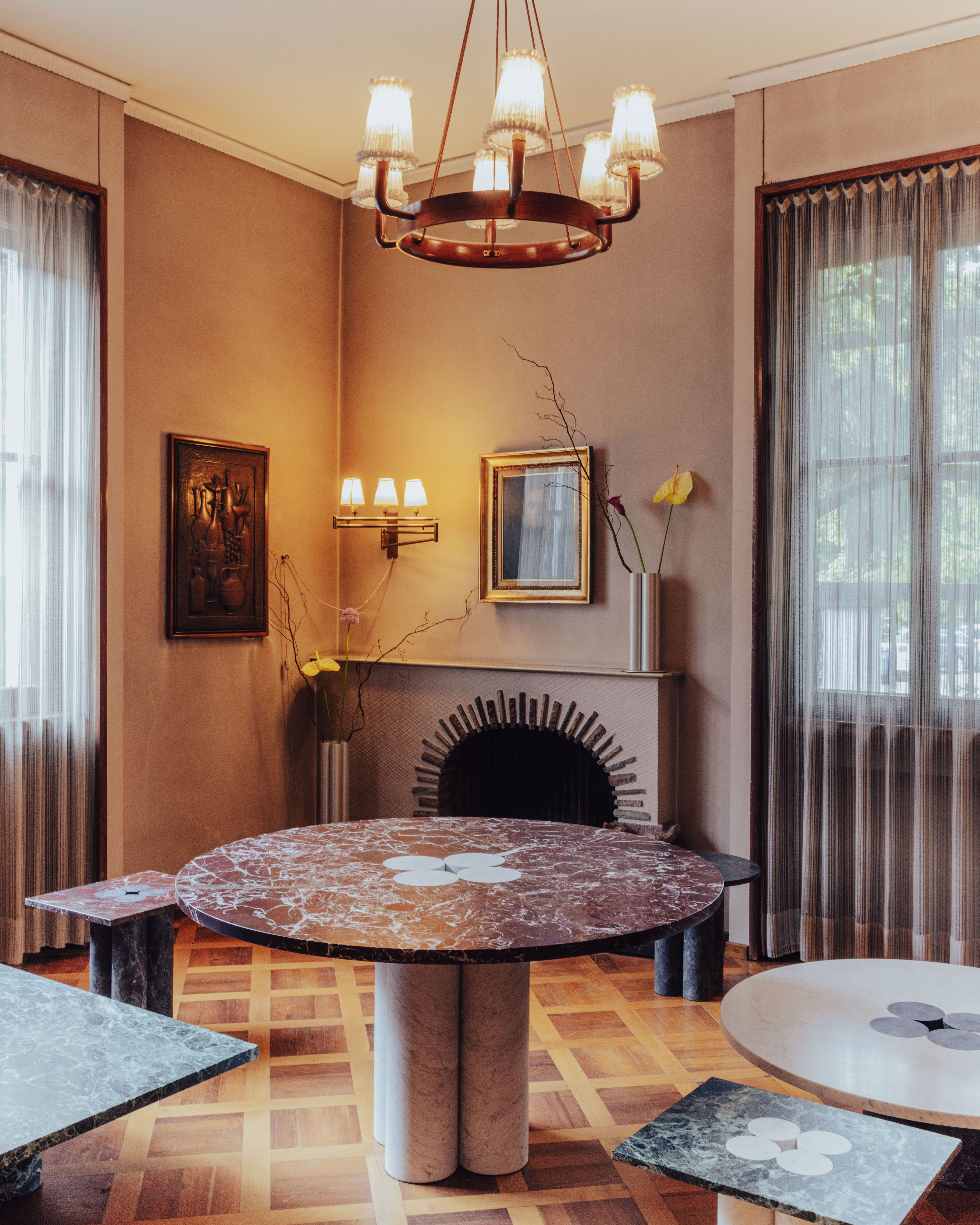
Over 70 exhibitors are sprawled across these two locations, and while many architectural aficionados will know modernist icon Villa Borsani, the disused Lombard Baroque Villa Bagatti Valsecchi was also a hidden gem for Alcova’s organisers. 'This location has the usual Alcova,' Ciuffi says of the exposed raw floors and peeling walls of the villa, nodding to Alcova itself as an testing ground for designers, spanning innovation, rethinking systems and more.
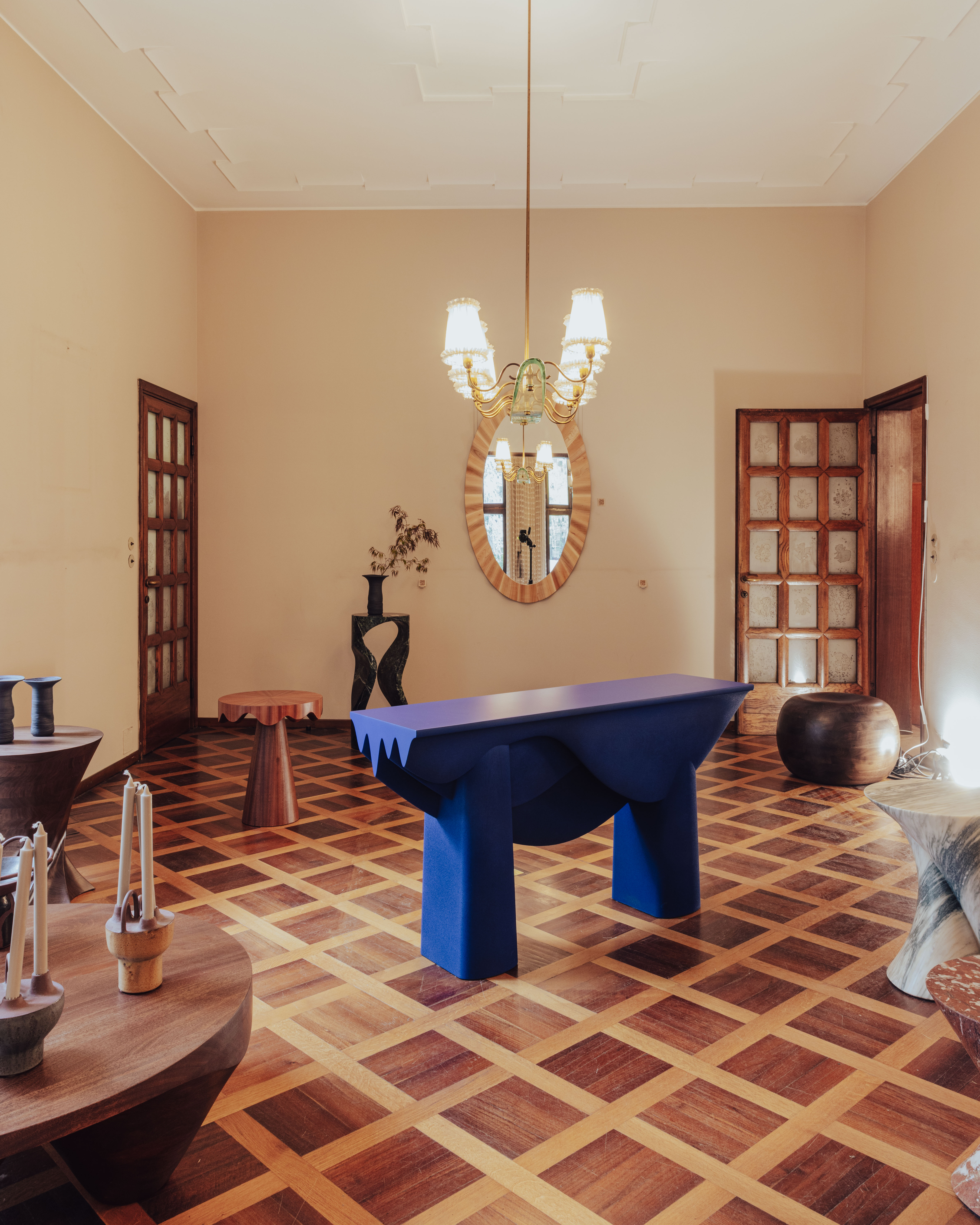
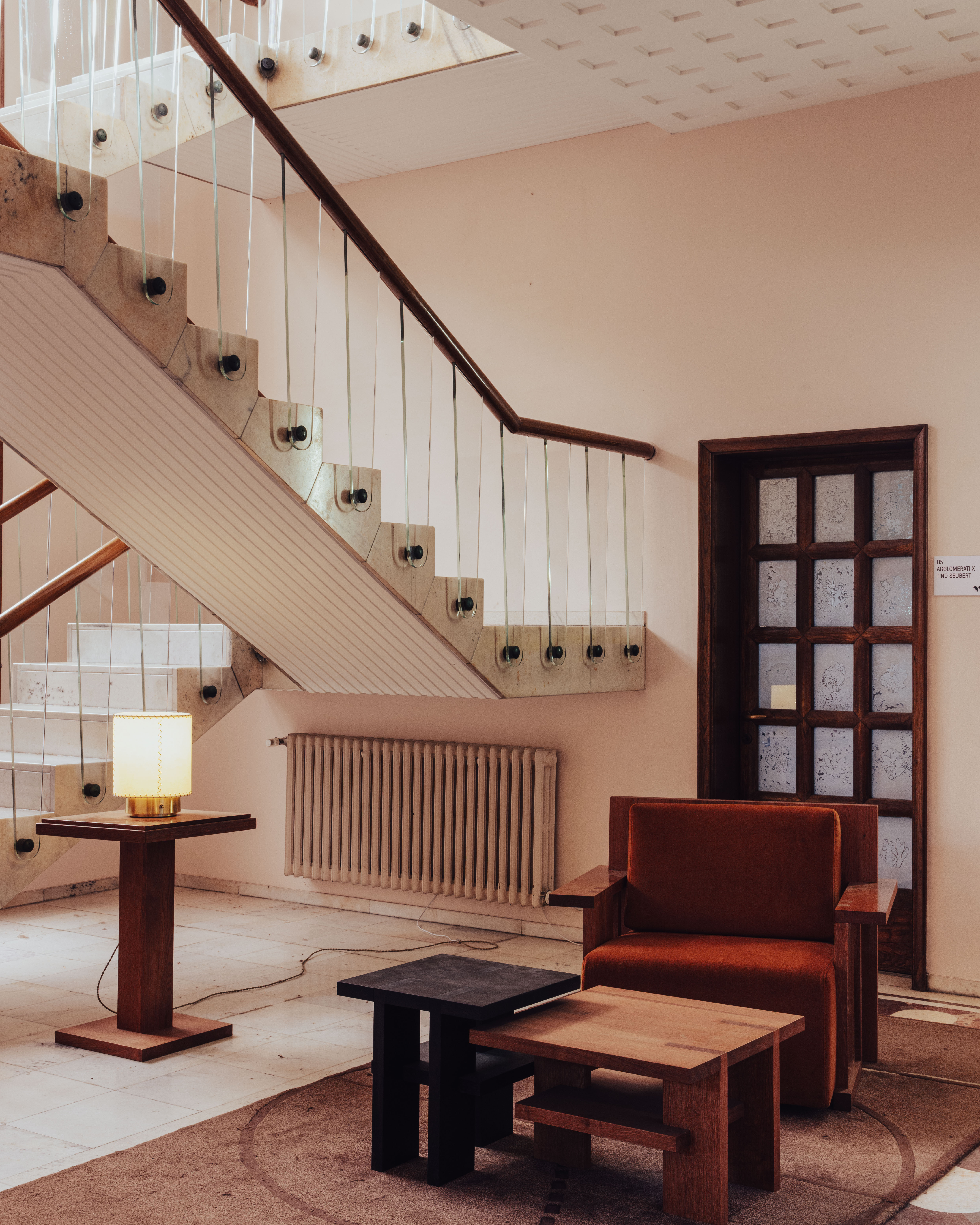
'There is materiality and conceptual works,' says Ciuffi of the experiments at this year's show. Explorations with materials manifested in the marble work of Tino Seubert in collaboration with studio Agglomerati, realised by Bianco, and organic ceramic vessels by Andrea Tsang for Studio Tooj.
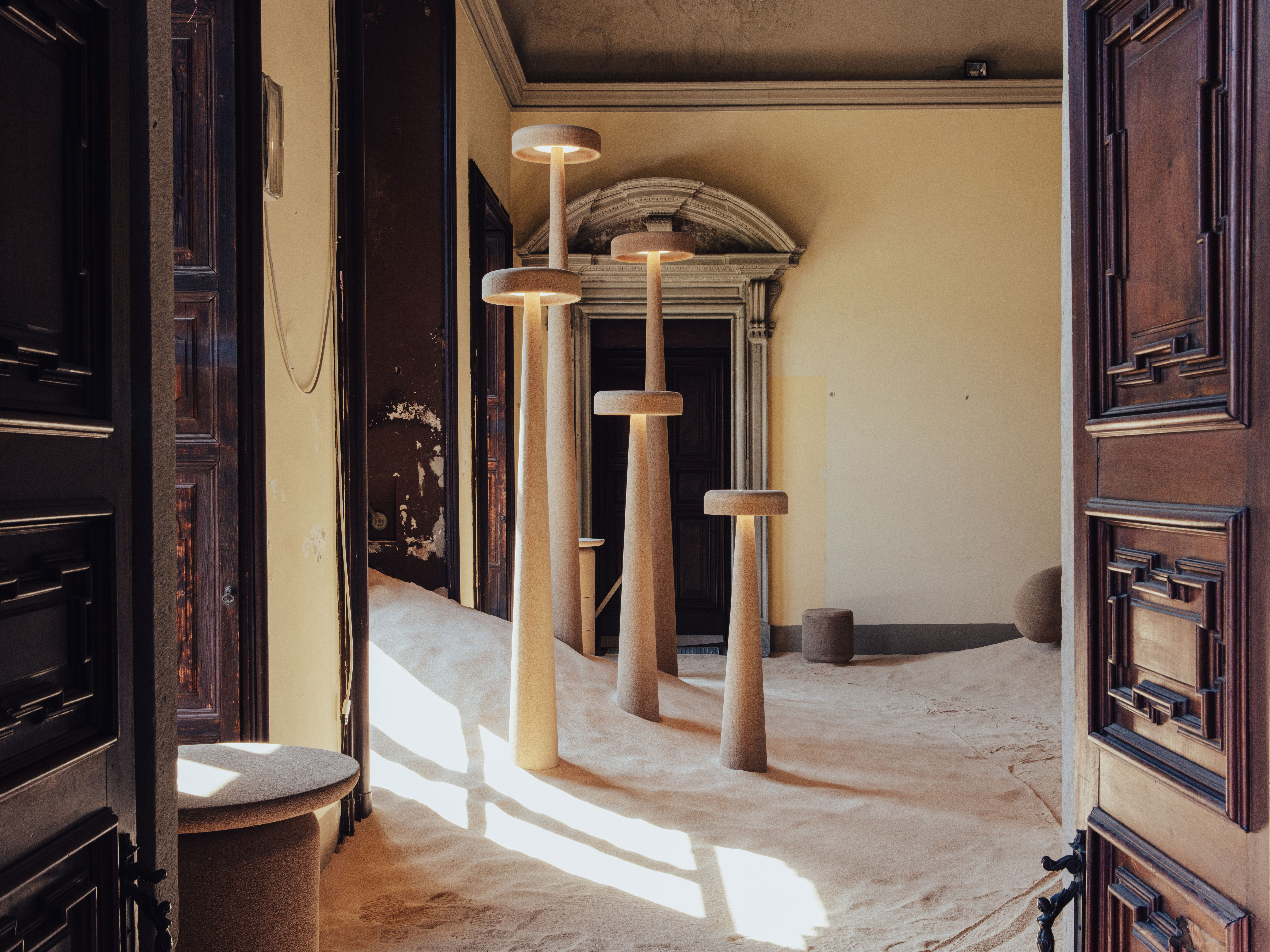
Stepping inside Villa Bagatti Valsecchi, visitors were welcomed by mounds of EconitWood️, which uses wood waste from sawmills. The potential of this material was shown in lighting and seating designed by Harry Thaler. An apocalyptic vision of the future was visually told by design school HEAD Genève, addressing the climate emergency through performance dioramas of damaged environments.
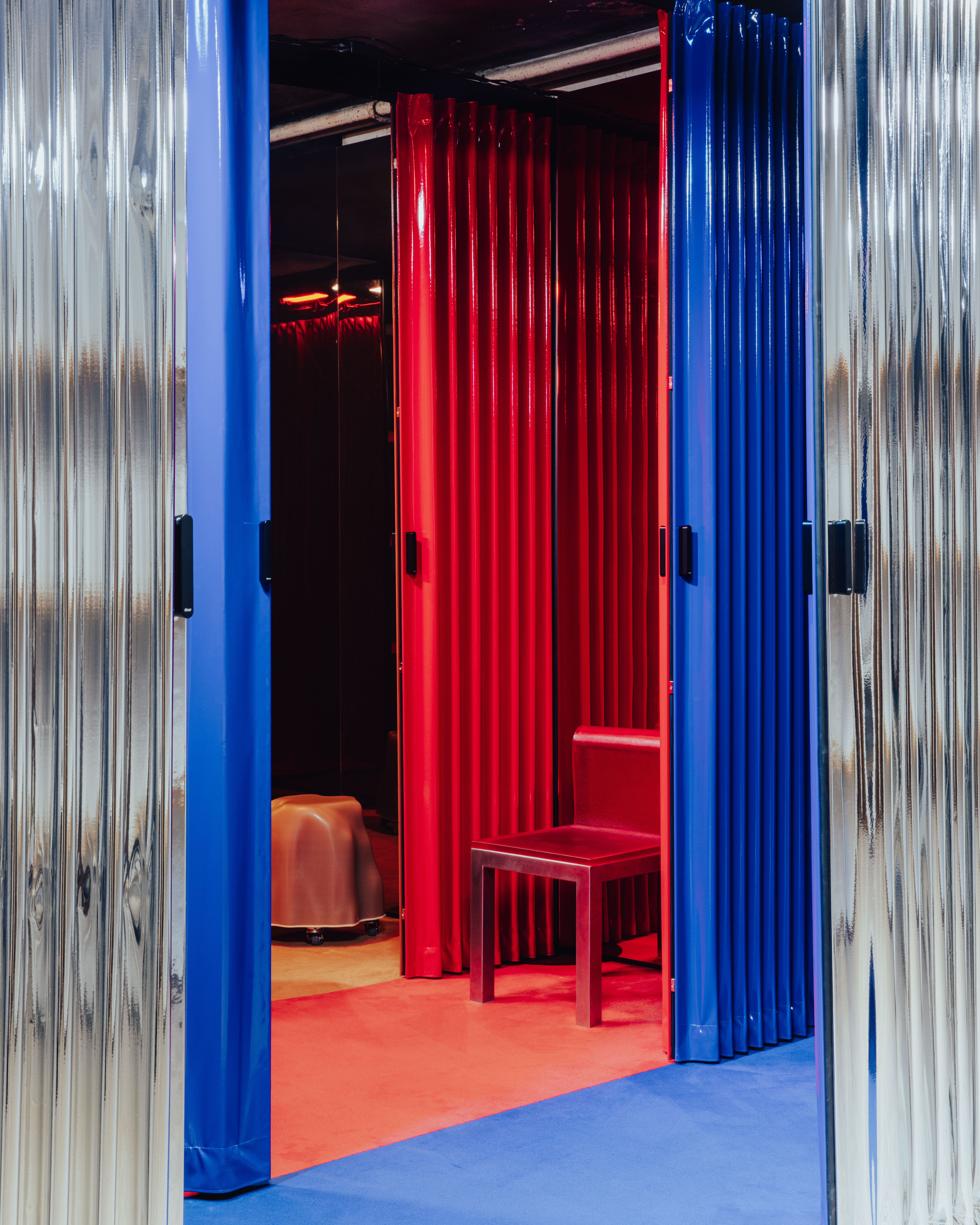
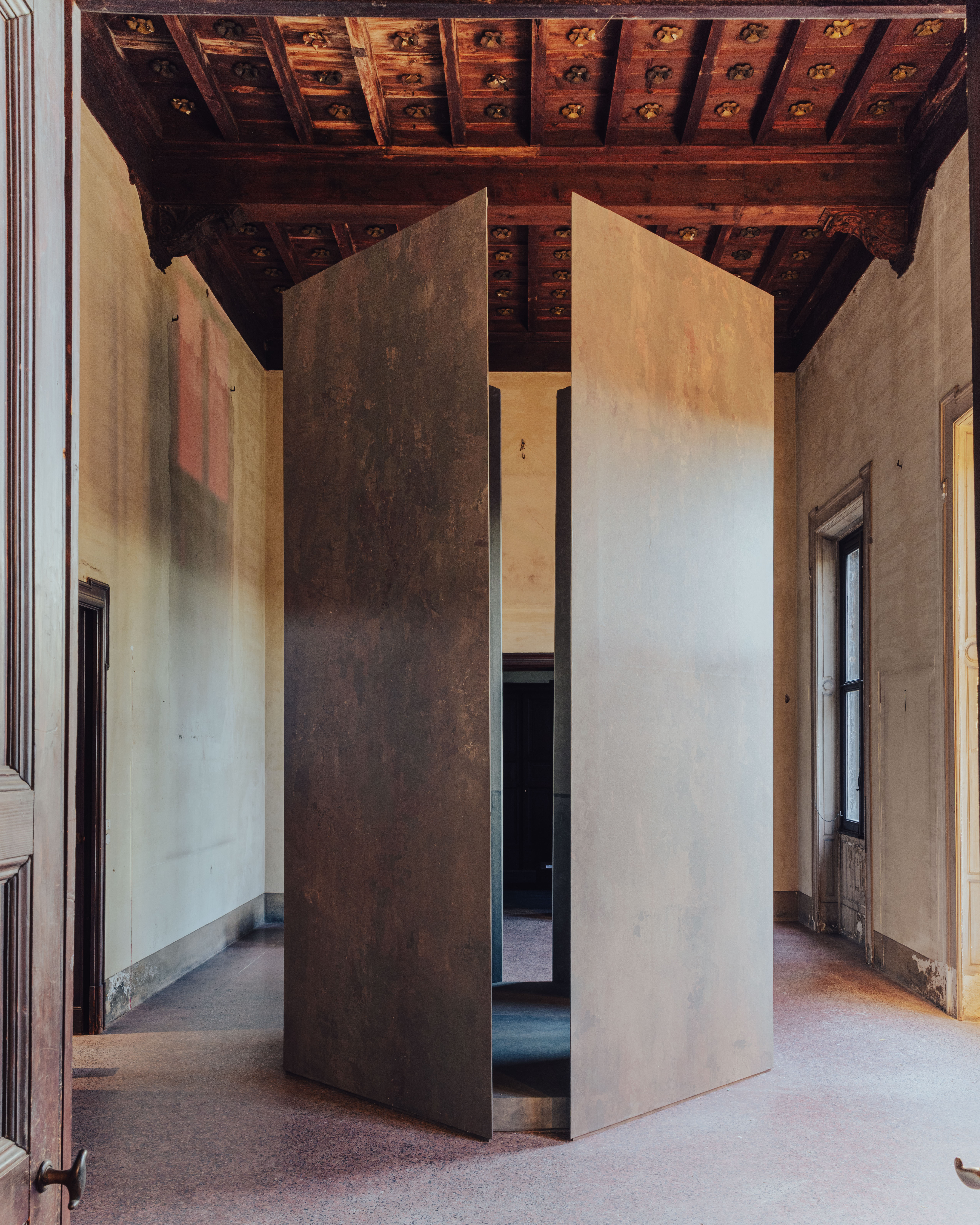
'What is new this year is a dialogue with the domestic space,' says Ciuffi of the fact both of these villas were once family homes. Walking downstairs in Villa Borsani, visitors could uncover a maze-like installation by Objects of Common Interest for Dooor, which manipulates the cellar of the home through colour and abstract passages.
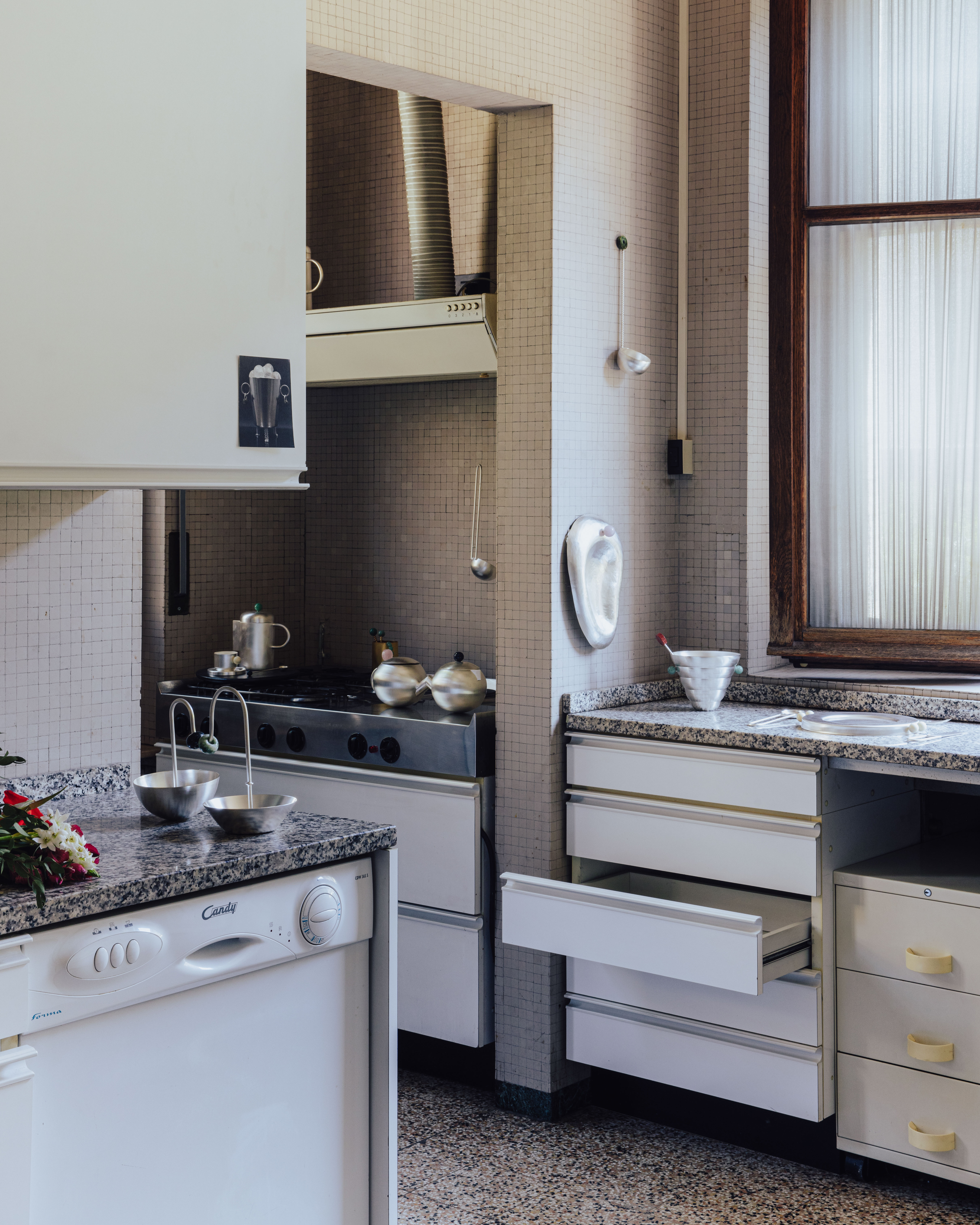
In the narrow kitchen, Colombian designer Natalia Criado’s metal works, including cutlery, coffee containers and tea pots, were found peppered across the countertops and kitchen sink. Once a jewellery designer, Criado’s delicate pieces are inspired by combining cultural legacies of Colombia and Italy. Inderjeet Sandhu also delved into the clashing of cultures inside Villa Bagatti Valsecchi with his political vases and vessels that draw upon his experiences in a Dutch-Indian household.
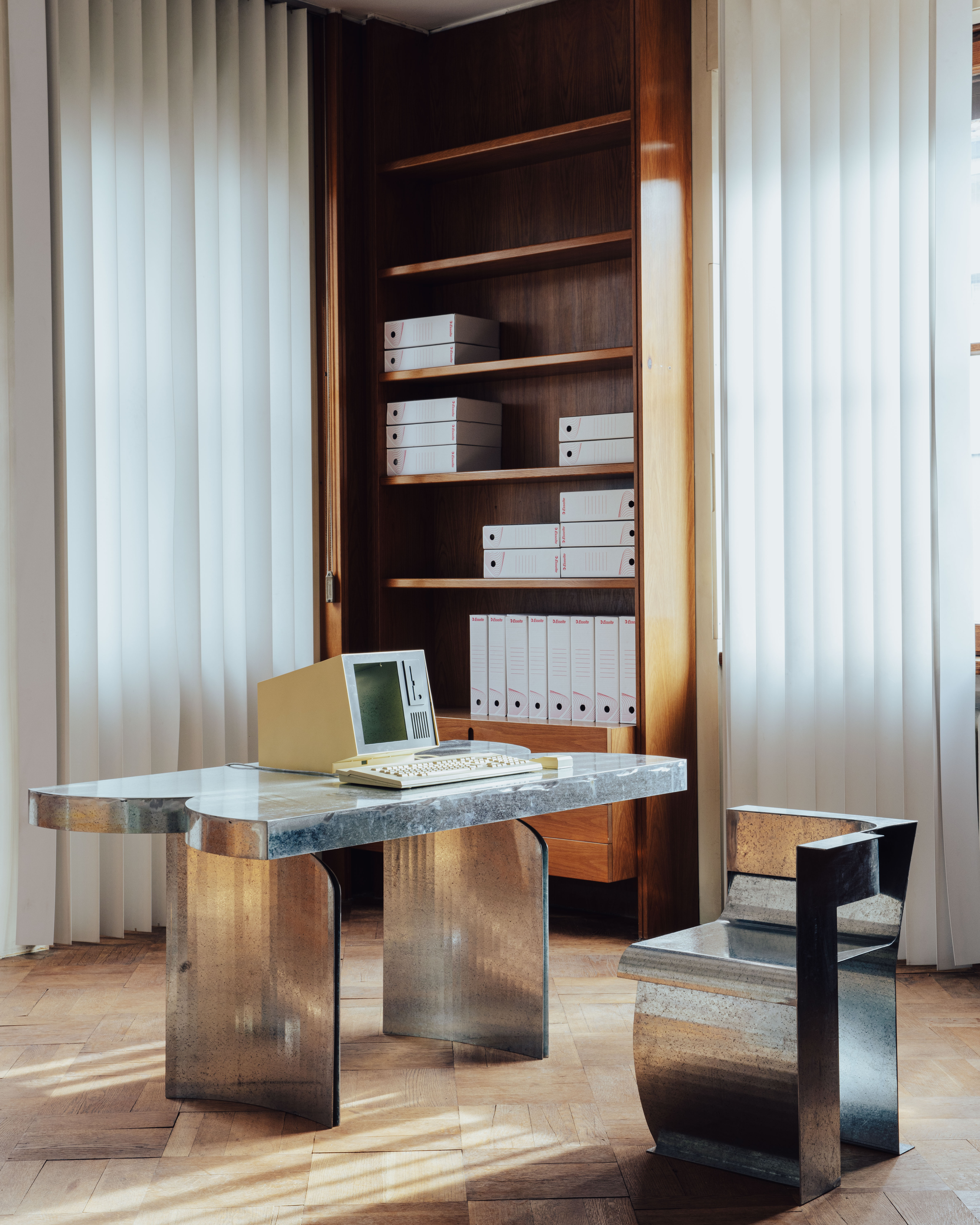
Inside the study room once used by architect Osvaldo Borsani, Supaform were inspired by this area being a 'laboratory for experiments and a sacred space for solitude and escapism,' with a simple office set up of a chunky silver desk and chair paired with a retro computer and conventionally corporate looking folders in the shelves, feeling both futuristic and vintage at the same time. 'The furniture within the space are intended as artefacts of the author’s imagination,' says Maxim Shcherbakov, founder of Supaform.
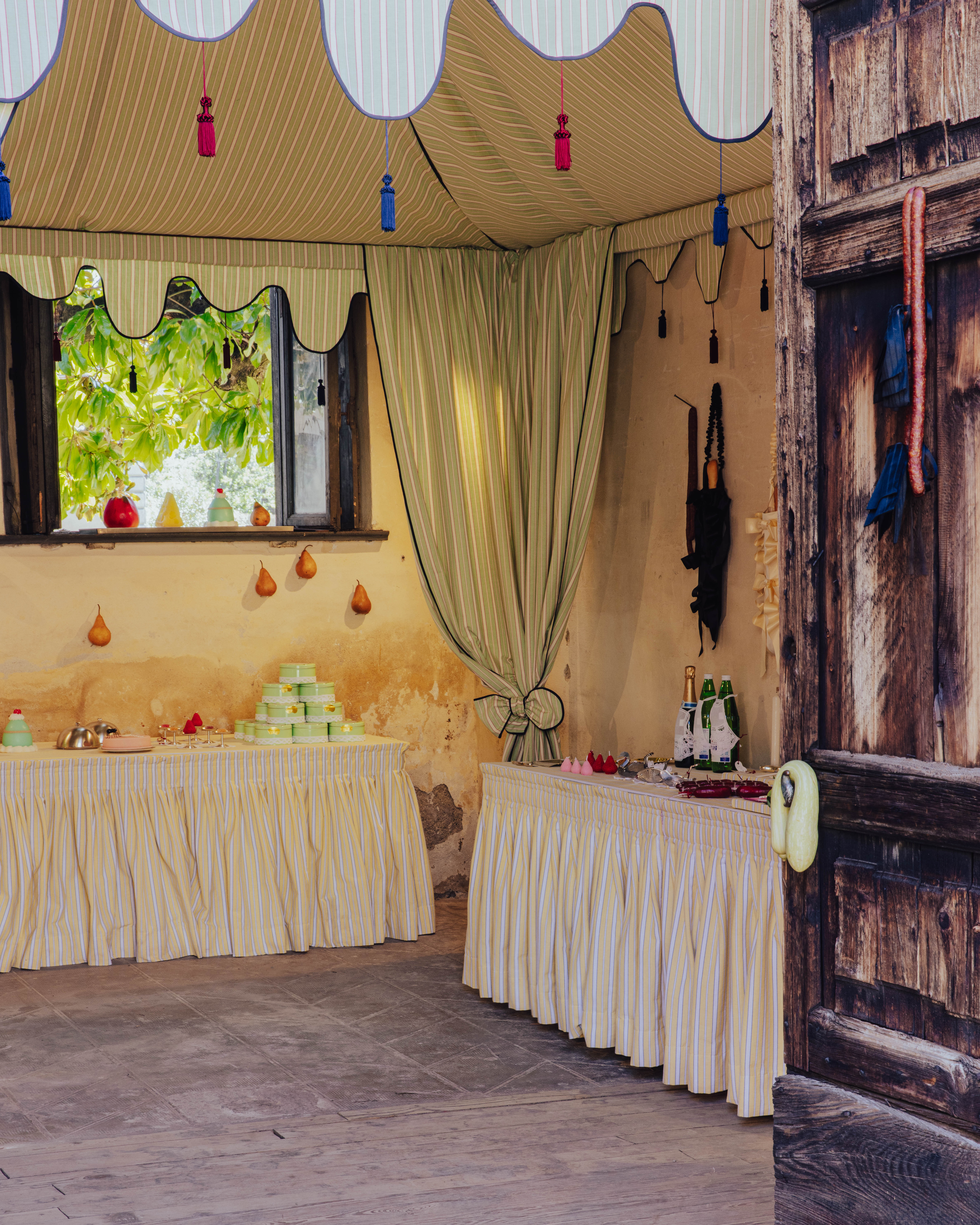
Elsewhere, Fabian Freytag reinterpreted the bar area in the Villa Borsani to include washbasins and lamps, while back at Villa Bagatti Valsecchi, the universe of Gohar World came to life in a pop-up shop set up inside a pinstripe tent, with satin baguette bags on offer amongst other delectable items.
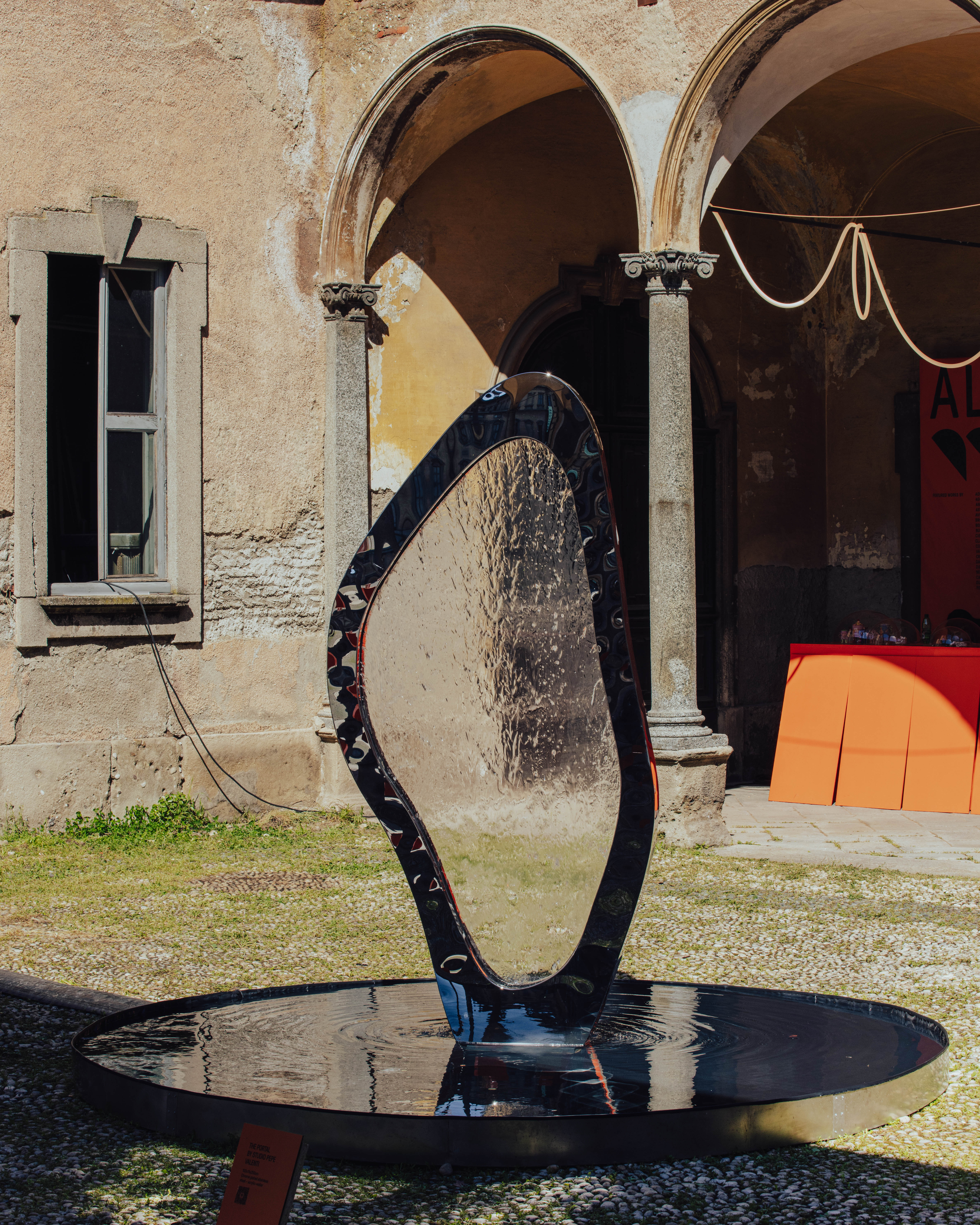
'The relationship with the park and greenery is astonishing,' Ciuffi says of the vast green space surrounding Villa Bagatti Valsecchi, where playful sculptures by Studio Pepe and a golf course are found. 'We don’t have a style, we just look for amazing places,' says Ciuffi of future plans for Alcova. For now, being a hotbed for research and a platform for designers is the main goal, but 'Alcova will keep travelling.'
Located a 5-minute walk from each other, the two venues are in Varedo, a 25-minute train ride from Milan stations including Cadorna, Garibaldi, Porta Venezia and Repubblica with lines S2 and S4.