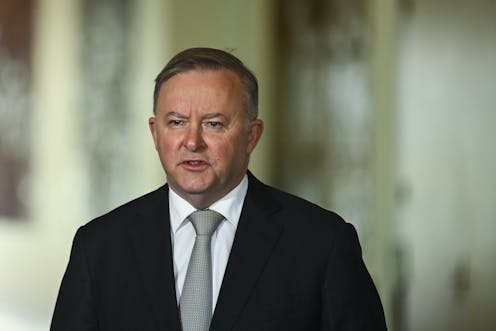
A Labor government would set up an Australian Centre for Disease Control to strengthen the country’s preparedness for future pandemics as well as boost efforts to deal with chronic illnesses.
Opposition leader Anthony Albanese, announcing the initiative, said Australia was the only OECD country not to have such a centre.
The country went into COVID-19 “with less than one mask for every Australian in the National Medical Stockpile, an over-reliance on global supply chains, and badly stretched aged and health care systems.
"These failures have contributed to the tragic deaths of almost 900 Australians - 673 of whom were aged care residents and 28 linked to the Ruby Princess debacle – and more than 27,000 infections.”
The centre would have three broad functions
ensuring ongoing pandemic preparedness
leading a federal – not just Commonwealth – response to future infectious disease outbreaks
working to prevent non-communicable (chronic) as well as communicable (infectious) diseases.
The centre would run regular drills like Exercise Sustain in 2008. This was the last time such a pandemic preparedness exercise was held.
It would manage the National Medical Stockpile, and work with other countries on regional and global preparedness.
Albanese said Australia’s response to COVID was “too slow, too reactive and too un-coordinated.
"We can’t be left playing catchup again.”
Labor’s health spokesman, Chris Bowen, said health experts had been calling for such a centre for more than three decades.
“We know that almost 90% of Australian deaths are associated with chronic disease – but 38% of the chronic disease burden is preventable.” An Australian centre “would save lives and ease the pain of chronic illness,” Bowen said.

Michelle Grattan does not work for, consult, own shares in or receive funding from any company or organisation that would benefit from this article, and has disclosed no relevant affiliations beyond their academic appointment.
This article was originally published on The Conversation. Read the original article.