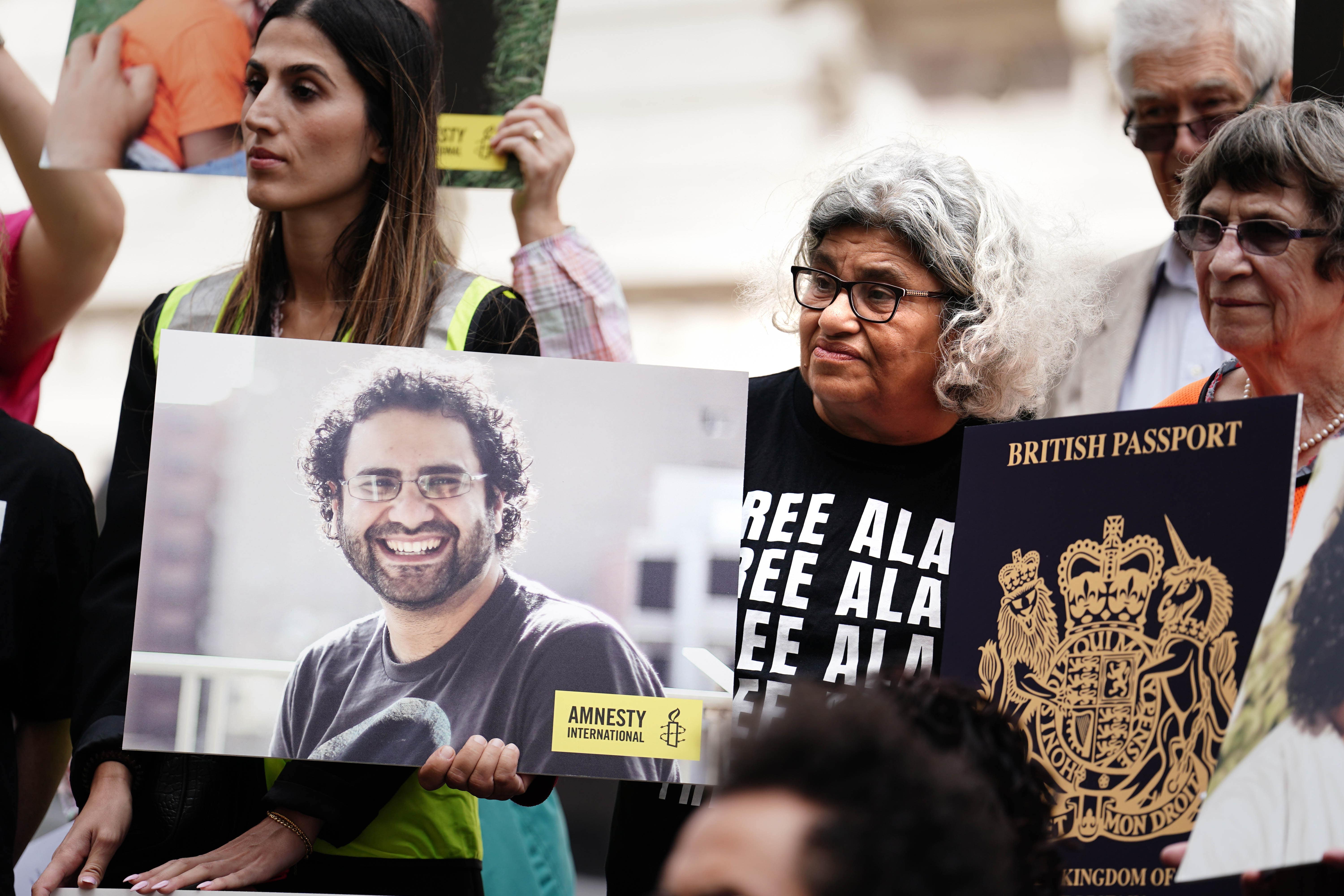
The Foreign Office is looking into the handling of the case of a democracy activist who recently arrived in the UK after years of imprisonment in Egypt, after the emergence of several historic tweets and growing calls for him to be deported.
Alaa Abd el-Fattah on Sunday night issued an “unequivocal” apology for several historic tweets, some of which appear to advocate violence against Zionists. But he maintained that other posts have been “completely twisted out of their meaning”.
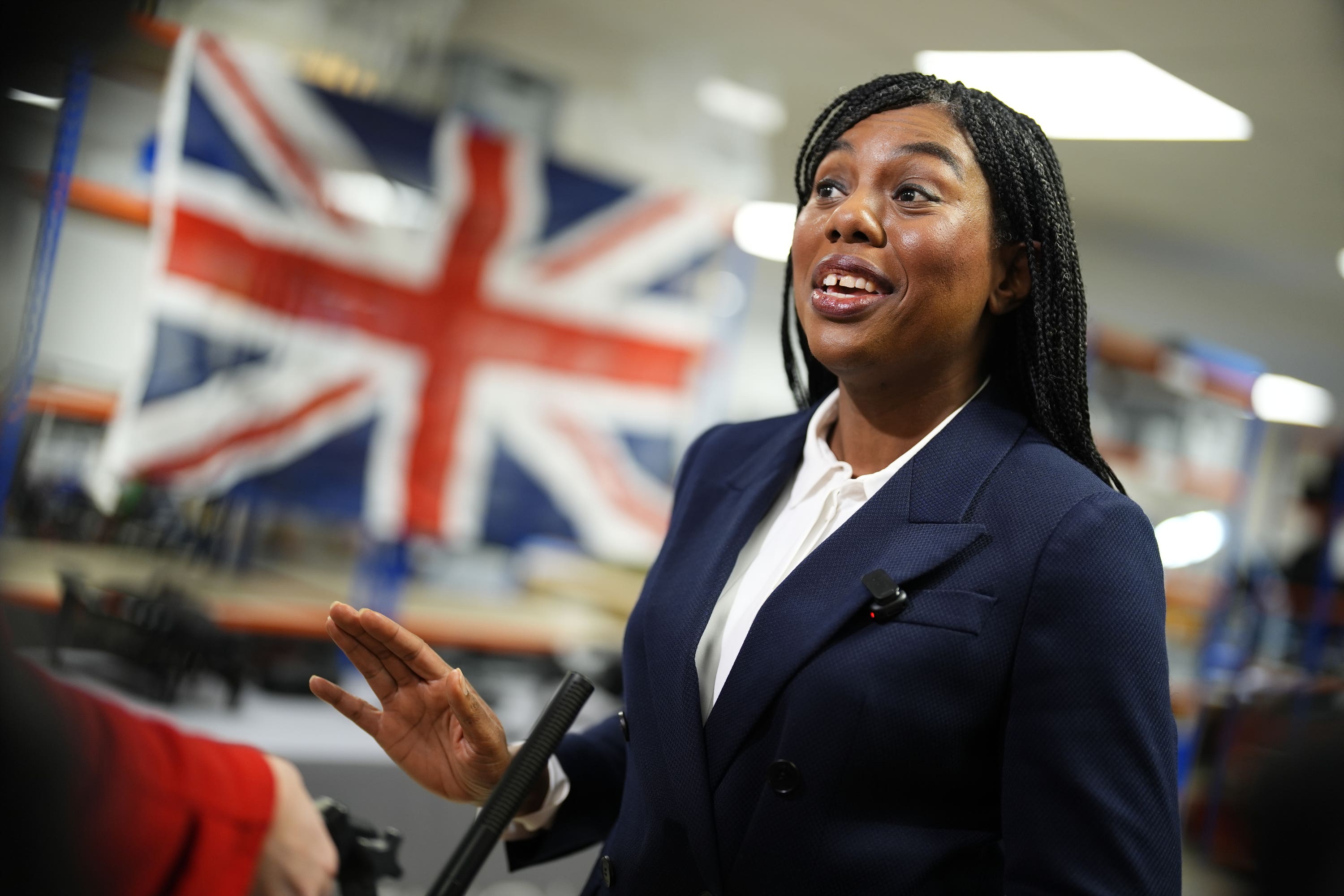
The controversy has led figures such as the Conservative leader Kemi Badenoch and Reform UK leader Nigel Farage to demand an investigation with a view to revoking the activist’s British citizenship.
Downing Street believes there are questions to be answered over the handling of the case, and it is understood that the Foreign Office is now examining the issue. But the activist is unlikely to be stripped of his citizenship, because No 10 does not believe his actions meet the high legal bar for deportation.
Mr Abd el-Fattah, who was detained in Egypt in September 2019 and sentenced to five years in prison in December 2021 for allegedly spreading false news, was pardoned by Egypt’s president Abdel Fattah al-Sisi in September.
After his release, which followed extensive lobbying by both Conservative and Labour governments, he flew to the UK on Boxing Day to be reunited with his son in Brighton. Since his arrival, posts dating back to 2010 have resurfaced, appearing to call for violence against Zionists and the police.
On Monday, Downing Street defended Mr Abd el-Fattah’s entry into the UK, saying that the government would welcome the return of any citizen who had been “unfairly detained abroad”.
The prime minister’s official spokesperson said: “We welcome the return of a British citizen unfairly detained abroad, as we would in all cases and as we have done in the past. That is central to Britain’s commitment to religious and political freedom.
“That said, it doesn’t change the fact that we have condemned the nature of these historic tweets, and we consider them to be abhorrent, and we’ve been very clear about that.”
No 10 also said that his decision to apologise was “the right thing to do”, describing the apology as “fairly fulsome”.
In a statement issued on Monday, Mr Abd el-Fattah said: “I am shaken that, just as I am being reunited with my family for the first time in 12 years, several historic tweets of mine have been republished and used to question and attack my integrity and values, escalating to calls for the revocation of my citizenship.”
He added: “Looking at the tweets now – the ones that were not completely twisted out of their meaning – I do understand how shocking and hurtful they are, and for that I unequivocally apologise.”
He attributed these posts to “a young man’s anger and frustrations in a time of regional crises (the wars in Iraq, Lebanon and Gaza), and the rise of police brutality against Egyptian youth”, also regretting those that he had written during “online insult battles”.
Following the release of the statement, shadow home secretary Chris Philp branded Mr Abd el-Fattah a “scumbag”, adding that he was “not really interested” in the activist’s apology.
The Conservative MP told ITV’s Good Morning Britain: “What he said was absolutely disgusting ... If I was the actual home secretary, I would today be signing an order to revoke his citizenship under the 1971 Immigration Act on the grounds he’s not conducive to the public good, and making sure he gets deported, because people who spew this kind of hatred have no place in this country, and the fact he’s issued an apology now that he’s been essentially exposed, I think, makes no difference whatsoever.”
The shadow home secretary’s comments come after Ms Badenoch argued it was “inconceivable” that the activist’s past statements had gone unnoticed. Writing in the Daily Mail, she stated: “I do not want people who hate Britain coming to our country.”
Mr Abd el-Fattah – who was granted UK citizenship in December 2021 under Boris Johnson, reportedly because his mother was born in the UK – insisted that he takes allegations of antisemitism “very seriously”.
He claimed that some of his posts had been “misunderstood, seemingly in bad faith”, citing examples such as a tweet that was interpreted as homophobic but was “actually ridiculing homophobia”, and another that was perceived as denying the Holocaust but was “clearly mocking Holocaust denial”.
He highlighted his past support for LGBT+ rights and for religious minorities in Egypt.
The Foreign Office, in a statement on Sunday, affirmed Mr Abd el-Fattah’s British citizenship, noting that securing his release had been a “longstanding priority under successive governments”.
However, it added: “The government condemns Mr Abd el-Fattah’s historic tweets and considers them to be abhorrent.”
It is understood that Sir Keir Starmer was unaware of the social media posts when he expressed delight at the activist’s return.
Concerns have also been raised by Jewish community organisations. The Board of Deputies of British Jews stated they had contacted the government, stressing an “urgent need” to ascertain whether Mr Abd el-Fattah still holds the views he previously expressed online.
The Jewish Leadership Council voiced worries about the safety of Jewish communities, referencing recent antisemitic attacks in Manchester and at Australia’s Bondi Beach.
“We know from Heaton Park, Manchester, and Bondi Beach that there are those who hear such words as a call to action,” the organisation posted on X/Twitter, adding: “The government has celebrated Mr Abd el-Fattah’s arrival as a victory, [while] British Jews will see it as yet another reminder of the danger we face.”
This is not the first time Mr Abd el-Fattah’s tweets have caused controversy. In 2014, his nomination for the European parliament’s Sakharov Prize was withdrawn after a 2012 tweet about Israel.
Despite the backlash, Mr Abd el-Fattah expressed gratitude for the “huge empathy and solidarity” he received.
“It has been painful to see some people who supported calls for my release now feel regret for doing so,” he said. “Whatever they feel now, they did the right thing. Standing up for human rights and a citizen unjustly imprisoned is something honourable, and I will always be grateful for that solidarity.”
MAGA defector MTG once again questions Trump’s agenda: ‘Can we just do America?’
Iraq's parliament elects a new speaker to face political and financial challenges
No 10 defends approach to Alaa Abd El-Fattah’s case amid calls for deportation
Netanyahu to meet Trump in US for crucial talks on future of Gaza ceasefire
January 2026 payment dates for benefits and pensions plus cost of living support
Premium Bonds prize checker: When is January’s NS&I draw and have I won?