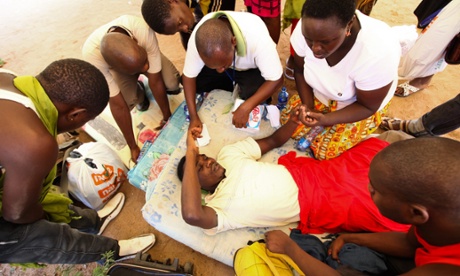
Dozens of anxious parents gathered at a mortuary in Nairobi to await word on the fate of their children who were caught up in a rampage by Somali-based al-Shabaab militants that left 147 dead.
Only 20 bodies had been delivered to the Chiromo mortuary by midday and Red Cross personnel were struggling to counsel relatives of the victims following the dawn attack on a university campus on Thursday.
Security sources told the Guardian that the vast majority of the victims were girls and women, mainly in their early 20s. The BBC quoted security forces saying up to 20 police officers and soldiers were also killed.
As Kenyans struggled to digest news of the scale of the atrocity in the impoverished north-east of the country, analysts criticised the authorities for their failure to do more to protect the students.
Garissa – the scene of the attack – is the main population centre in a sprawling, lightly policed territory near the border with Somalia. British and Australian governments had issued travel notices warning their citizens against all travel to the town only a week before the attack.
Rashid Abdi, an independent Horn of Africa analyst, told the Guardian the security forces should have done more to secure the students.
“It has been obvious for some time that al-Shabaab has been going for soft targets and this university was an obvious possible target. Al-Shabaab has consistently attacked non-Muslims who are not of Somali ethnicity in the region and it really is criminal that there were only two guards at the hostels. The intelligence failures this reveals are utterly inexcusable.”
More details continued to emerge of the casual brutality of the militants, who stormed the hostels at 5.30am, separated the Christians from the Muslims and allowed the Muslims to leave before massacring dozens of students using an assortment of grenades and machine guns.
Fred Musinai, who lost his 21-year-old daughter in the attack, told the Star newspaper that his daughter had called at 7am frantically requesting that he ask her mother to pray hard because the killers were closing in.
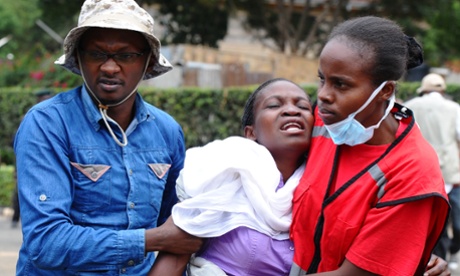
The paper reported that a few minutes later, Musinai received a call from one of the attackers who said he had just shot his daughter.
Kenya, long seen as an island of peace in a turbulent region, has been rocked by a number of attacks by al-Shabaab since 2011, when the country’s troops joined a UN-backed security force that is seeking to tackle the al-Qaida affiliate in Somalia.
African Union troops have pushed the Islamist extremists from virtually all major populated centres in the country, but the rebels have hit back with a series of terror attacks in Somalia, Kenya and Uganda, another country contributing troops.
Before Thursday’s attack, al-Shabaab’s highest profile atrocity had been the four-day siege of the Westgate mall in Nairobi in September 2013 that left 67 dead. The north of Kenya, which is primarily settled by Kenyan Somalis, has been the scene of a string of attacks including the massacre of dozens of bus passengers in November.
The Amnesty International east Africa chief, Muthoni Wanyeki, said Kenyan authorities should do more to protect its citizens.
She said: “It is the government’s responsibility to guarantee the security of all its citizens, including those in the north – and to do everything legally in their power to prevent such attacks from taking place at all.
“We urge the government of Kenya to act decisively and within the constitution and the law to ensure protection for those under or at risk of attack in Garissa and other areas of the north.”