Al-Mutanabbi Street Starts Here: artists' tributes to Baghdad booksellers – in pictures
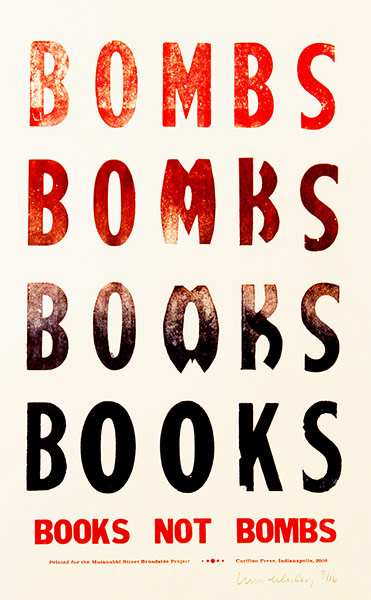
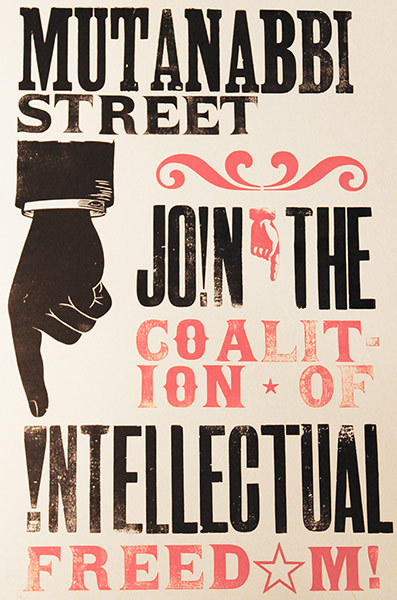
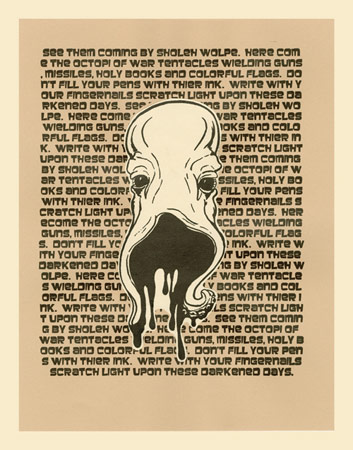
Books Not Bombs, printed by Nina Ardery, 2008. A response to the call on letterpress artists to produce broadsides in the wake of the car bombing Photograph: Mosaic Rooms | Al Mutanabbi Street CoalitionAnother broadside response: Mutanabbi Coalition, printed by Darren De La Pena in the United Kingdom, 2008Photograph: Mosaic Rooms | Al Mutanabbi Street CoalitionAnother letterpress artist's response: See Them Coming, printed by Jamie Main in Detroit, Michigan, with text by Sholeh Wolpe, 2009Photograph: Mosaic Rooms | Al Mutanabbi Street Coalition
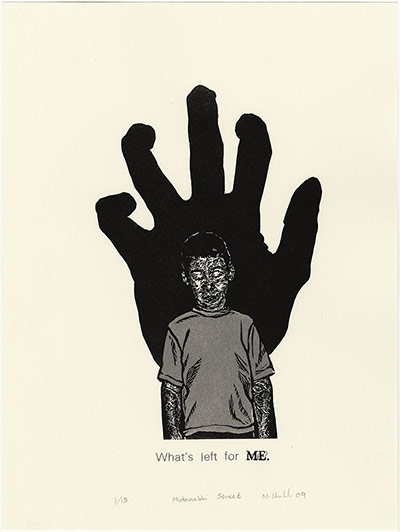
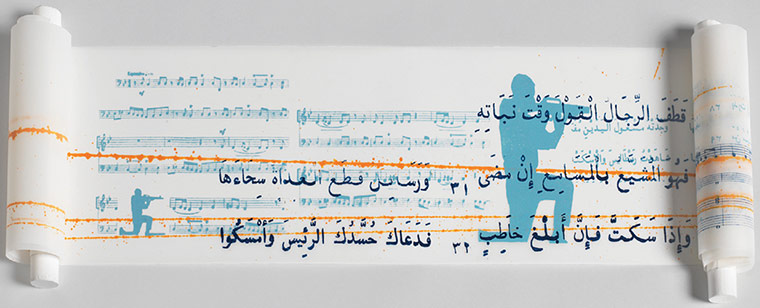
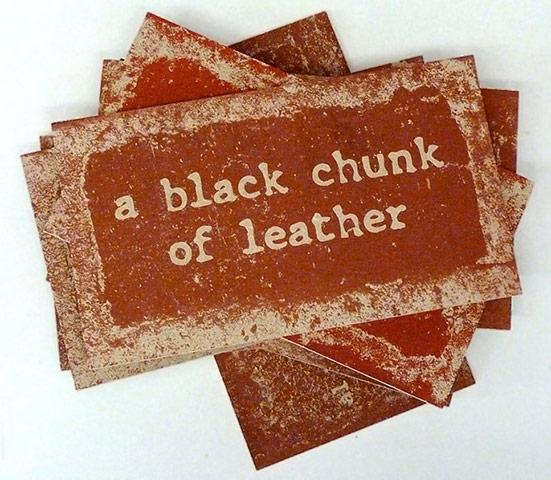
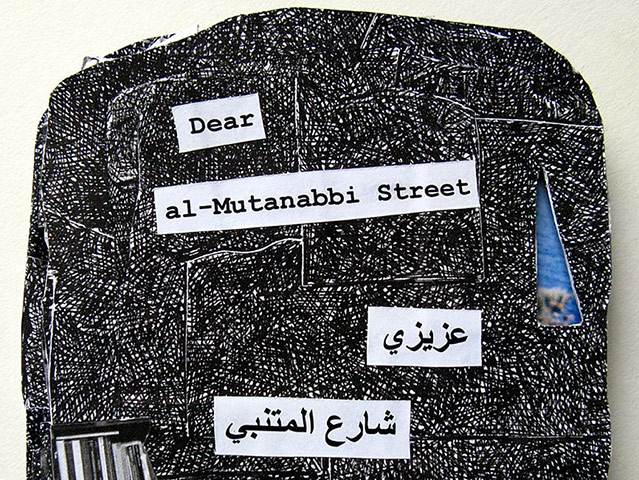
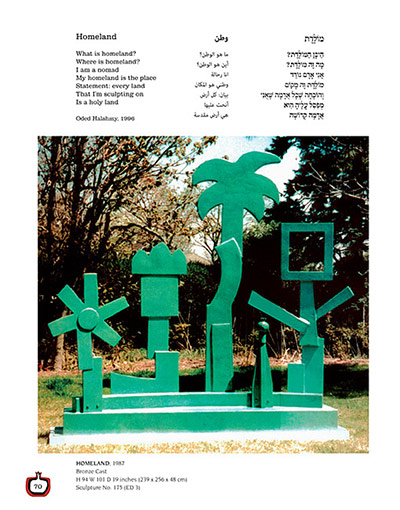
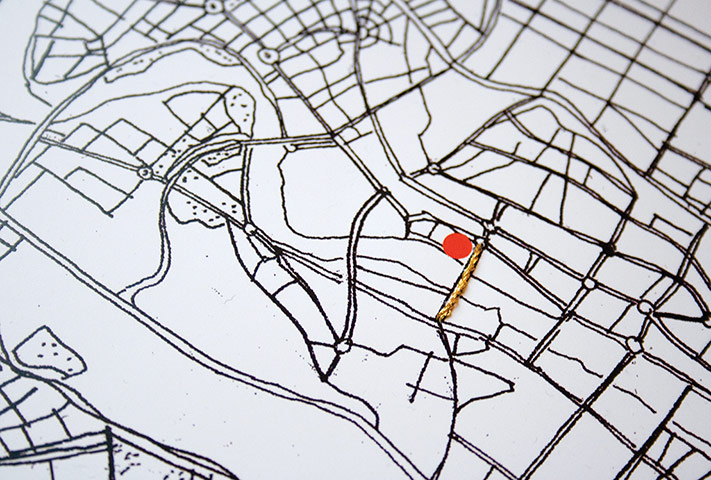
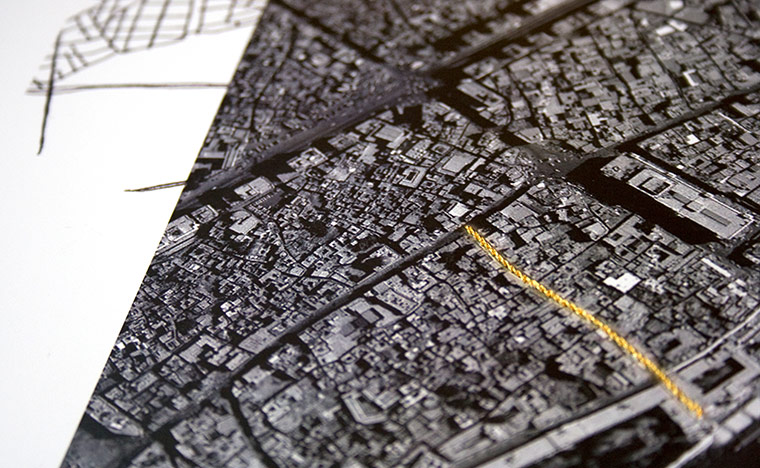
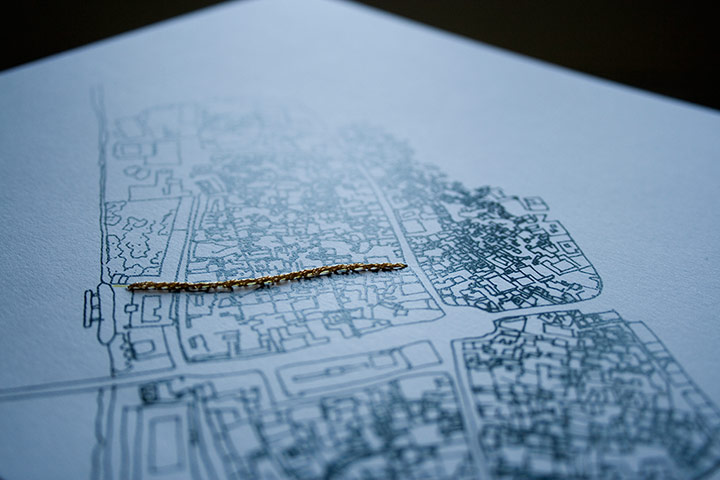
Artist Nadia Chalabi's response to the Al-Mutanabbi Street bombing: What's left for me? Printed in London, 2008Photograph: Mosaic Rooms | Al Mutanabbi Street CoalitionThis is Evidence Vol. 48, 6134, 27, 537, 1129 was produced in 2011 by Ania Gilmore & Annie Zeybekoglu in the US. One of the artist books produced to encapsulate both “‘memory and future’, exactly what was lost that day”, in an Inventory of Al-Mutanabbi Street Photograph: Mosaic Rooms | Al Mutanabbi Street CoalitionAnother artist book: Iraqi Peace Song 2011, by Laurie Alpert in the US. Alpert photographed a kneeling soldier in the Golan Heights in 2007. She used the scroll form for her project, finding that it "made more sense in this particular context" than a traditionally bound book. She included Arabic text from the poetry of Al-Mutanabbi, the poet born in 915 AD and honoured in the street's namePhotograph: Mosaic Rooms | Al Mutanabbi Street CoalitionThis is the response of Catherine Cartwright for the Inventory of Al Mutanabbi Street. A Pile of Bricks was made in 2011 in Exeter. Cartwright is talking at the Mosaic Rooms on January 22 at a panel event about this project’s significance, and the process of responding to and creating artwork for such a venture. This work was directly inspired by Julie Bruck's poem March 9, 2007 Al-Mutanabbi Street, Baghdad. Cartwright aimed to "create a book that could be handled and played with ... in a form that would reflect the impact of the bombing"Photograph: The Al Mutanabbi CoalitionDear Al-Mutanabbi Street, 2012, by Patricia Sarrafian Ward, from an Inventory of Al Mutanabbi Street. Raised in Beirut during the civil war, Ward's "own memories rose up" for the project, "illuminating the connection across time and space between myself and this event. I found myself ... re-experiencing the anguish of that time, and this became my response to the survivors of Al-Mutanabbi Street"Photograph: Al Mutanabbi Street CoalitionFrom an Inventory of Al-Mutanabbi Street: Art Home Lands by Oded Halahmy, Iraq, 2012. Halahmy – who calls Baghdad, Jerusalem and New York home – uses the three languages of his three homelands in this work: Hebrew, Arabic and English. He explains, "This project brought me back to my childhood in Baghdad. When Iraqis want to read, the first place they turn to is Al-Mutanabbi Street, a mecca for all writers, poets, novelists, students and anyone who is thirsty for knowledge" Photograph: Al Mutanabbi Street CoalitionMona Kriegler's response to the project is based on the idea of brokenness. "We can imagine the street as a scar, and the city as a wounded body … To highlight the brokenness of the street and its people and the loss of its books, every page in this book is stitched by hand with golden thread, crafting the outline of the scar that is al-Mutanabbi Street. The act of stitching does not only admit irreplaceable loss, but suggests a transition from different states of pain to an everlasting memory …"Photograph: Dafne Louzioti/Mona KrieglerKriegler collaborated with a range of different people for this work. Speaking to Iraqis, she found out about the "khayyat al-farfuri”, a man who once came to villages and towns to repair broken objects "from glasses and teapots to plates and leather goods. He did not only stitch, but also used a metal coating to give the object stability and a new form". His story is woven into her textPhotograph: Dafne Louzioti/Mona KrieglerWhile making the work Kriegler worried about how she could create her work in good conscience without first-hand knowledge: "I have never been to Iraq even though I write about it … I did an image that was a sketch of Baghdad and I stitched the pages. I realised that I stitched over the river. So it’s a nice metaphor for what do we do if a place is unfamiliar and those things happen. You stitch over the river because you don’t know"Photograph: unknown/Mona Kriegler
Sign up to read this article
Read news from 100's of titles, curated specifically for you.