Akihabara, also known as "Akiba," is a district in Tokyo known as an epicenter of computers, games and otaku culture. While tourists from all over the world flock to the town, the founding businesses -- handling electronic parts -- continue to thrive.
I visited the community to find out the secrets of how the town took form and how it nourished otaku culture.
You will be greeted, immediately, by colorful advertising panels showing anime characters or promoting neighborhood "maid cafes" as soon as you step out of JR Akihabara Station through the electric town exit.
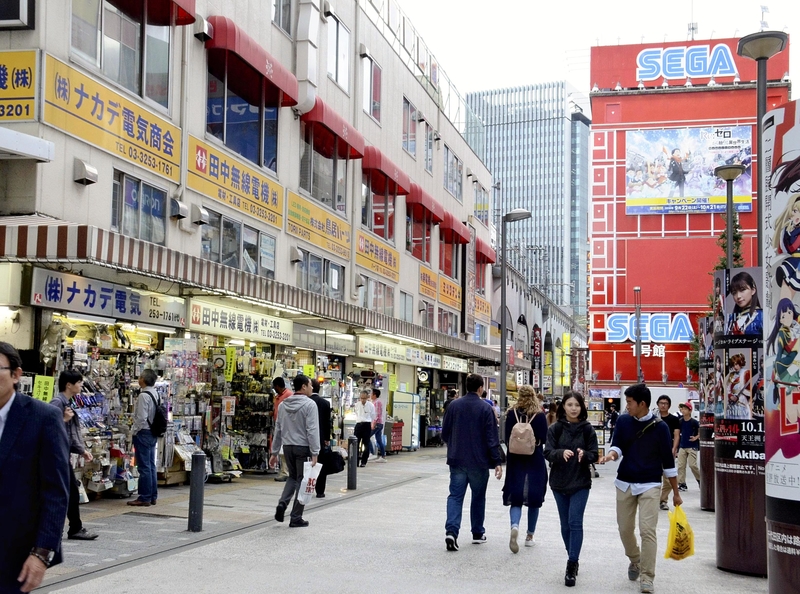
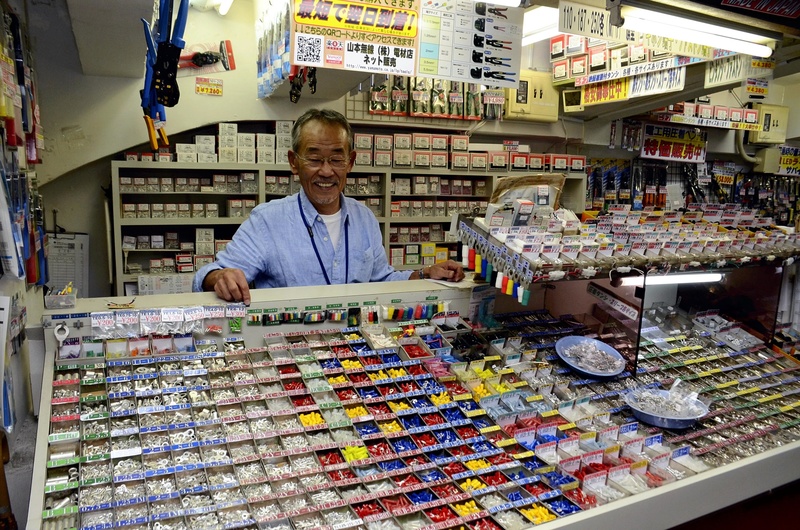
Skirting a crowd of foreign tourists gazing curiously in every direction, I entered the Akihabara Radio Center, located under the elevated railroad tracks of the JR Sobu Line. Shops offering electric and electronic products crammed the space -- I felt as if I had stepped into a scene from the past.
"There're no parts you can't get here, and that's our strength," said a vendor of Toei Transformer Co. The company, which started its business in 1958, boasts that its inventory includes 800 kinds of electric transformers alone.
At other shops, I saw stacks of condensers, connectors, switches and more.
Customers vary, too. There are gray-haired amateur radio fans and junior high and high school students who are preoccupied with microcomputers.
It was ardent students in the past who initiated the making of this special town, according to a member of the Akihabara Electrical Town Organization, which comprises electric appliance stores and others in the area.
Though Akihabara and the surrounding area were totally obliterated during the Pacific War, the place soon turned into a black market, drawing electric-product dealers to network with wholesalers who had connections in provincial regions.
Radios were the most sought-after products of the time. The shops were packed with students from a nearby engineering school of higher education (present Tokyo Denki University). They came to buy vacuum tubes and the like. And with the students assembling the radios as part-time workers, the area became even more popular; people rushed to purchase once expensive items that had become cheaper.
"The streets were jammed with people who wanted to listen to sumo tournaments broadcast on the radios, displayed at the stores in those days," recalled Minoru Kakuta, of the Manseibashi Rengo Chokai. The 89-year-old member of the local neighborhood association said that the students "just kept on assembling the devices, while things were happening around them."
Top-selling products rose and fell. After radios had their day, TV sets, washing machines and refrigerators became known as consumers' "three treasures." Later came air conditioners, video decks, word processors and personal computers.
The number of products offered in Akihabara kept growing. The town survived oil crises and the recession caused by the yen's appreciation. Akihabara always had its position in history.
"The town has always been at the forefront," said Tomio Izumi, 64, head of the nonprofit Akihabara Tourism Promotion Association. "Though it maintains its roots as the electric town, it's transforming itself dynamically."
It was around 2000, just after the end of an economic bubble based on the information technology boom, when the idea of a maid cafe was born.
Such coffee shops, where women who dress and talk like maids serve coffee, was another invention of the town. It grew out of conversations among people who played games on their handmade PCs who eventually got absorbed in products related to certain characters featured in animation and games, according to the association and other sources.
So this was how Akihabara became the hub of otaku culture. It was natural that the idol group AKB48 made its debut here in 2005.
The number of companies belonging to the local Akihabara Electrical Town Organization now stands at 45, down from a peak of more than 100.
But Kazushi Ono, head of the organization, is not discouraged.
"The town, like the businesses in it, changes along with the times. Akihabara is no longer just an electric town," he said.
The organization holds events regularly, where various businesses, such as maid cafes, restaurants and home electronic dealers, participate together to promote the area.
On Oct. 21, a virtual-reality avatar, called VTuber, was appointed the town's virtual tourism ambassador.
So, this is Akihabara. A place that takes in the latest trends; a town where young people come together.
I wonder what it will be like in its next stage.
Read more from The Japan News at https://japannews.yomiuri.co.jp/