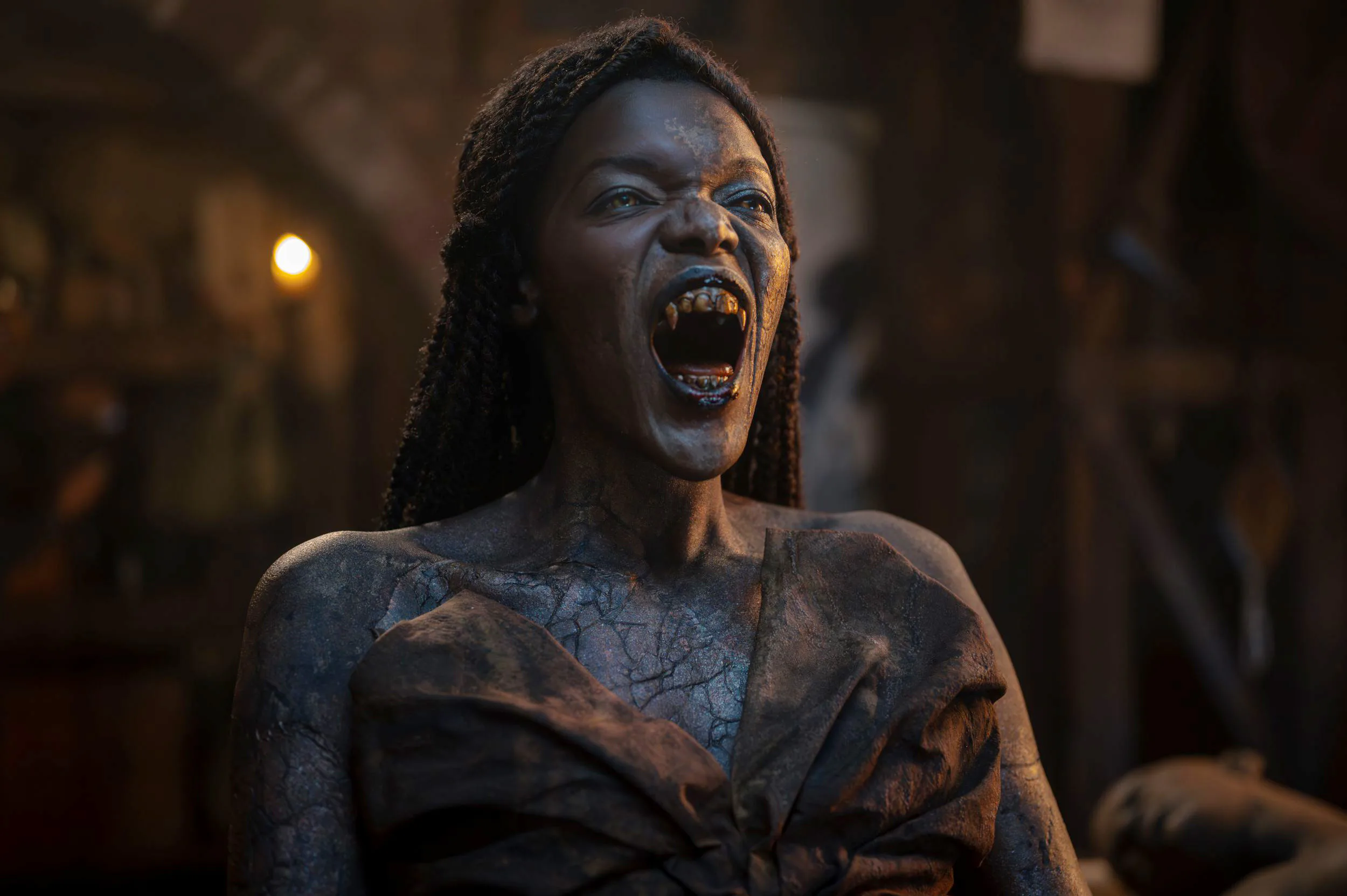
As The Vampire Lestat is only seven episodes, the series has a very limited window to lay out all the “failures” perpetrated by its titular diva (Sam Reid). Despite that time crunch, The Vampire Lestat has been taking its sweet time where it matters. Lestat’s backstory has unfolded at a patient, if erratic, clip — and ditto for the little details that eventually pitch the world into a vampiric catastrophe. After last week’s episode, however, the series seemed to finally acclimate to the mania going on in Lestat’s head. In Episode 5, we finally get to the juiciest part of his past as a vampire: his brush with Akasha (Sheila Atim), Queen of the Damned and mother of all vampires.
“I’m finally going to talk about the Queen,” Lestat’s narration teases early in this week’s episode. The story that unfolds doesn’t disappoint, either. It’s been over 20 years since Akasha took on a new life outside of Anne Rice’s Immortal novels: Aaliyah starred as the OG vampire in Queen of the Damned, a mostly bad movie that nonetheless made Akasha an icon. But it’s not hyperbole to say that Atim sinks her teeth into the role with raw, committed finesse, delivering a new version of Akasha we can’t wait to see more of.
Spoilers ahead for The Vampire Lestat.
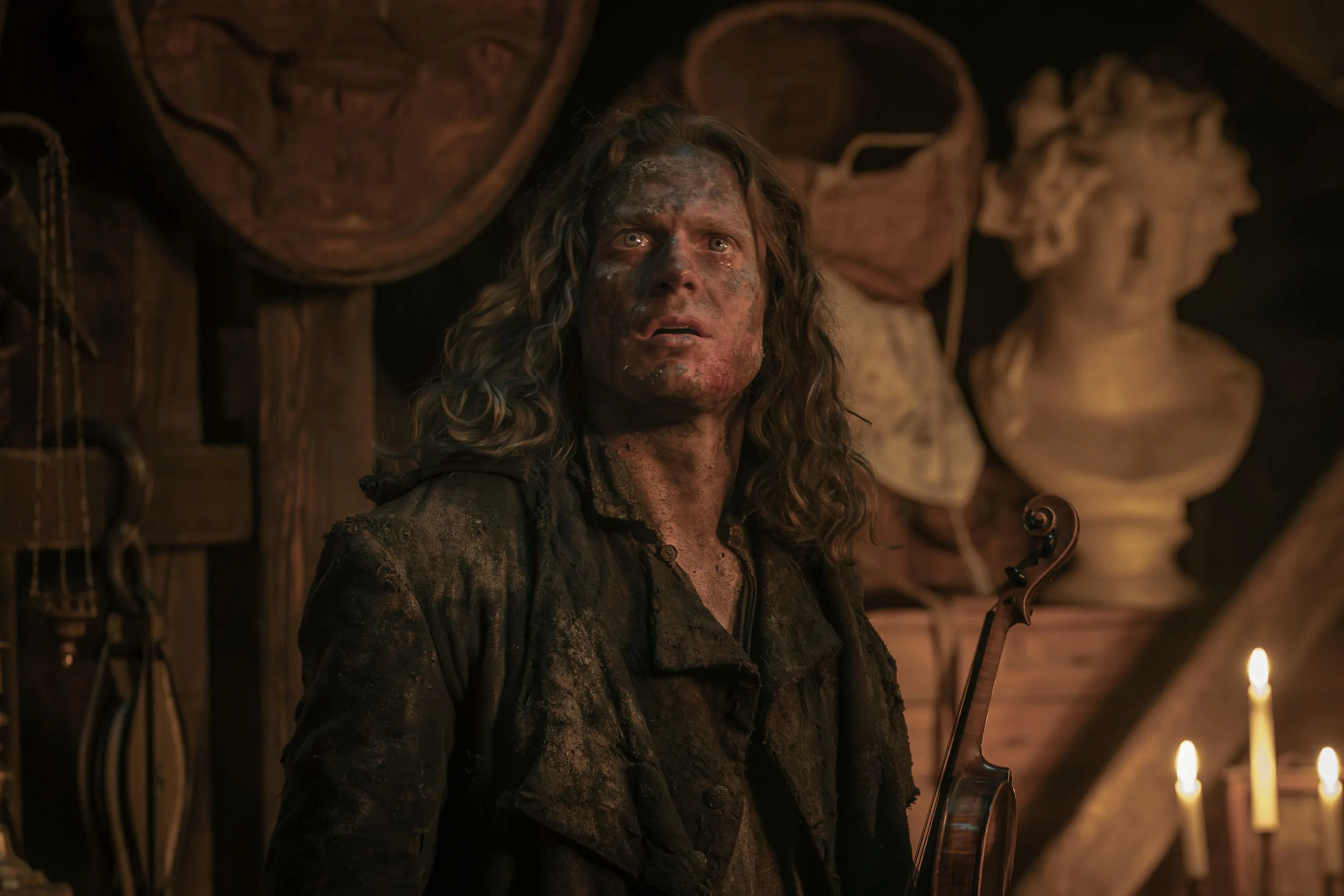
While Lestat works on his new album in the present day, he finds himself looking back on the darker chapters of his life, namely the origins of his “self-taught musicianship.” After being abandoned by his mother in the 18th century, the Vampire Gabriella (Jennifer Ehle), Lestat finds himself in the domain of Marius (Christopher Heyerdahl). Ironically, they already have something of a connection: Marius is the maker of Lestat’s former flame, the Vampire Armand (Assad Zaman). That shared thread isn’t brought up in this episode, however, and for good reason. With Marius focused on keeping the desiccated body of Akasha mostly alive, he’s clearly got a lot on his plate. So much so that he charges Lestat to be her keeper while he takes a much-needed break.
The Vampire Lestat reunites Atim with Reid: the duo starred in Girl from the North Country, a jukebox musical based around the catalog of Bob Dylan, in 2017. “We played adoptive siblings,” Atim tells Inverse, “so it’s a different dynamic here.”
Still, the chance to play in a different sandbox alongside a former co-star was one of many reasons Atim jumped at the chance to play Akasha. “I am a fan of Aaliyah, who had stepped into this role before me,” the actress adds. And this version of the character was a unique ticking of boxes in other ways: the casting breakdown described Akasha as “The original Vampire Queen from Ancient Egypt or Samaria or somewhere,” Atim says. “I was like, ‘Yeah, cool. I’m East African. I can do that.’ And then they were like, ‘She’s really angry,’” Atim says with a laugh. “I was like, ‘I can also do that.’”
Akasha is “the answer”
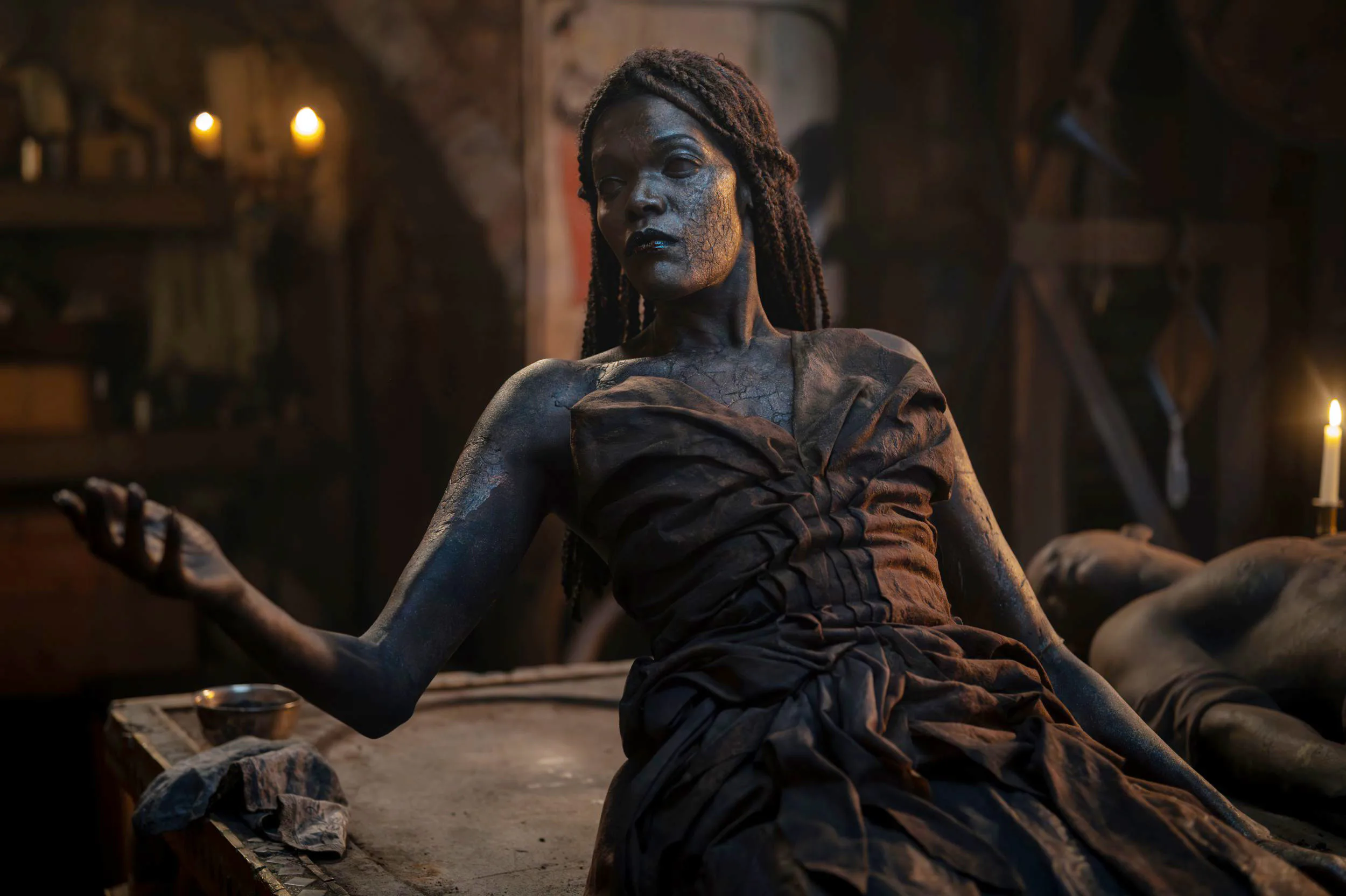
Akasha doesn’t seem to be feeling much of anything when Lestat takes on his duties, aside from a quaint curiosity about small advancements in the world. Her body is too stiff to move — without enough blood to make her strong, she resembles a bronze statue drying out from within — so she communicates telepathically, and mostly just echoes new words that Lestat teaches her. Before long, though, she goes from adorably repeating the word “scoop” to luring Lestat close enough to exchange blood (against his will, again!) and regain some semblance of her former strength.
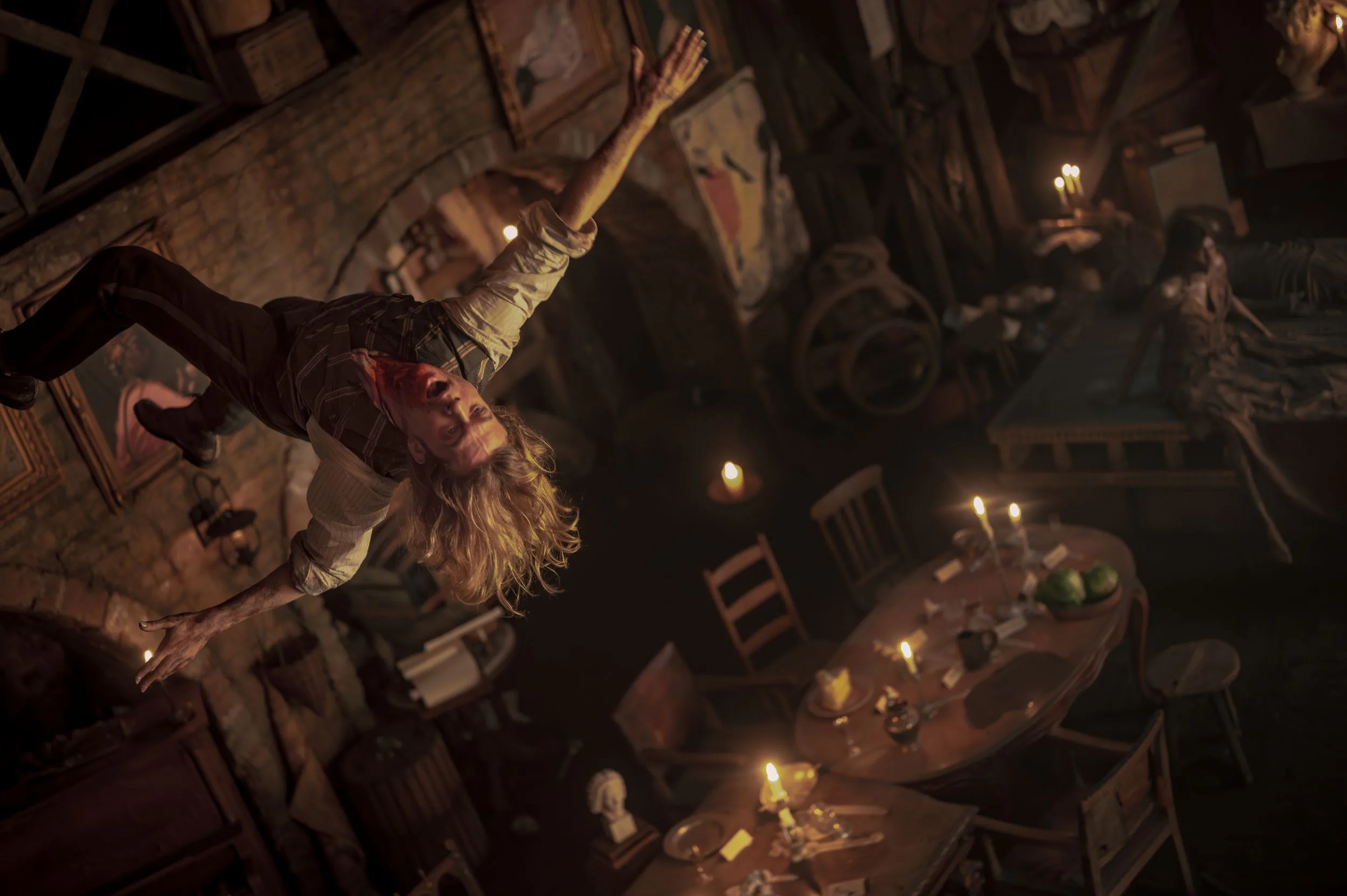
When Marius returns to his lair, he finds Lestat spinning out of control after inheriting Akasha’s gift of flight, and Akasha herself sitting upright. It’s here that her rage and confusion fully manifest: in one breathless monologue, she details the past few centuries of stagnation in jagged bits and pieces. “Why does he tell her what God has said?” she asks, likely referring to Marius’ treatment. “Why must she be kept? And why in this place must she be kept? ...Why is her tongue cut out?”
Akasha reveals that her demise has been “prolonged” by Marius and his helpers. Rather than wishing for it to stop, however, the Queen seems ready to reclaim her dark throne. She reveals that she was “the girl” in the strange story she’s been telling — but she is also “the god” that they’ve all forgotten. She is “the night,” and she is “the answer,” the latter presenting a dark challenge to anyone hoping to become the next vampire sovereign.
“I was living for it,” Atim says of Akasha’s whopping statement of intent. “It was four pages long and had no full stops... Hannah [Moscovitch, executive producer for The Vampire Lestat] wrote something so brilliant. It’s all in there, I think. All the clues and all the nuance and all the depth and all the scope and breadth of what it’s trying to talk about is in there.”
That said, it might take a few watches to fully dissect Akasha’s motives. It doesn’t help that Marius finds a way to subdue her after Lestat’s transgression — otherwise, we probably would have seen the Queen make an appearance in present-day scenes. But thanks to some breadcrumbs from Lestat, which reveal that Akasha will inflict plenty of “damage” in the future, we know she does eventually return — in fact, she’s awoken by Lestat’s new music. His relationship with music more or less began with Akasha, and that will all come full circle when the Queen resurfaces in present day.
Akasha won’t take kindly to the Great Conversion rising in the wake of Lestat’s new album. The Mother of All Vampires will find herself at the center of the vampire apocalypse one way or another, and with the endgame for this season in sight, we may see the carnage unfold very soon.