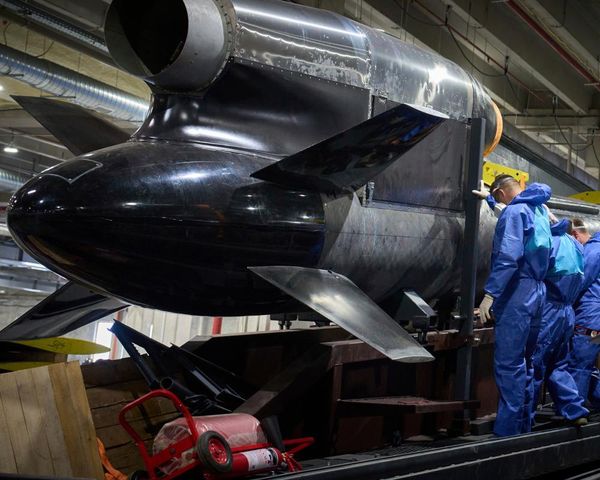
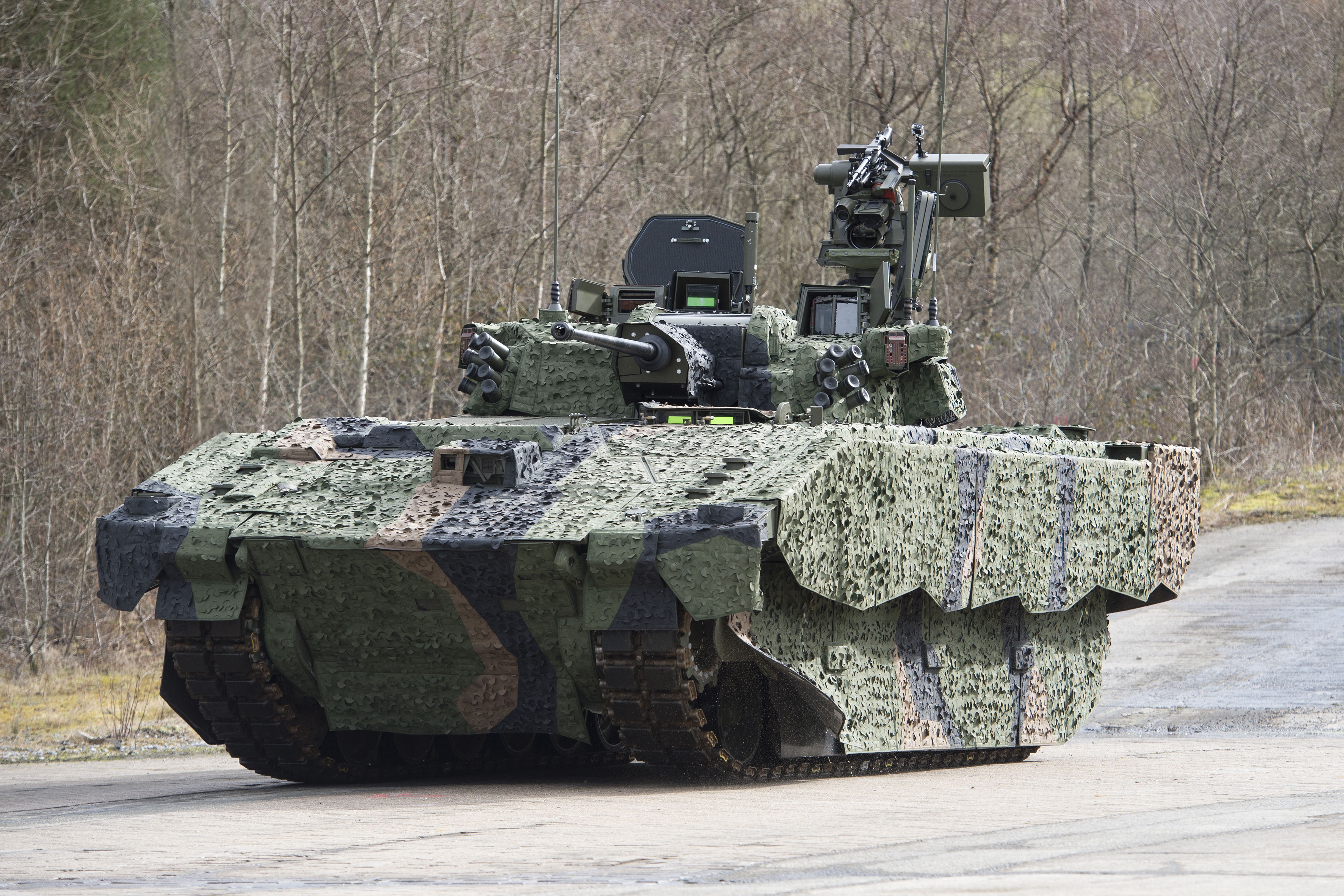
The long-delayed Ajax armoured vehicle programme has “left its troubles behind”, a minister has promised.
That is despite its £6.3bn price tag for 589 vehicles – a cost of more than £10m each.
The Ministry of Defence project, a source of strong criticism, was initially intended for service in 2017.
However, it suffered serious setbacks, including noise and vibration issues that injured soldiers during testing.
Ajax has now declared Initial Operating Capability (IOC), a key milestone that means a squadron can deploy on operations.
Luke Pollard, minister for defence readiness and industry, said the project had “overcome” its difficulties.
Speaking in Merthyr Tydfil in Wales on Wednesday, he said: “Ajax has overcome significant challenges, but importantly, we can say it has left its troubles behind.
“Ajax has proved itself in the field to be the most advanced medium-weight armoured fighting vehicle on the planet, and we have more than a full squadron ready to go, ready to fight, ready to win, with more in the pipeline.
“Our Ajax fleet has a key role as we move our nation to war-fighting readiness… We now live in a new era of threat, we live in a more dangerous world, and to respond to that, we need to renew our armed forces, retiring old equipment, and investing in new technologies.”
The six variants in the Ajax project, which are being developed by General Dynamics in the Welsh town, are the first new armoured fighting vehicles to enter service with the British army for nearly 30 years.
More than 165 of the vehicles have now been delivered, but full operating capability (FOC) may not be reached for another four years.
Ajax replaces CVR(T) vehicles, which first entered service in 1971, and the new fleet was put through its paces to meet IOC by the Household Cavalry Regiment, based in Bulford, Wiltshire.
Mr Pollard said: “It’s a really important milestone today. This is a programme that did have significant problems, it was right that under the last government the trials were paused so the lessons could be learned around the vibration and noise issues.
“Those issues are firmly in the past. We would not be declaring IOC if it were not safe, we would not be putting it in the hands of our frontline forces if it were not safe, and I’ve been reassured from the top of the army down to the folks that work on the platform that it is safe.
“There are lots of lessons that we can learn from this.”
“We want to see huge improvements in the value for money for defence procurement, we want to see speeding up of those procurements, and we want to see more of an increased defence budget being directed at companies in Britain,” he added.
What I told MPs about the government’s catastrophic Afghan data leak
Duke of Edinburgh praises pupils who braved expedition during Storm Amy
Full list of percentage of adults who are smokers in UK, by local area
Selfridges and Disney collaborate for store’s Christmas window displays
Interest rates live: Rate cut decision ‘divides’ Bank of England before Budget
Record number of referrals to counter-terror programme Prevent, figures show