The Community and Public Sector Union has announced a dramatic escalation of strikes at Border Force in a move which could force the three-year industrial dispute to arbitration.
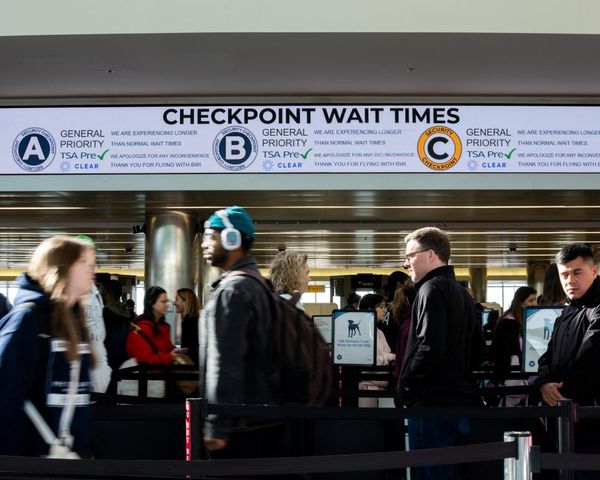
On Wednesday the union notified the immigration department of extensive rolling stoppages – including at international airports – beginning on 26 September until 2 October, with further action planned as needed.
CPSU members will be able to take 30-minute strikes all day, every day, with the union planning “multiple short strikes to cause significant disruption and delays”, it said in a statement.
CPSU national secretary Nadine Flood said: “This will be strike action on a major scale, an unprecedented escalation to make the government finally do something to end this 1,000-day dispute.”
Flood warned if the government asks the Fair Work Commission (FWC) to suspend strikes for the second time this year, the union will ask the commission to terminate the dispute and arbitrate the outcome.
Termination of industrial action would rely on the same Fair Work Act provisions used in the Qantas dispute which allows the umpire to intervene when there is risk of harm to the economy.
Arbitration could see the union win conditions above the government’s restrictive bargaining policy. The policy restricts pay rises to 2% and mandates or encourages loss of other conditions as trade-offs for pay rises.
In its statement, the union said 81% of staff at the immigration department had voted down the last offer, which proposed 1% a year pay rises and loss of other conditions.
Of the more than 128,000 public sector workers whose deals were up for renegotiation, the union has said agencies covering 74,000 workers have rejected their offers this year and have not received a pay rise in three years.
The union has taken industrial action to force renegotiation of the bargaining policy. But its wings were clipped in April when FWC suspended industrial action at the Australian Border Force after finding “criminal or terrorist opportunistic behaviours” may occur during strikes.
Flood said in the face of the escalation “the government has a clear choice”.
“It can sit down with us, drop the cuts and try to resolve the dispute in good faith, or it can exercise its rights through the FWC.
“If the government tries again to have our industrial action suspended by the FWC, we will argue it’s time to terminate this bargaining charade and have the independent umpire arbitrate an outcome.”
Flood said if FWC arbitrated the dispute it would find a “sensible solution”.
“This is and has never been a pay dispute ... it’s about the loss of rights and conditions for commonwealth workers, and for immigration and border force workers it’s actually about cuts to pay.
“If the government wants to go to FWC and advocate cuts to pay and rights, good luck to them, that’s why they don’t want this dispute there, we suspect.”
Flood said the strike would not compromise national security but would be “significant enough that the government will need to act”.
The minister assisting the prime minister for the public service, Michaelia Cash, who sets the bargaining policy, told Guardian Australia the CPSU “remains more interested in organising and promoting industrial action that disrupts and inconveniences Australian travellers than ensuring their members receive a pay rise”.
“The only party who benefits from protracted industrial action is the public sector union,” she said.
“The CPSU is desperately trying to remain relevant as an increasing number of agreements are successfully voted up across the public service.
“Since the re-election of the Turnbull government in July, seven agreements have gone to ballot and seven agreements have been approved by its workforce.”