FORT LAUDERDALE, Fla. _ Accused airport shooter Esteban Santiago initially blamed his actions on government mind control but later told FBI agents he had been "on the dark web" communicating in "jihadi chat rooms," with Islamic State terrorists or sympathizers, authorities said in court Tuesday.
During a detention hearing, federal prosecutors said that Santiago, 26, practiced firing his weapon at a gun range in Alaska in the months prior to the Jan. 6 attack at Fort Lauderdale-Hollywood International Airport.
The semi-automatic handgun Santiago used in the attack was the same weapon that was returned to him by the Anchorage police department in December, agents testified.
The gun was confiscated by local police when Santiago was hospitalized for six days for mental health problems in November after he went to the FBI office in Anchorage, Alaska, and told agents his mind was being controlled by the government and he was being pushed to watch terrorist propaganda, prosecutors said.
They said Santiago was released from psychiatric care in November when doctors believed he was "stable." Agents said he was not prescribed any psychiatric drugs, just anti-anxiety medication and melatonin, an herbal supplement people use to help them sleep.
Santiago, who has not yet been formally charged, is facing allegations he fatally shot five people and injured six others on Jan. 6 at the Terminal 2 baggage claim area of the airport. If convicted of the most serious allegations, he could face the death penalty or life in federal prison.
U.S. Magistrate Judge Lurana Snow ruled that Santiago will remain jailed while the case is pending.
Santiago is due back in court Jan. 30. He is on suicide watch, in solitary confinement, at the Broward County main jail.
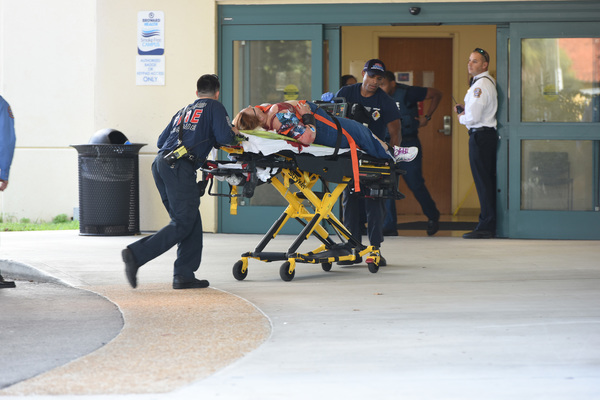
After emptying two magazines of ammunition and "methodically" shooting people by aiming at their heads, Santiago dropped his gun, lay on the ground and made no attempt to escape before he was arrested by Broward sheriff's deputies, prosecutor Ricardo Del Toro said in court.
"During the interview, the defendant admitted that he planned the attack," Del Toro said.
"At various points ... he said he carried out the attack because of government mind control. But he later said he did so because of ISIL ... after participating in jihadi chat rooms," Del Toro told the judge, using an acronym for the Islamic State.
Santiago was first interviewed by FBI agents and sheriff's detectives in a law enforcement office in the airport in the hours after the rampage, prosecutors said. Later that night, he was brought to FBI headquarters in Miramar and questioned more.
Investigators said he spoke with them for about six hours. The first few hours of his "confession" were audio recorded and all but about 10 minutes of his interview at the FBI office was recorded on video, they said.
If prosecutors formally decide to seek the death penalty for Santiago, that would also slow down the case, experts said. U.S. Attorney Wifredo Ferrer and his advisers would have to make an initial decision, which would then be reviewed by a U.S. Department of Justice panel, before a final decision is made by the U.S. attorney general.
If Santiago wants to plead guilty, and is found legally competent to do so, that could take the death penalty off the table, lawyers said, though prosecutors could still insist on going to trial.