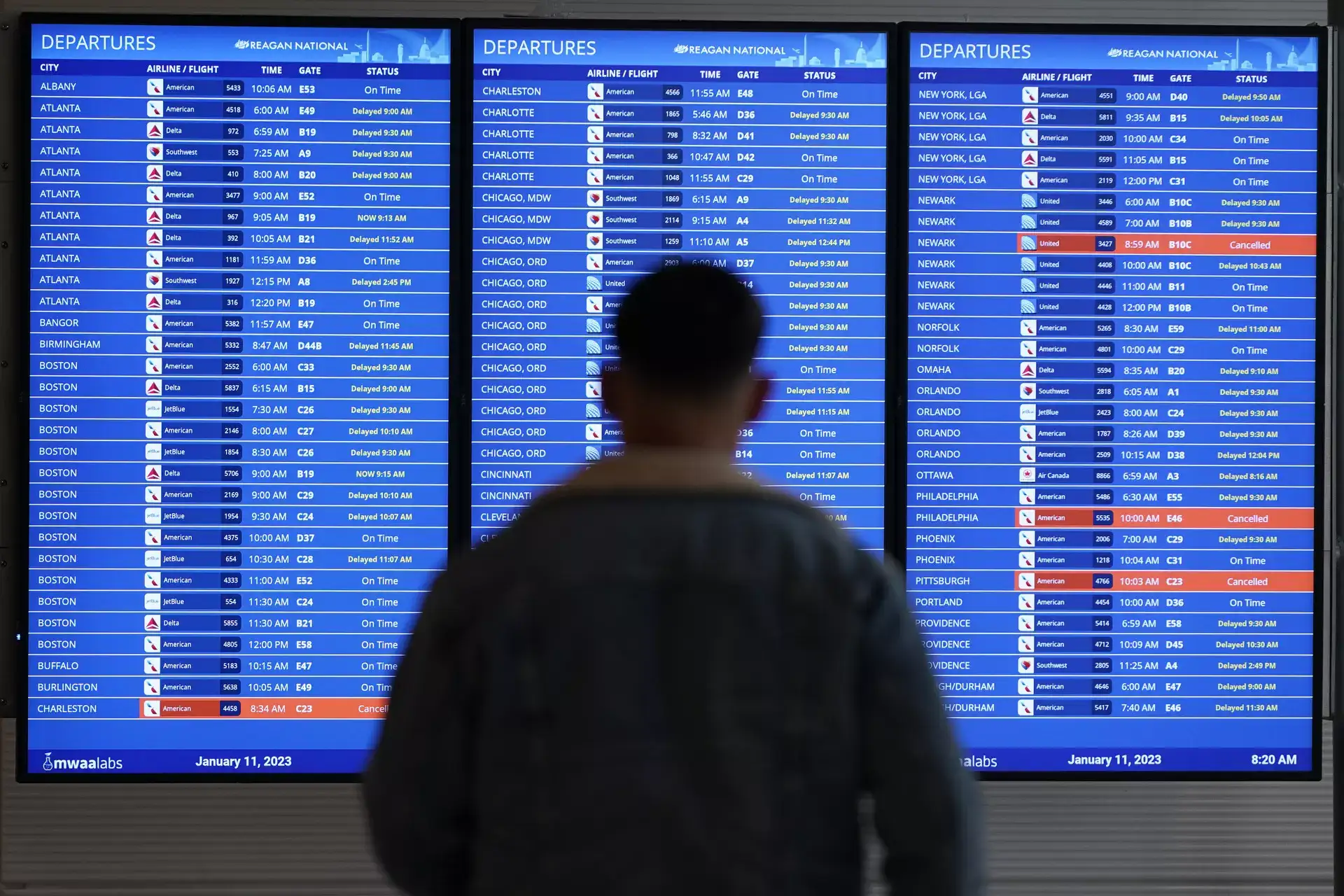
Airlines across the world are cutting flights and increasing ticket prices as a sharp rise in jet fuel costs and supply concerns disrupt travel plans. Around 2 million seats have been removed from May schedules in recent weeks, as carriers respond to uncertainty triggered by the Iran war, according to data from Cirium cited by the Financial Times.
The conflict has pushed jet fuel prices to nearly double since late February and disrupted key routes through the Gulf, which earlier connected a large share of Europe-Asia travel. Airlines have cancelled thousands of flights and shifted to smaller or more fuel-efficient aircraft to conserve fuel and manage rising costs.
The total number of available airline seats for May dropped from 132 million to 130 million between mid and late April, reflecting adjustments across global networks. Gulf carriers such as Emirates, Etihad and Qatar Airways have revised schedules after earlier halting operations, while international airlines including British Airways, United, Air China and Japan’s ANA have also reshuffled capacity.
“No European airline is going to send a plane off to Asia to mop up demand from the Gulf, and find it’s stuck there without fuel to go back,” aviation analyst John Strickland told the FT. “Jet fuel pricing has always been intermittent, but I don’t think in my time there has ever been the question of shortages.”
Also Read| Dubai Airport sees sharp decline in passenger traffic due to Iran-Israel war
Air France said it was asked not to add extra services to Singapore or Tokyo’s Haneda airport, as major Asian hubs try to control fuel consumption. The region is facing the most pressure due to its dependence on supplies passing through the Strait of Hormuz, where movement remains limited due to security risks.
“The disruption of these flows has created significant imbalances in global travel supply and demand,” said Ben Smith, chief executive of Air France-KLM.
Airlines are also warning about financial pressure. Delta Air Lines has reduced 3.5 per cent of its network in the second quarter to save fuel. EasyJet and Virgin Atlantic have flagged concerns about profitability, while Lufthansa has cancelled 20,000 flights between May and October due to unviable fuel costs.
In Asia, airlines are preparing for higher expenses. ANA expects to spend an additional £650 million on fuel by next March, while Japan Airlines said its profits could fall by a fifth. Vietnam has already introduced limited fuel rationing.
“Price and demand” for fuel has become “much more significant” since the conflict began, Bum-ho Kim, acting chief executive of Seoul’s Incheon airport, told the FT. “We are trying to seek any solutions for passengers,” he said.
Airlines are adjusting aircraft deployment based on demand and fuel efficiency. Etihad has switched from an Airbus A350 to a smaller Boeing 787 on its Abu Dhabi–Hong Kong route. Emirates has reduced aircraft on some routes while maintaining select high-capacity services.
At the same time, some routes are seeing larger aircraft to meet demand for direct travel between Europe and Asia. Air France is using a bigger Boeing 777 on its Mumbai route, while Air China has deployed larger aircraft on its London to Beijing service.
The changes indicate continued disruption for passengers, with fewer flight options and higher fares expected in the coming months.