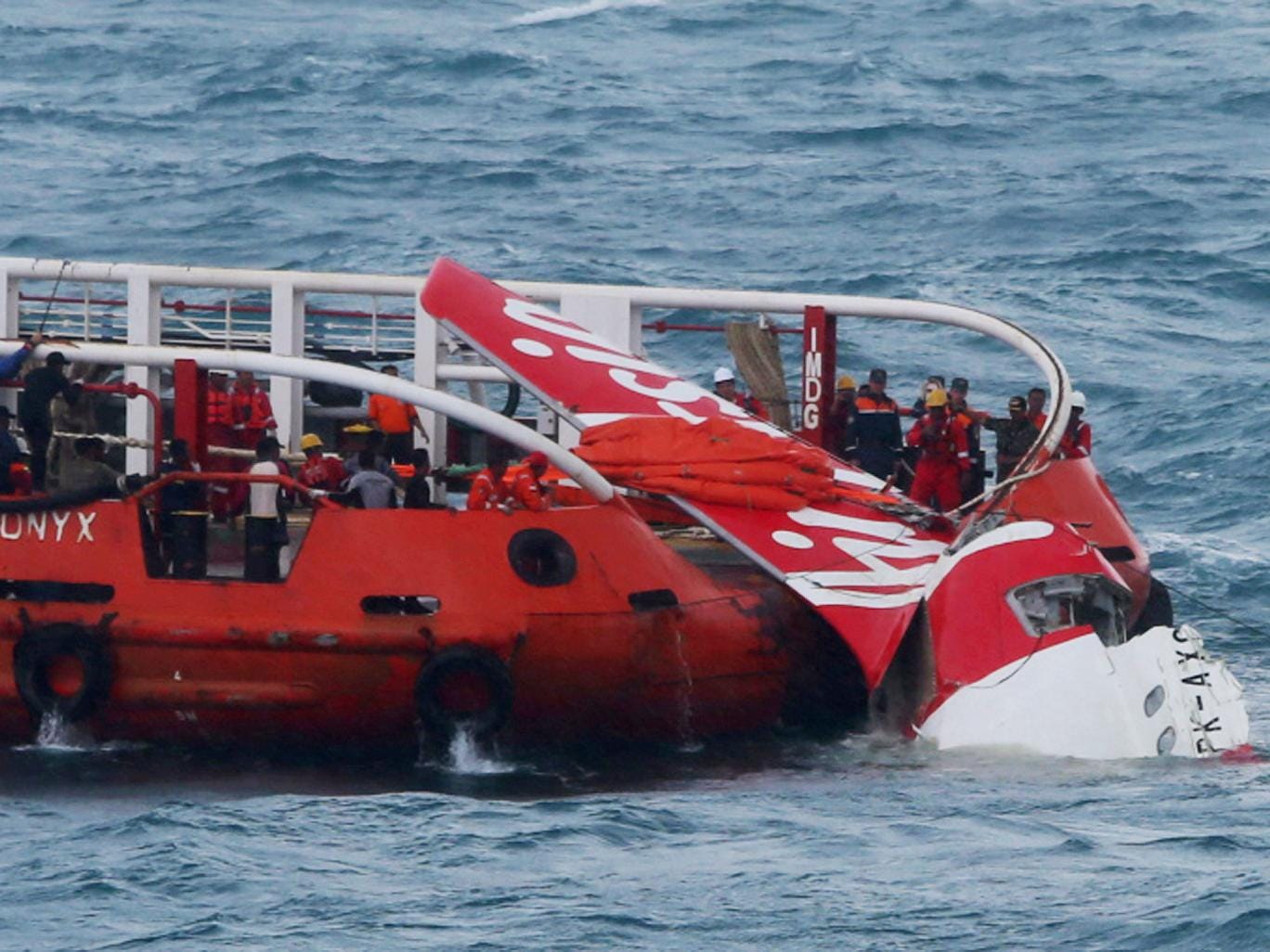
The AirAsia passenger jet that crashed into the Java sea in December last year killing 162 people was caused by a faulty component and the crew’s subsequent attempts to fix it, Indonesian investigators have said.
The crew’s action in response to problems with the system controlling the aircraft’s rudder has been focused on.
The soldering on the rudder control system was cracked and the system sent four warning alerts to the pilots, which they responded to by resetting the system in an attempt to fix it.
This action caused the aircraft’s autopilot to disengage, causing the loss of control of the plane, the BBC reports.
“Subsequent flight crew action resulted in inability to control the aircraft … causing the aircraft to depart from the normal flight envelope and enter a prolonged stall condition that was beyond the capability of the flight crew to recover,” the national transport safety committee said in a statement.
Aircraft maintenance records show the faulty component had malfunctioned four times during the flight and 23 times in the 12 months prior to the crash.
AirAsia flight QZ8501 disappeared from radar during bad weather on 28 December last year, less than halfway into a two-hour flight from Surabaya, Indonesia, to Singapore.
The report into the crash, which has been the result of a year-long investigation, said bad weather conditions did not play a role in the tragedy.
Earlier this year it was reported that investigators found the captain of the flight had taken the “very unusual” step of disabling the Flight Augmentation Computer, shortly after this is thought to have happened the plane went into a sharp climb that is said to have caused the plane to stall.
Investigators had previously confirmed co-pilot Remi Plesel, 46, the second-in-command, was in control of the flight when it crashed. The plane is known to have risen sharply upwards to 37,400ft in the space of 30 seconds, before dropping back to 32,000ft in a three-minute stretch.
Additional reporting by agencies