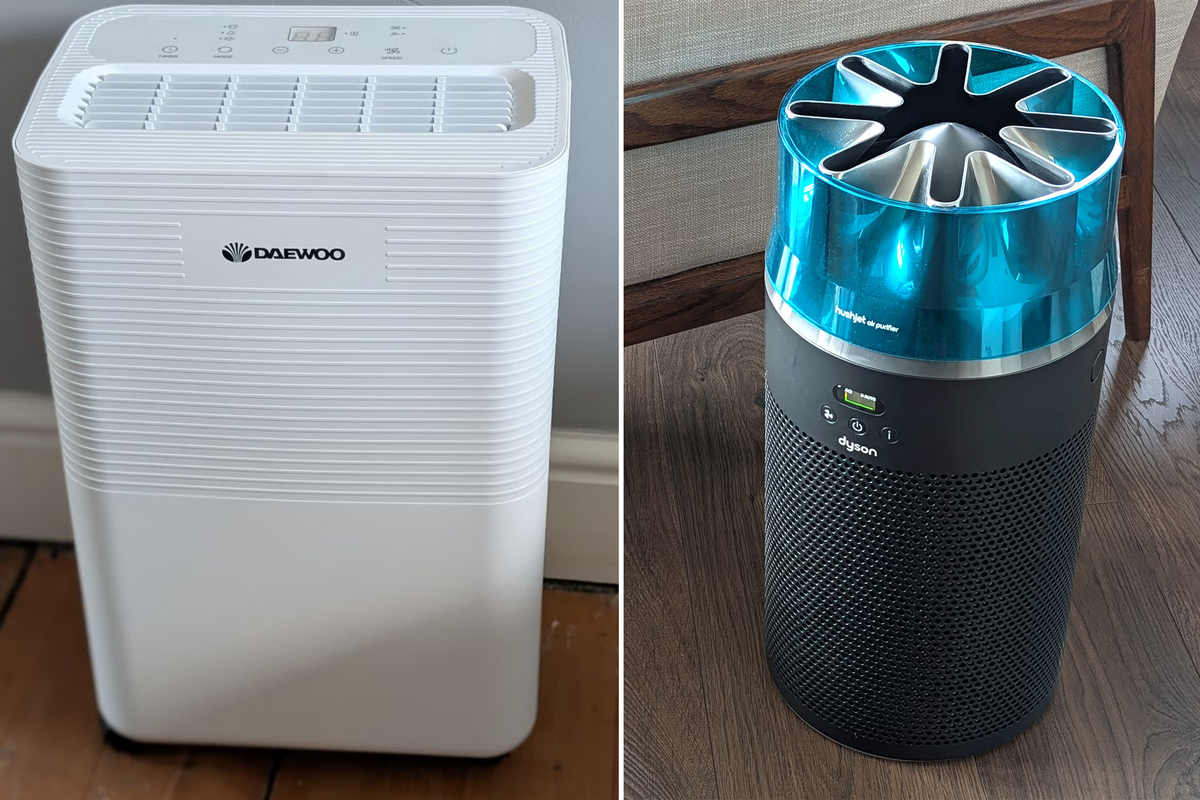
If you’ve ever noticed condensation running down your bedroom windows, a faint musty smell in a cupboard, or a sudden sneezing fit the moment you start dusting, you might have wondered: “Do I need an air purifier or a dehumidifier?”.
You’ve come to the right place to find out. I’ve been reviewing air purifiers and dehumidifiers for the best part of a decade, and during that time, I’ve tested scores of both in my damp-prone, pet-filled period home. I’ve counted more airborne particles than you can sneeze at and emptied enough dehumidifier tanks to fill an Olympic-sized swimming pool, so I have a pretty good idea which appliance actually solves which problem. Don’t just take my word for it, though; I’ve also spoken to air treatment experts and industry specialists to get their take on what these machines actually do and, just as importantly, what they don’t.
One of the biggest misunderstandings most of us have is that air purifiers and dehumidifiers do the same job. In reality, they solve completely different problems. As Katy Lillywhite, air treatment expert at AO, explains: “The main role of an air purifier is to remove airborne allergens, such as pollen, pet dander and mould spores.
“In contrast, a dehumidifier is primarily designed to reduce moisture levels, helping to prevent allergen growth,” she adds.
Knowing which one you actually need can save you from buying the wrong appliance entirely. If you suffer from damp or mould, or if you have allergies, it’s especially important to get it just right. Here’s how.
Read more: Best air purifiers to free your home from dust and allergens, expert tried and tested
Air purifier vs dehumidifier: What do they actually do?
They might look similar, but what’s happening inside an air purifier vs a dehumidifier couldn’t be more different.
As Dr Jaspreet Dhau, VP of research and development at air purifier brand Molekule, explains, “Air purifiers are designed to remove airborne pollutants such as dust, pollen, pet dander, smoke particles and other microscopic irritants, helping to create a cleaner breathing environment.”
In simple terms, an air purifier pulls air through filters that trap these particles, improving the overall air quality in your home.
Many of the best air purifiers use ultra-efficient HEPA filters, considered the gold standard in air purification, capturing up to 99.97% of airborne particles as small as 0.3 microns. That’s why air purifiers tend to appeal to people dealing with allergies, asthma or urban pollution, because they can remove allergens that normal dusting and cleaning can’t.
A dehumidifier, on the other hand, doesn’t filter particles at all. Compared to a purifier, its job is actually pretty simple: to remove excess moisture from the air by pulling humid air across cold coils, condensing the moisture into water and collecting it in a tank. Lower humidity levels make a room feel fresher and drier, reduce mould and damp, and crucially, as Lillywhite points out, “can also limit dust mites.”
Read more: Experts reveal how much it actually costs to run a dehumidifier
Which device is better for mould and damp?
This is where people often get confused. While a purifier might capture airborne mould spores (if it has a true HEPA filter), it doesn’t remove the humidity that allows mould to grow in the first place. So if your walls or windows are damp, the underlying cause is almost always going to be excess moisture in the air – something only a dehumidifier can tackle. Pulling moisture out of the air and lowering humidity levels to around 40 to 50 per cent can help to stop mould in its tracks.

That’s why dehumidifiers have become increasingly popular in the UK, where older housing stock and colder winters can make condensation and mould a persistent issue. During the winter and early spring in our house, we generally have two dehumidifiers running at any one time, just to keep humidity at a healthy level and keep laundry dry indoors (another benefit of the humble dehumidifier). Mould tends to collect in the corners of rooms where two external walls meet, and running a dehumidifier helps reduce this significantly during the damper months.
And while many purifiers also come with activated carbon filters, which can reduce that musty, damp smell associated with mould, those spores will simply settle and grow again if you don’t tackle that pesky humidity.
The bottom line? If you want to tackle mould and damp in your home, it’s a dehumidifier you need, not an air purifier.
Read more: Best dehumidifiers to tackle damp at home, tested by an expert
Which is more likely to help people with allergies?
If you have allergies, the balance tips firmly in favour of air purifiers. The latest research suggests that air purifiers, particularly HEPA models, can reduce indoor allergens and airborne particles. However, they tend to be more effective at tackling pet-related allergens than dust mites, which is something to be aware of if that’s your particular allergy.
Simone Miles, chief executive of Allergy UK, highlights the wider impact of poor indoor air quality. “For many people living with an indoor allergy, their home isn’t a sanctuary. Instead, it can be a hazard to their health. Indoor allergies can take a heavy toll on a person’s quality of life, contributing to sleep disturbances, mental health struggles, missing work or school and a cycle of ongoing expenses.
“Having access to cleaner air can make a world of difference,” she adds. “An indoor allergy can carry a risk of hospitalisation, and long-term exposure to poor quality air can result in irreversible lung damage.”
In bedrooms, especially, where we all spend long stretches breathing the same air overnight, a purifier can make a noticeable difference to comfort. Air purifiers can help to capture harmful airborne particles and ease those pesky allergy symptoms like sneezing, a blocked nose, watery eyes, and coughing.
Read more: This device could help to ease your hay fever symptoms
Which is best for overall health?
Both appliances can improve the air in your home, but they do it in very different ways.
An air purifier is all about what you’re breathing in. If you’ve ever found yourself sneezing while dusting, waking up with a blocked nose, or dealing with pet hair floating around no matter how often you vacuum, that’s where a purifier comes in. It pulls those tiny airborne irritants out of the air, which can make a noticeable difference if you have allergies or asthma.
A dehumidifier, on the other hand, tackles how your home feels. If your windows are streaming with condensation in the morning, your clothes take forever to dry on an airer, or there’s a slightly musty smell in certain rooms, excess moisture is usually the culprit. By drying out the air, a dehumidifier makes it much harder for mould and mildew to take hold.
Which is cheapest to run?
As with all electrical appliances, running costs can vary depending on the model and whether it has an eco mode or other energy-saving features. Having said that, there are a few key differences worth knowing about.
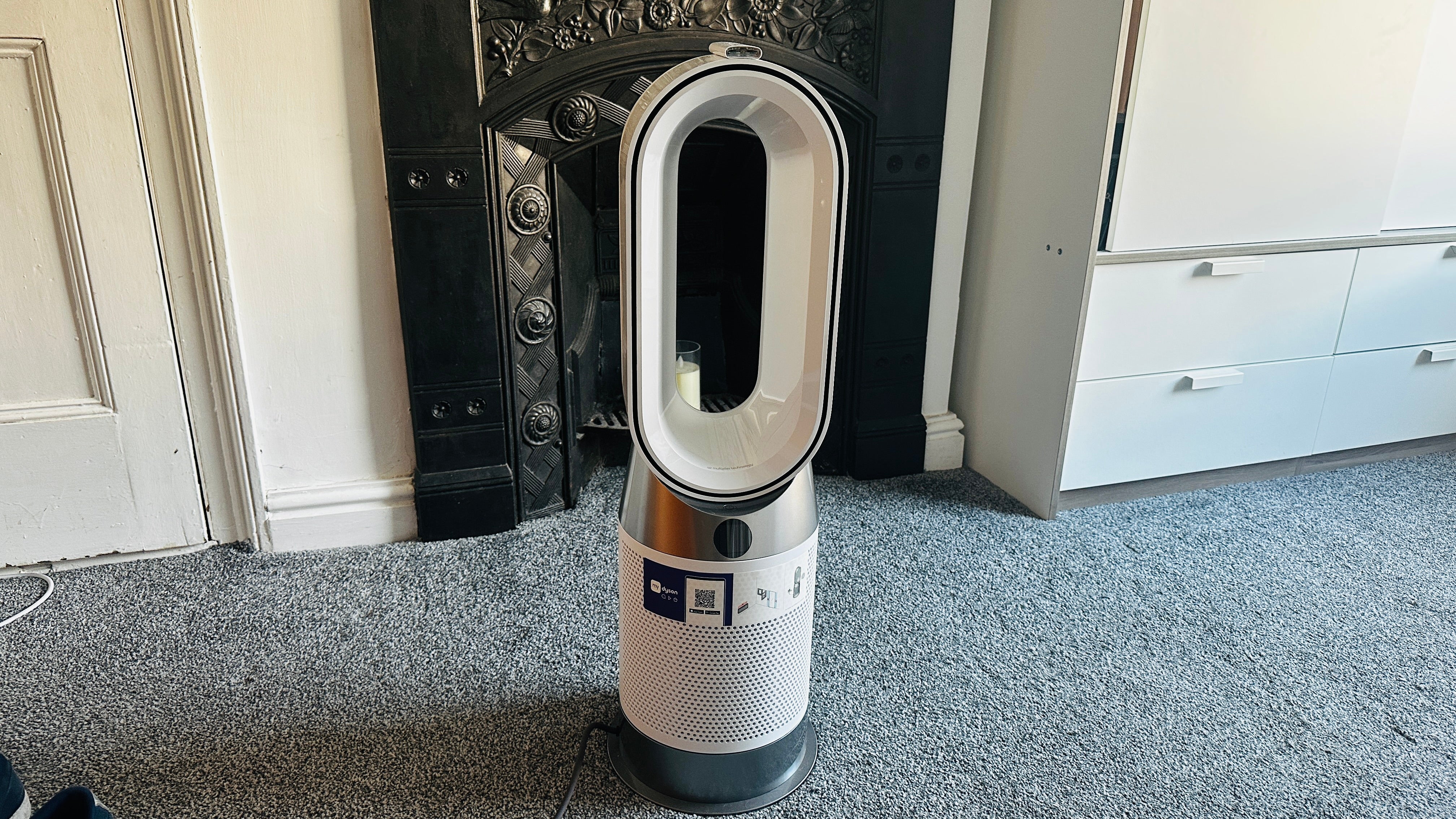
An air purifier is generally cheaper to run day to day, as it’s mostly just powering a fan and a filter. The catch is the filters themselves – these usually need replacing every 12 months and the cost can add up over time, especially if you’re running it constantly. But as technology improves, more brands are releasing air purifiers with longer-lasting filters, like the new Dyson HushJet (£349, Dyson.co.uk), which has an impressive filter lifespan of five years, instead of the standard one year you’ll find on most purifiers.
A dehumidifier, by comparison, uses more electricity because it’s actively pulling moisture out of the air. You might notice it more on your energy bill if it’s running for long stretches, particularly in winter. That said, in many homes, a dehumidifier can actually save money in other ways. If you’re using it to dry laundry instead of a tumble dryer, for example, it’s often a much more energy-efficient option, and gentler on your clothes, too.
Read more: Dyson hushjet air purifier review – is the compact model worth £350?
If you could buy only one device, how would you decide?
If you’re trying to choose between the two, the simplest approach is to focus on the problem you’re actually seeing in your home. As Lillywhite explains: “If your main triggers are pollen or pet dander, an air purifier is the device for you. However, if you have issues with damp, humidity, mould or dust mites, a dehumidifier is the better option.”
But, she adds, neither is guaranteed to solve your problems. “While both products can be helpful in making allergies more manageable, they aren’t standalone fixes. Pairing them with a regular cleaning routine, allergen source control and good ventilation will all help to keep allergies under control."
There is, however, a new breed of appliance beginning to blur the line between the two. Hybrid machines now exist that combine air purification and dehumidification in a single device, meaning they can pull excess moisture from the air while simultaneously filtering out dust, pollen and other airborne pollutants.
A dual-function appliance won’t always outperform a specialist machine in each category, but if your home struggles with both damp and poor air quality, they can be a convenient, and sometimes cheaper, all-in-one solution.
Dryzone 12l dehumidifier and air purifier: £149.99, Amazon.co.uk
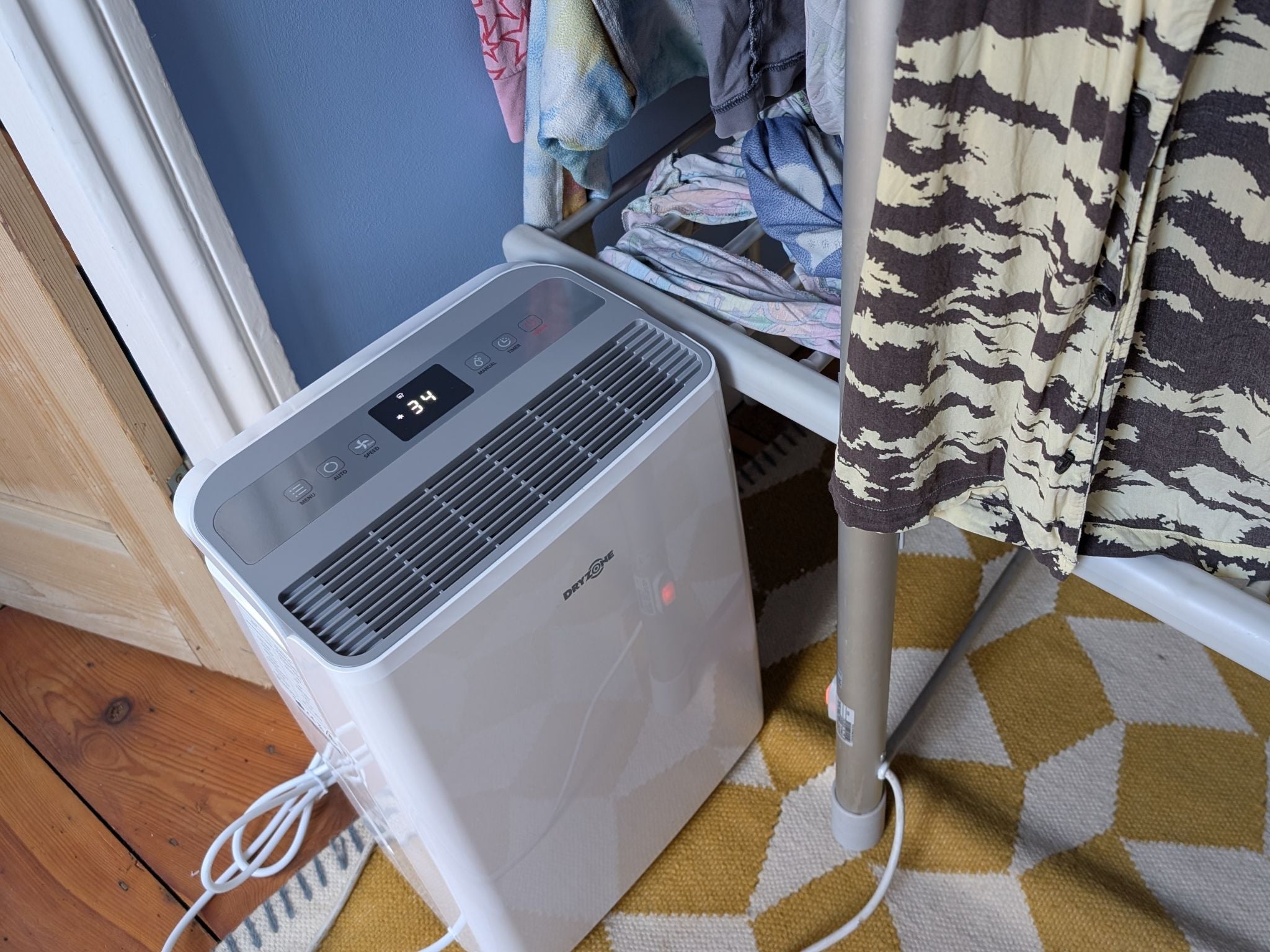
One example is the Dryzone 12L air purifier and dehumidifier, which combines moisture extraction with HEPA filtration to tackle both humidity and airborne particles simultaneously. In my round-up of the best dehumidifiers, I also highlighted that it “speeds up indoor clothes drying to around six hours – and at 4p an hour, that’s much cheaper to run than a tumble dryer.”
Meaco arete one 20l: £260, Argos.co.uk
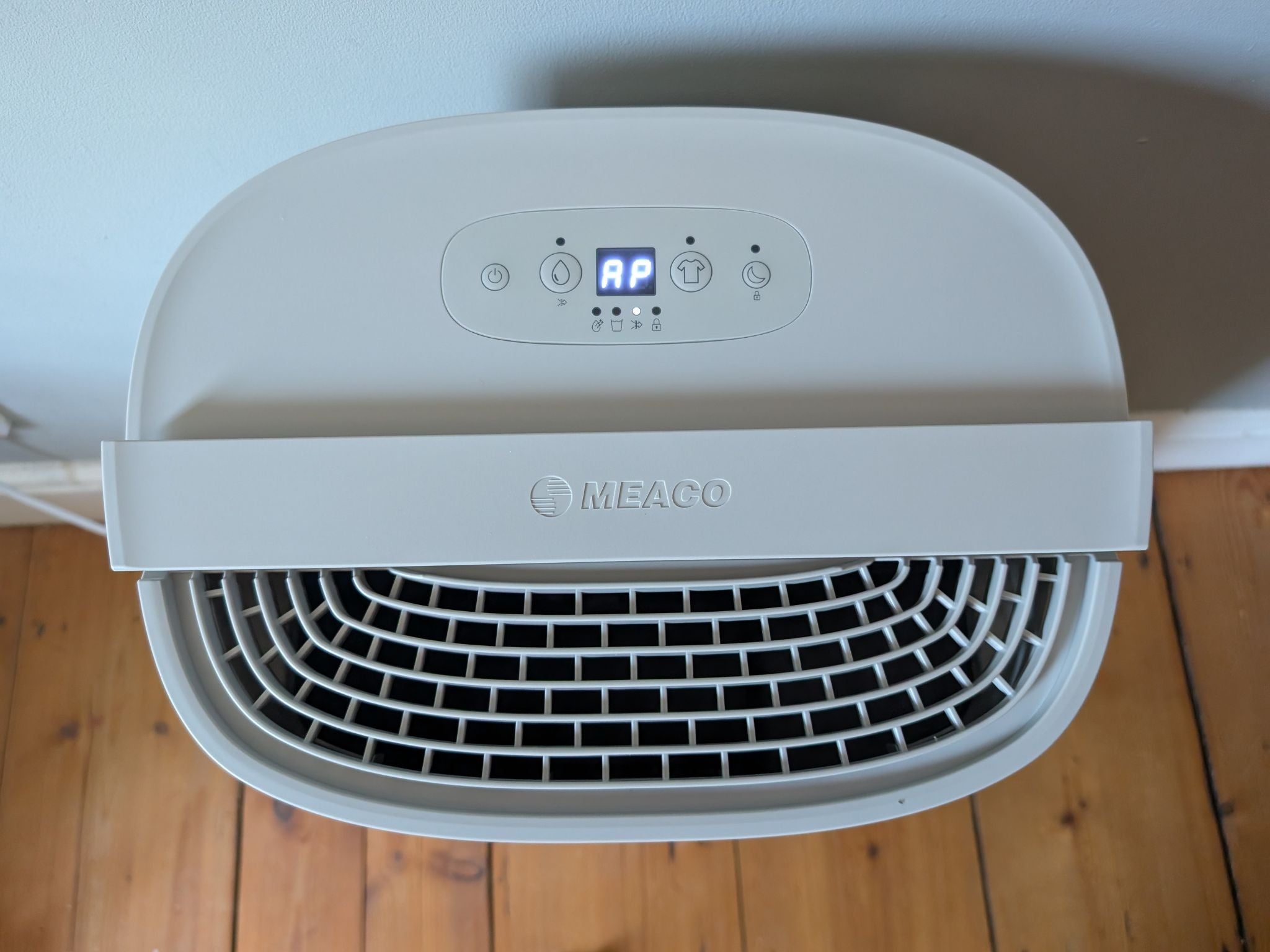
Another strong contender is Meaco’s arete one 20L (£260, Argos.co.uk). I’ve tried both in my home and noticed instant improvements in air quality and humidity. “The controls are intuitive and easy to use, and I liked that the inset air intake means you can push it right up against the wall without blocking performance,” I wrote in my Meaco arete one review.
See our pick of the best humidifiers for dry skin and congestion, tested by an expert