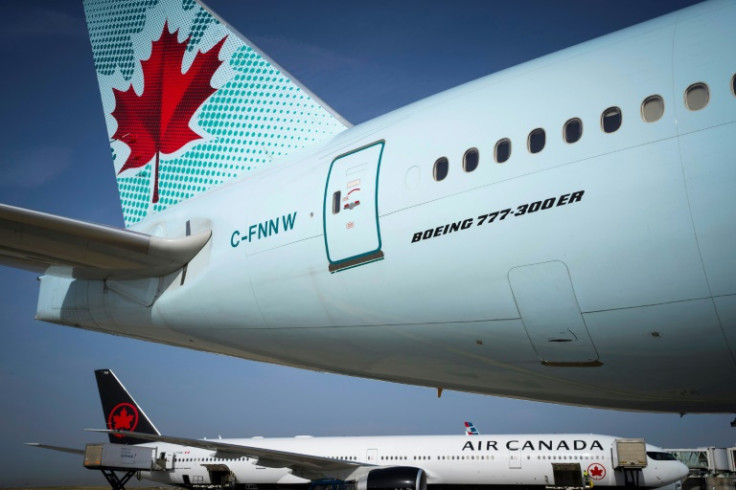
Air Canada has suspended some of its U.S.-bound flights as a result of rising fuel prices.
"As we regularly do, we monitor and review our network to ensure that routes are meeting profitability targets," the air carrier said in a statement.
"Jet fuel prices have doubled since the start of the Iran conflict, affecting some lower profitability routes and flights which now are no longer economically feasible. Schedule adjustments including some frequency reductions are being made in response."
The U.S. changes from Air Canada include:
- Salt Lake City-Toronto: temporary route suspension effective June 30 with plans to resume in 2027.
- JFK-Toronto: temporary suspension effective June 1, with plans to resume Oct. 25
- JFK-Montreal: temporary suspension effective June 1, with plans to resume Oct. 25
Jet fuel prices and potential fuel shortages are threatening to disrupt air travel globally. Last week, the Associated Press reported that Europe could run out of jet fuel in about six weeks.
That information came from International Energy Agency Executive Director Fatih Birol, who told the AP that this was "the largest energy crisis we have ever faced."
"In the past, there was a group called 'Dire Straits.' It's a dire strait now, and it is going to have major implications for the global economy. And the longer it goes, the worse it will be for the economic growth and inflation around the world," Birol told The Associated Press.
Birol told the AP that the coming energy crisis would affect everyone: "Some countries may be richer than the others. Some countries may have more energy than the others, but no country, no country is immune to this crisis."
Bloomberg News reported that Air Canada is far from the only carrier to cut back on its routes. Others include Dutch flag carrier KLM which last week announced it was ending 80 return flights to 80 return flights at Amsterdam's Schiphol Airport. Other cuts have been announced by United Airlines Holdings Inc., Deutsche Lufthansa AG, and Cathay Pacific Airways Ltd.
"Any flying that we're doing that's on the margin, maybe not producing the yields we'd like, is likely going to be reconsidered," Delta Air Lines Inc. Chief Executive Officer Ed Bastian told Bloomberg. "This is going to be a test for the industry."
Bloomberg reported that United Airlines had announced a 5 percent reduction in capacity, while Delta airlines announced a 3.5 reduction and price increases.
The disruption to fuel largely has been caused by the closure of the Strait of Hormuz due to the Iran war. About 20 percent of the world's oil supply is exported through the Strait. Although the Strait was supposed to open during an announced ceasefire, tensions have remained high in the region and shipping still stalled, according to the New York Times.