When the crusade for development was launched, its context was unequivocally geopolitical: this was a grand international project to enable newly independent countries to embrace economic progress and bind them into alliance with the west. Thus aid packages were based on many considerations other than need – especially the building of strategic and trading partnerships. However, the internal dynamics of the mission were not seen as political – rather, as technocratic.
“Development” had little to do with politicians, still less with political scientists; it was a matter for economists, engineers and planners. Where poor people were concerned, welfarist and humanitarian perceptions ruled, and the task was seen as mopping up politically innocent distress. When social concerns won the right to be viewed as developmental too, the provision of education and healthcare was equally non-political, about building human capital and wellbeing. After this was achieved, a mature and democratic political system would emerge. Few considered that poverty reduction was, itself, a highly political process, and that no policy to promote it could be delivered without structural social change.
On their side, the IMF/World Bank and UN bodies were rigorously bound not to interfere in the internal politics of sovereign member states. So any mission under their auspices must be one from which all taint of politics was extruded. What might politically result from any transfer of resources, and whether such transfers could, or should, have a political purpose were subjects beyond the pale. The only political issue these inter-governmental bodies attended to was that of not taking sides: staying “above the divide” in any dispute between states or parties within them. In the post-cold war world, so embroiled have military, political and humanitarian initiatives become that this principle has been compromised. Transnational corporations have assumed the role of “above the political divide” – but in a very different way.
Keeping development co-operation tied firmly to issues of human and country disadvantage may have been an act of international self-delusion, but it had advantages. During the cold war, the idea that aid, human rights promotion or co-operation for development could be politically neutral and entirely humanitarian in motive was greeted with skepticism in the Sino-Soviet bloc. Today, it is greeted with skepticism everywhere.
Tackling root causes while northern governments masked their use of development aid for political and strategic purpose behind a cloak of neutrality, the more progressive NGO players viewed the political context of development very differently. It soon became obvious to them that tackling the root causes of poverty was an inherently political business. And they embraced it. The hope of bringing about self-improvement and social change made the goal of development preferable to pouring money into welfare.
In the early, naive days, the idea of development was encapsulated by a widely repeated proverb: “Give a man a fish, and you feed him for a day. Teach him to fish, and you feed him for life.” But knowing how to fish often turned out to be the least of his (or her) problems. The river might be polluted and the catch depleted; the trees from which boats were built felled by loggers, or the right to fish granted to others with powerful patrons and larger boats. Along the coast, illegal trawlers might be hoovering up the local catch on an industrial scale. The “knowledge transfer” needed was not “how to fish”, but how to organise, bargain collectively, expose corrupt officials and film fishing-boat marauders to get them arrested and fined.
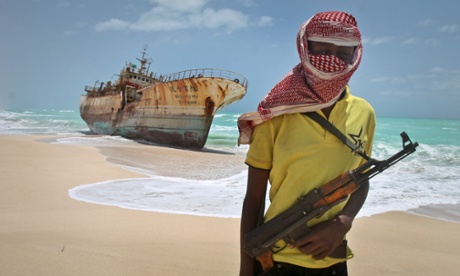
An extreme case in point is that of Somalia. After the collapse of government in the 1990s, the uncontrolled plunder of fish stocks by foreign trawlers off the 3,000km coast around the Horn of Africa was a driver for the emergence of Somali piracy. High-seas boats from South Korea, Japan and Spain enjoyed a free-for-all among the tuna and sardine shoals, freezing out local boats. Now that Somali piracy has been brought under control, reinforcement comes from international patrols of the coast keeping foreign trawlers out, while re-equipping Somali fishers.
How could power struggles be removed from fishing, around Africa’s coasts or anywhere else? Interventions to support livelihoods not only have to fit economic and social realities, but also to contend with politics. If they do not, vested interests destroy them or co-opt every benefit to themselves. Even UN Secretary-General Ban Ki-moon has concluded that this can induce marginalised people whose human rights and dignity have been abused to react with extreme acts of violence.
Maggie Black is a writer and editor specialising in international development issues. This is an extract from chapter six of NoNonsense International Development published by New Internationalist Books.
Join our community of development professionals and humanitarians. Follow@GuardianGDP on Twitter.