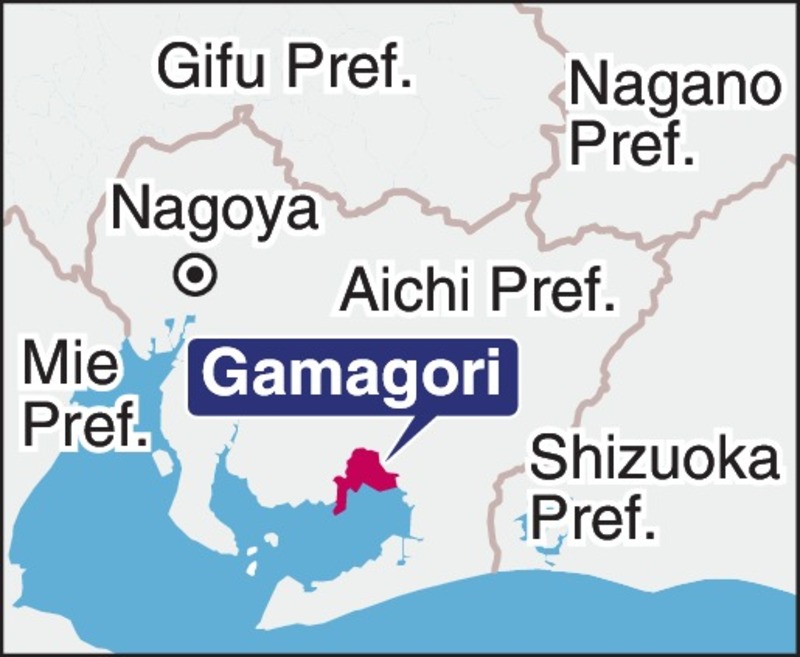
GAMAGORI, Aichi -- Facing Mikawa Bay, the Pacific coastal city of Gamagori has been blessed with a reputation for delicious deep-sea fish. But what is attracting attention these days is the city's Takeshima Aquarium, which is regaining popularity for its unconventional ideas and services to entertain guests.
While the number of visitors to the aquarium had been sluggish, it is on an upward trend now. As the aquarium overcame the slump and achieved a dramatic recovery, there are hopes it will serve as a driving force for local tourism.
The aquarium opened in 1956 to great fanfare and crowds. However, by the beginning of the 2000s when Ryuji Kobayashi, 39, now the aquarium's director, began working there as a keeper, the building had lost its luster and budgetary constraints made it impossible to bring in popular fish or animals. To turn around the falling visitor numbers, Kobayashi and others racked their brains.
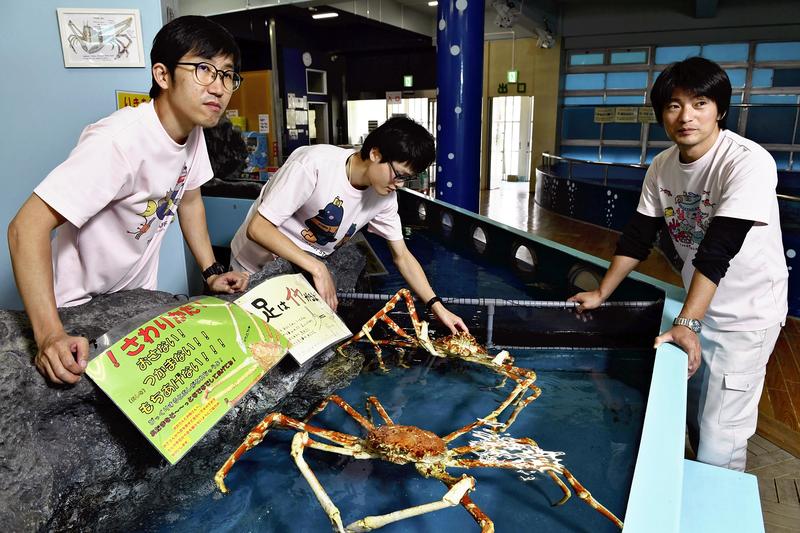
One idea they came up with was to start exhibiting the largest variety of deep-sea creatures in Japan. Since the local fishing industry centers on trawl fishing in the Enshunada and Kumanonada seas, Japanese spider crabs and giant isopods caught in their nets can be provided by local fishermen.
Another special touch they added is in the form of humorous and unique descriptions for their sea creatures. Along with explanations about habits and other things, the description for manybar goatfish, which have two barbels extending from their snouts, includes a message from the fish that says: "Please give me food. I'm an old man." Manybar goatfish are called "ojisan" in Japanese, which means "old man" in English.
About five years ago, the aquarium introduced a capybara show that became popular because the capybaras do not obey the directions of the trainers, which many visitors find hilarious.
The number of visitors marked a record high of 475,000 people in fiscal 2018, almost four times its lowest level. "We are trying to differentiate our aquarium from others and make every effort to give visitors a good time," Kobayashi said.
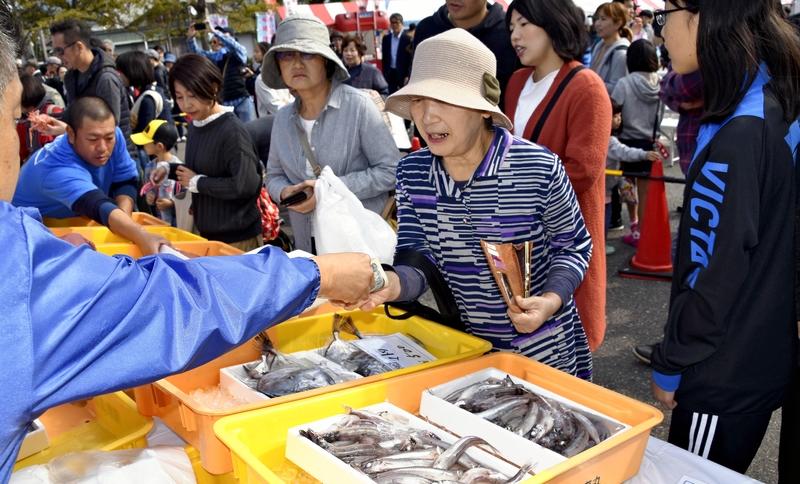
There are further moves to make use of the revitalized aquarium for promoting the region's tourism. For example, the Shinkaigyo (deep-sea fish) Festival was held in November last year for the first time, organized by the aquarium, local fisheries businesses and restaurants.
The festival's venue was the parking area in front of the aquarium. At the festival, food stalls sold deep-sea fish from nearby seas, while various events were held such as a contest where children competed over how well they ate simmered fish and a quiz competition themed on the ecology of deep-sea fish. The two-day festival drew in about 13,000 people.
Daisuke Yamamoto, 51, a senior official at a fisheries company and a member of the organizing committee, said, "Fishermen say fish from Gamagori tastes good, and the festival provided an opportunity for ordinary consumers to get to know the fish."
Toshiyuki Shibata, an associate professor at Mie University who is familiar with marine creatures, said: "It is difficult to distribute deep-sea fish throughout the country due to freshness issues, so such seafood is produced locally and consumed locally. The collaboration between the aquarium and the local fisheries industry has been effective in vitalizing the economy."
The outbreak of the new coronavirus still casts a long shadow over the region's tourism potential. However, Takahiro Koike, the chairman of the Gamagori Chamber of Commerce and Industry, said, "We may be able to take advantage of the situation to propose new tourism, such as scenic walks and presentations of the results of joint research by the Aichi Fisheries Research Institute and the aquarium."
There are other initiatives in which aquariums are positioned as leisure facilities to vitalize communities across the country.
One example is the Numazu Deep Sea Aquarium in Numazu, Shizuoka Prefecture, which was founded by a local fisheries company in 2011. Focusing on the fact that people tend to spend longer periods in aquariums, the company founded the aquarium with an aim to stimulate the sluggish fisheries industry, according to Shinichiro Sato, 43, the aquarium's director.
Also, thanks to the growing interest in deep-sea creatures due to the capture of daio ika (giant squid) making news several years ago, the number of restaurants around Numazu Port has increased by 30 or 40. The number of public transportation users has also increased.
The Kyoto Aquarium in Kyoto City, which was opened in 2012, exhibits Japanese giant salamanders living in the city's rivers and other fish and animals. Now, it has become a tourism spot with the basic principle of "learning while playing."
Read more from The Japan News at https://japannews.yomiuri.co.jp/