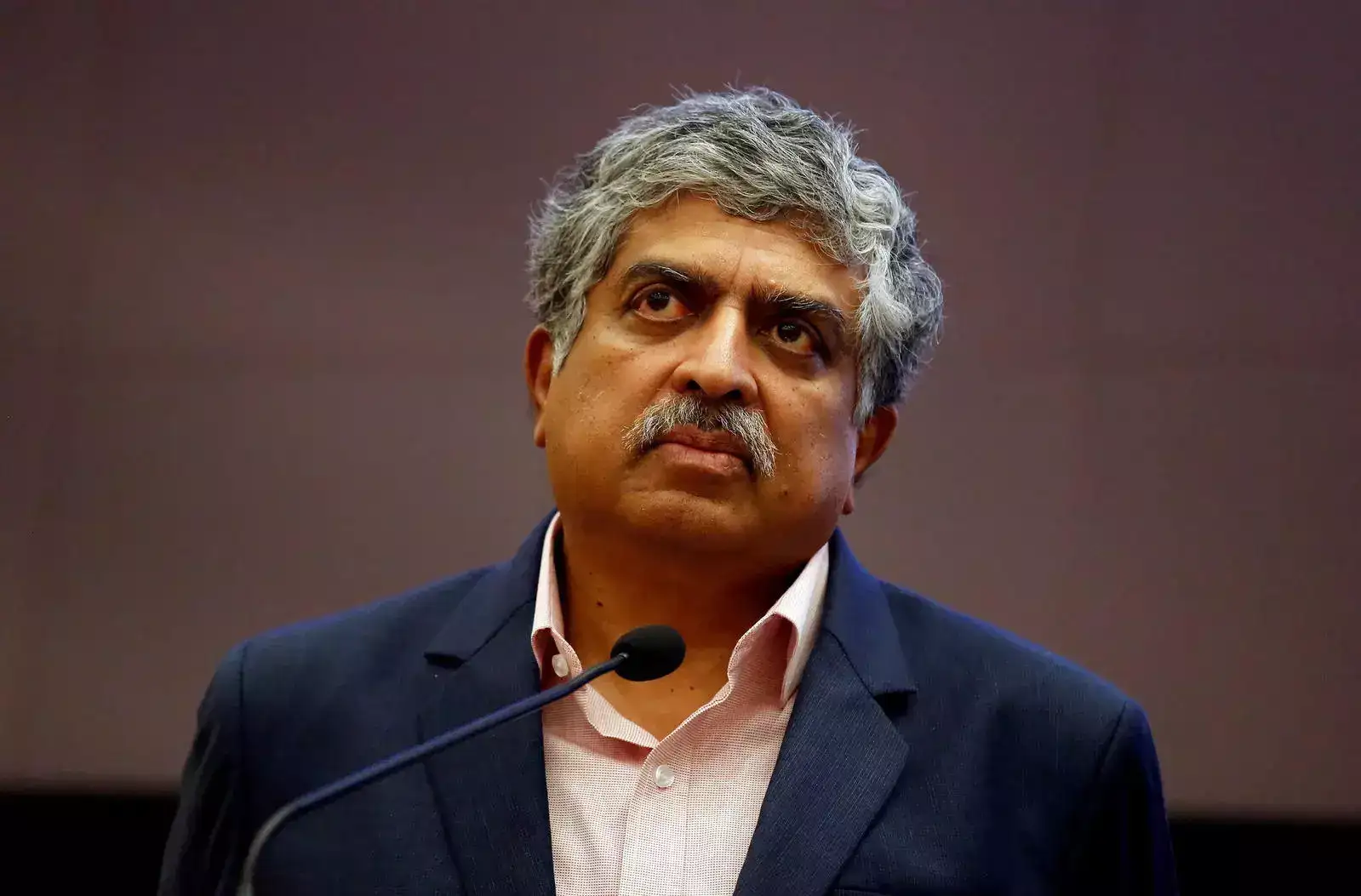
Infosys on Tuesday reiterated its aim to unlock the AI-first services opportunity, with chairman Nandan Nilekani saying artificial intelligence will amplify rather than replace IT services.
“We are already collaborating with 90% of our top-200 clients on their AI journeys. We recently unveiled our AI-first value framework…this positions Infosys to tap into an AI-first services opportunity of $300-400 billion by 2030,” Nilekani said as he addressed the Bengaluru-based company’s 45th annual general meeting.
“The AI deployment gap in our large enterprise clients is real, and closing that gap is where the work is. AI will not replace companies like ours. It will amplify those who move with purpose and adapt with speed,” he said, adding that AI is an execution risk, rather than an opportunity risk.
Nilekani reported that Infosys achieved a free cash flow conversion rate of over 100% for the second year in a row in fiscal 2026.
Chief executive officer Salil Parekh highlighted the six areas of AI services opportunity at the AGM, first shared during the company's investor day in February, citing legacy modernisation contracts as one of the largest addressable areas.
"We reconfirm that 5.5% of our revenue was in AI services (in FY26), which is approximately $1 billion annualised, and this is growing at a quite fast pace,” he said.
The CEO and others in management did not address questions on his succession plans. Parekh’s current term is slated to end on March 31, 2027, and he is likely to receive a two-year extension instead of a third five-year term, ET reported in April.
Addressing shareholder concerns about whether AI will be margin-accretive, dilutive, or neutral, Parekh said productivity savings generated and shared with enterprises are ultimately coming back as new projects, causing non-linear growth for the company.
“We've also had our own internal project for margin retention and expansion, where we've seen that the revenue per employee has been increasing over the last few years. This helped us to improve our margin,” Parekh said.
The management did not comment on shareholder questions about the sharp decline in Infosys’ share prices.
Responding to a question if the company would ever return to double-digit growth levels, chief financial officer Jayesh Sanghrajka said the overall demand environment continued to be soft, despite investments in small language models, AI and talent.
“We see cautious behaviour by clients due to macro concerns, with growth also impacted due to AI inflation. As the clients shift from siloed AI adoption to enterprise-wide AI adoption in the medium to long term, we expect them to increase the spend across six new AI value pools,” he said.
For FY26, Infosys had reported revenue of $20.1 billion, up 3.1% in constant currency terms. Net profit rose 4.9% to $3.3 billion.