Photograph: Dan Chung
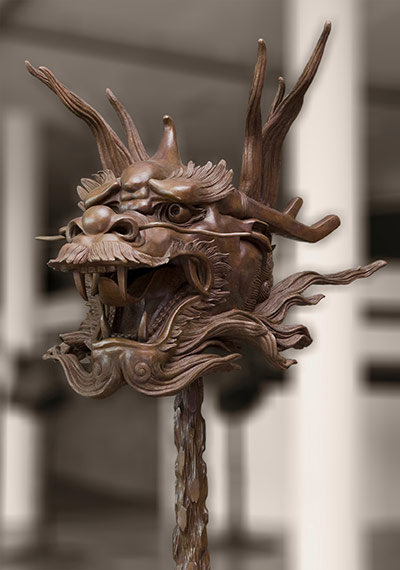
Ai Weiwei's Circle of Animals/Zodiac Heads is showing at London's Somerset House until 26 June 2011
Photograph: Courtesy AW Asia
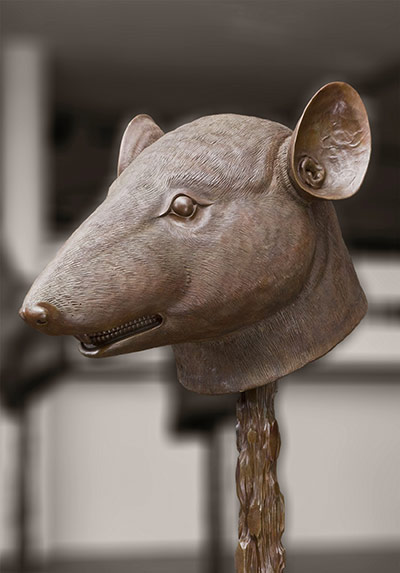
The work is 12 oversized bronze replicas of the zodiac animal heads
Photograph: Courtesy AW Asia
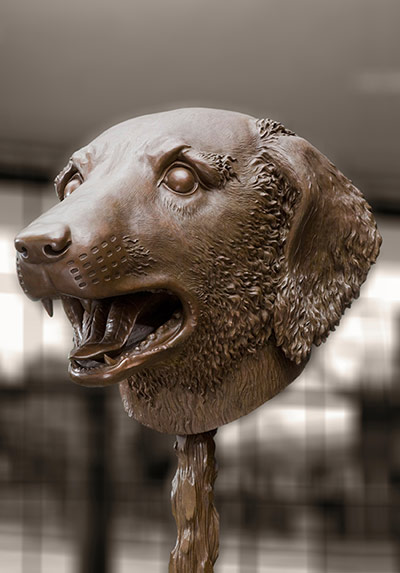
The heads were originally sculpted in Beijing by an Italian Jesuit artist and architect at the court of Giuseppe Castiglione (1688-1766), as a water clock for the gardens of the Yuanmingyuan, Qing dynasty Emperor Qianlong’s retreat Photograph: Courtesy AW Asia
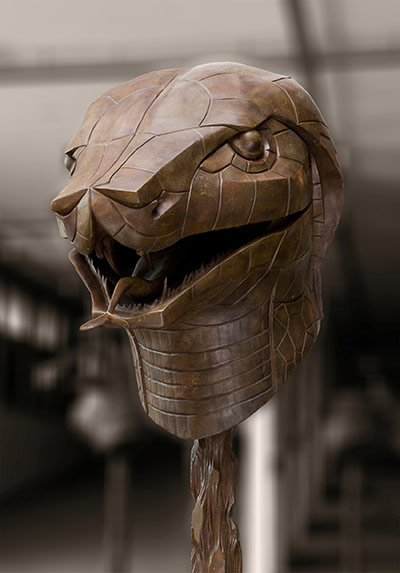
In 1860, the old summer palace was ransacked by French and British troops, and the heads were pillaged
Photograph: Courtesy AW Asia
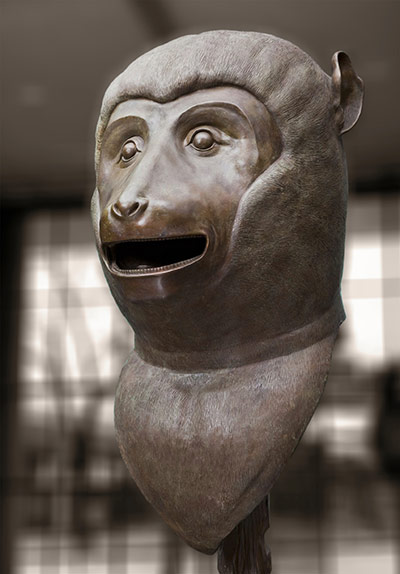
Two of the original heads finally ended up in the collection of Yves Saint Laurent. The current Chinese government has been trying to retrieve these for some time. What goes around comes around Photograph: Courtesy AW Asia
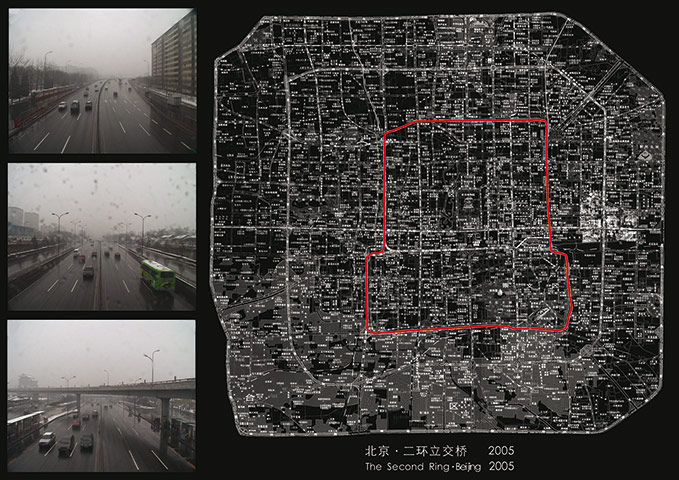
The video is a document of the two opposite views of traffic flow on 33 bridges along Beijing’s Second Ring. The artist records a single frame for one minute for each view of the bridge. The film lasts one hour and six minutes Photograph: Ai Weiwei
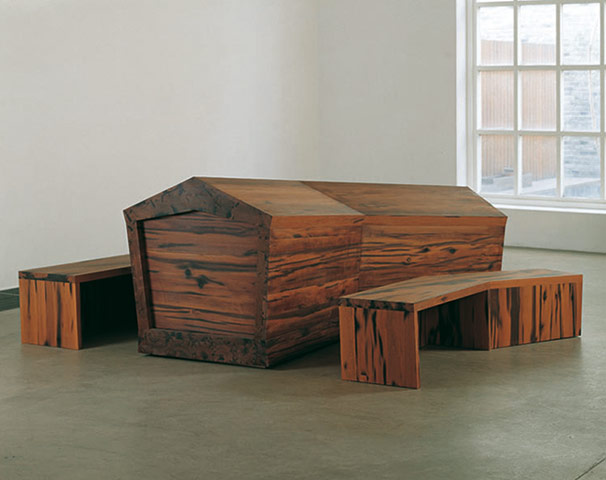
The coffins, made from iron wood taken from dismantled Qing Dynasty temples (1644-1911), are also intended to be read as a table and benches Photograph: Lisson Gallery
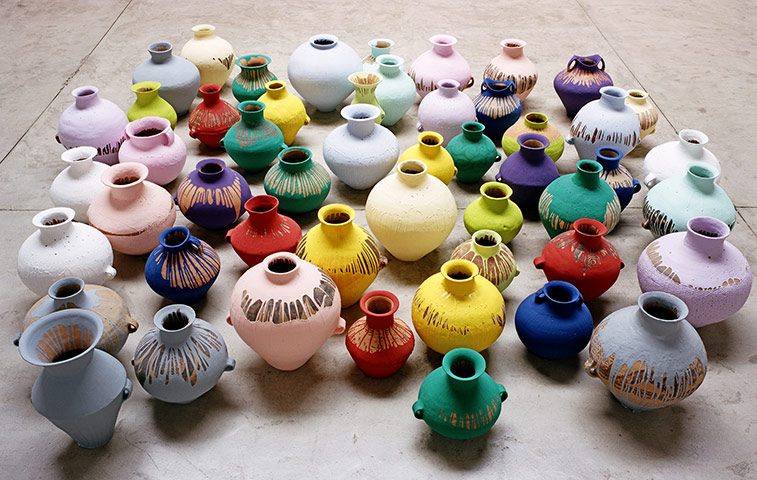
This collection of Han Dynasty Neolithic vases (from 5,000-3,000 BC) have been dunked in industrial paint. Their defacement speaks of the disregard paid to history during China’s recent past. Questions of value – of unique and irreplaceable artefacts, and of individual human lives – are recurrent themes in Ai Weiwei's work. What at first appear as acts of bad-boy cultural vandalism turn out to be mocking metaphors of the state of things Photograph: Ai Weiwei
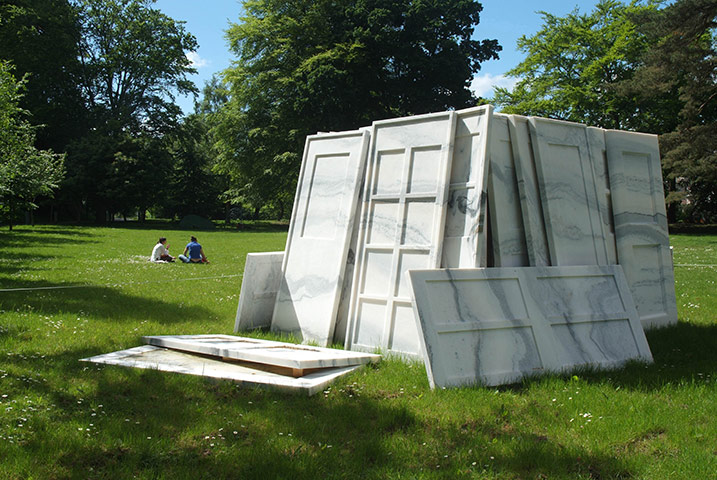
The installation has been designed to resemble a junkyard of building material that is typical in the suburbs of Chinese mega-cities. The piled materials are in fact 56 domestic doors reproduced in Chinese marble Photograph: Glucksman Gallery

This is carved from a single slab of marble
Photograph: Ai Weiwei
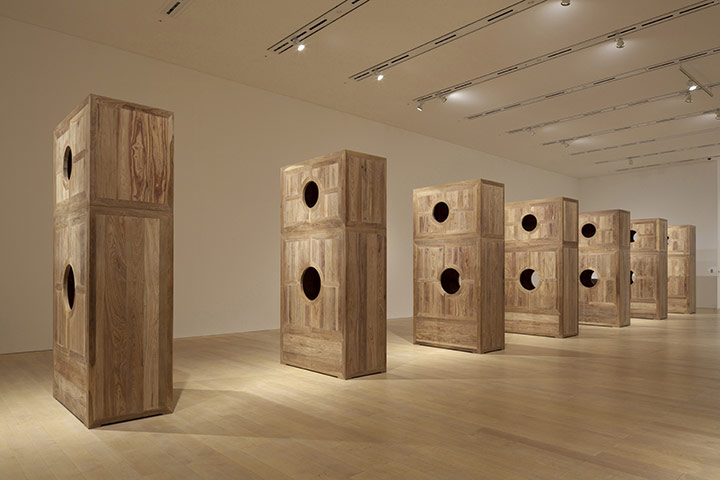
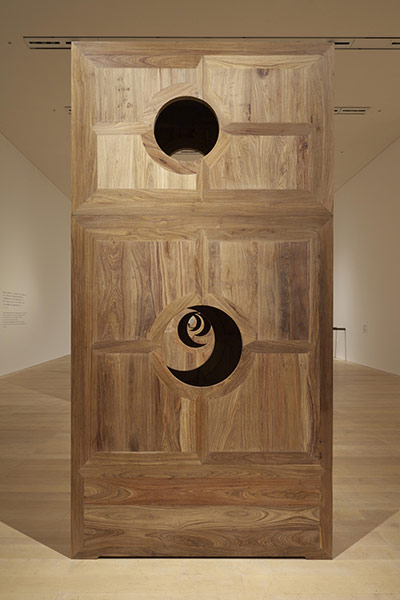
Built using traditional Chinese carpentry techniques in quince (huali) wood, the sides of these large chests have been perforated with asymetrical holes which, when the chests are seen all together, outline every phase of the moon as visitors walk around them Photograph: Mori Art Museum
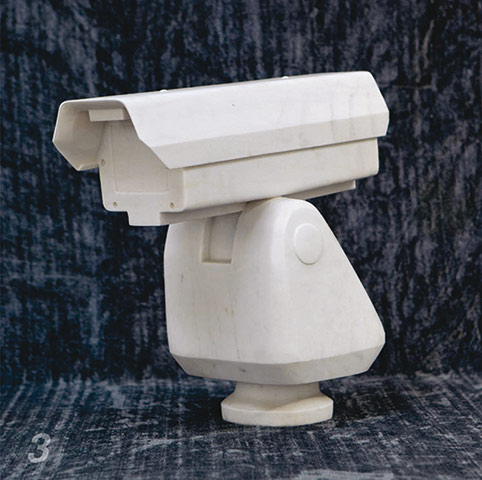
Chinese authorities have had surveillance cameras mounted outside Ai Weiwei’s Beijing studio, monitoring his comings and goings for several years. This replica of one such camera is carved from a single piece of marble Photograph: Ai Weiwei