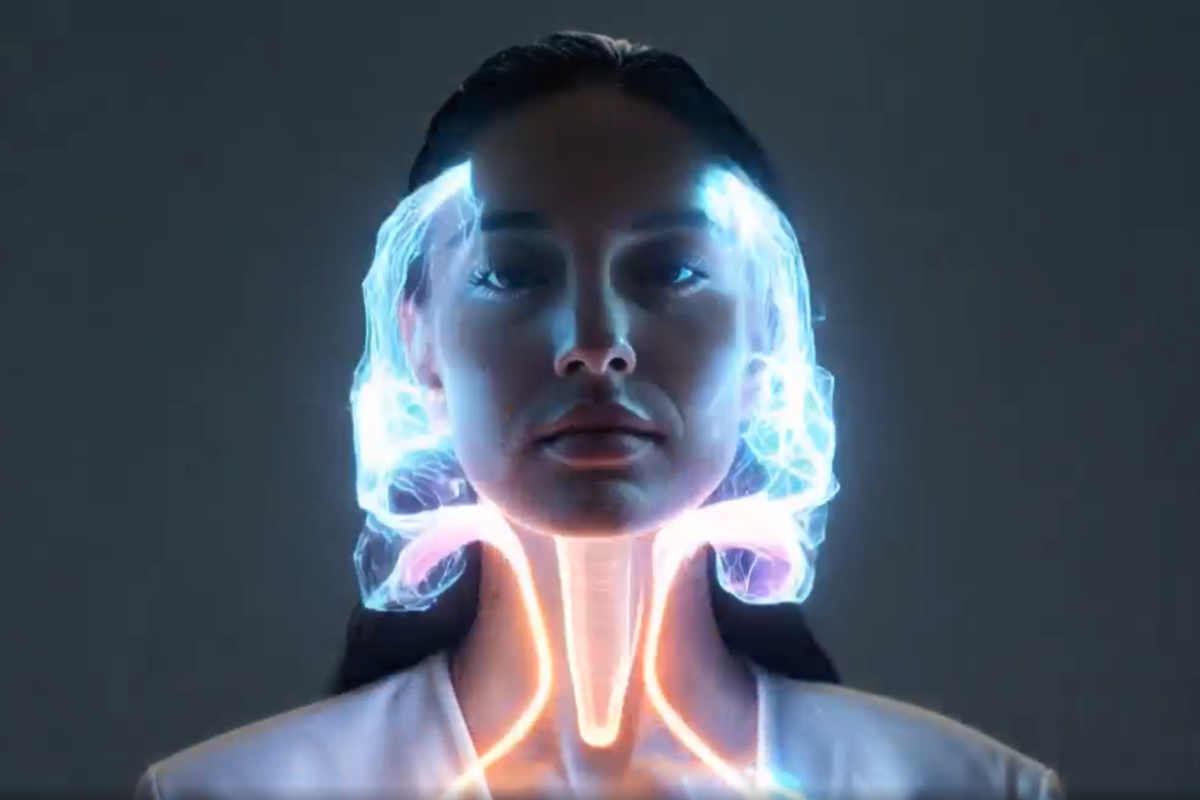
A neuroscience professor claims to have developed an AI algorithm that endows humans with “perfect and infinite memory”.
Gabriel Kreiman, who researches artificial intelligence and neuroscience at Harvard Medical School, launched a startup last month in the hope of commercialising technology that he says will transform people’s cognitive capabilities.
He describes his work as a “fight against oblivion”, allowing memories to be stored indefinitely.
The idea is to use something called “large memory models” – a play on the large language model (LLM) coinage used for AI tools like ChatGPT – in order to retrieve data from a person’s digital life.
In a manifesto on the startup’s website, the founders claim the technology will reshape every profession – from medicine and law, to the arts and engineering.
“Humanity has been fighting the problem of forgetting since the dawn of time,” Professor Kreiman wrote in a post to LinkedIn.
“My co-founder Spandan Madan and I built a new algorithm to endow humans with perfect and infinite memory... Welcome to a new future where you can remember everything.
“This is the MEMORY SINGULARITY: after 300,000 years, this is the moment that humans stop forgetting.”
It is not clear through what medium these memories will be recalled, though previous studies have explored the possibility of using brain-computer interfaces. The Independent has reached out to Professor Kreiman for further details.
Engramme is currently seeking to raise around $100 million (£74m), according to Bloomberg, with an estimated valuation as high as $1 billion.
It is not the first effort to use artificial intelligence to access memories from people’s digital lives.
AI-powered platform StoryFile is one of several companies offering customers a chance to be immortalised through real-time virtual avatars trained on videos and audio of the subjects.
Even leading tech giants are working on the concept, with Meta granted a patent last December to “simulate” a user’s activity through LLMs trained on their posting activity.
“The language model may be used for simulating the user when the user is absent from the social networking system, for example, when the user takes a long break or if the user is deceased,” the patent stated.
The ‘terrifying’ AI superhacker that has the tech world on alert
I’m a therapist and used ChatGPT for therapy – the results surprised me
OpenAI halts UK data centre project over energy costs and red tape
Chinese AI cracks decade-old math problem without human oversight