March isn’t just for college basketball anymore — it’s for AI, too.
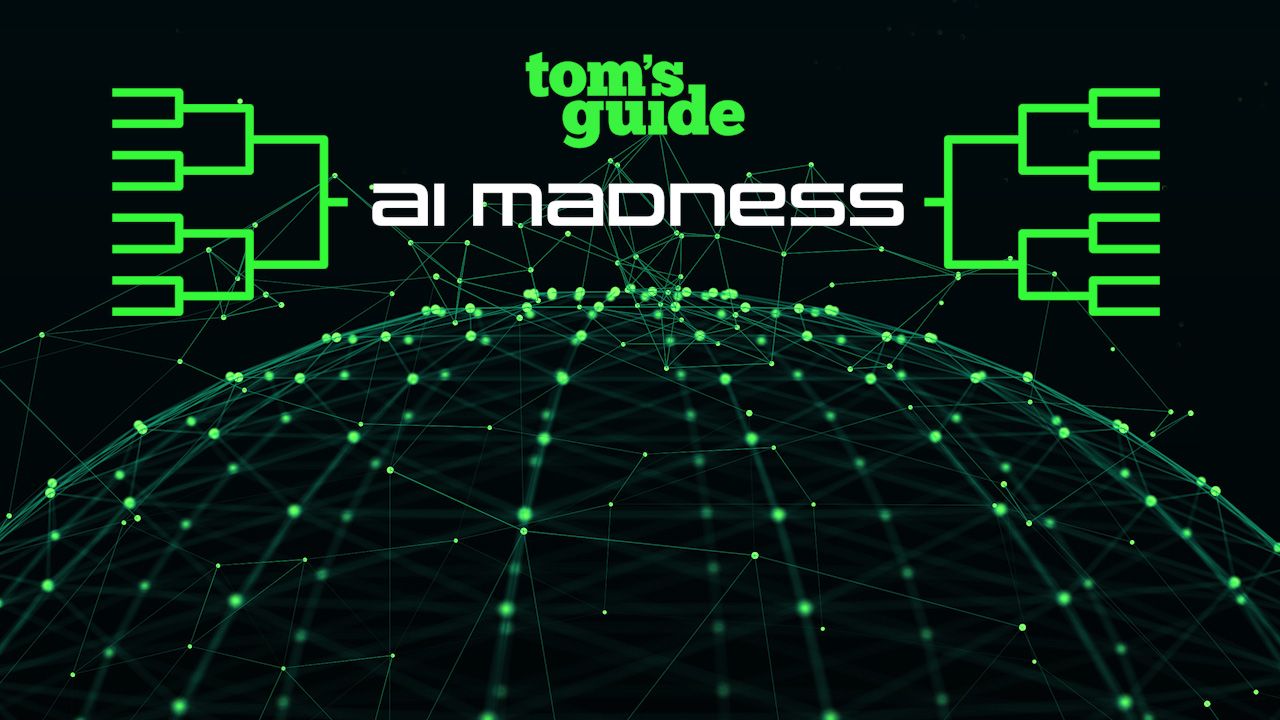
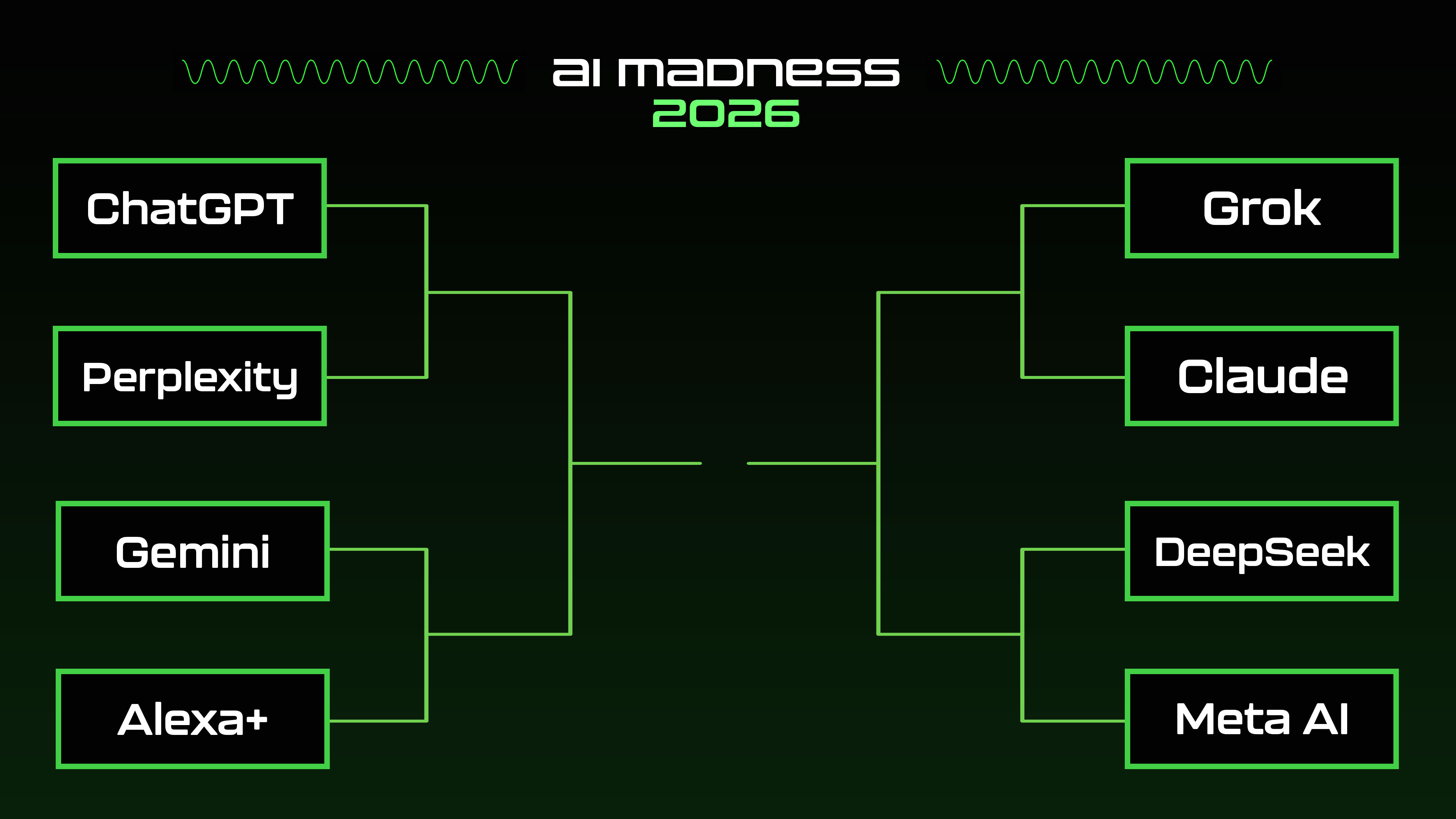
Welcome back to AI Madness, our annual bracket-style showdown where the biggest AI chatbots go head-to-head to see which one actually delivers in the real world.
These eight chatbots will faceoff across a series of matchups — pushing them on accuracy, creativity, speed and overall usefulness. Not in generic benchmarks, but in the kinds of everyday tasks people actually use AI for.
The reality is AI is moving fast and these chatbots have significantly changed over the past year. New models have launched, existing ones have improved and the gap between “impressive demo” and “actually useful” has never been more important. That's why this tournament is so exciting.
We kick things off on Monday, March 16, 2026 with a round a day as two chatbots face off with the same challenging prompts. The prompts will get harder as the series progresses — until only one is left.
We selected eight of the top AI chatbots — each with its own strengths, weaknesses and approach:

We’ve carefully selected the top AI chatbots, each bringing unique strengths (and weaknesses) to the table.
- ChatGPT: OpenAI’s flagship AI, known for its versatility, strong writing and coding abilities
- Google Gemini: Google’s multimodal AI built for text, images and deep integration with its ecosystem
- Claude: Anthropic’s AI, recognized for thoughtful responses and a strong safety-first approach
- Grok: Elon Musk’s xAI chatbot, designed for real-time information and a more unfiltered tone
- DeepSeek: A fast-rising model focused on reasoning and technical performance
- Perplexity: A research-driven AI that blends chatbot responses with live web search
- Meta AI: Meta’s assistant, built for social integration and multimodal experiences
- Alexa+: Amazon’s next-gen AI assistant, bringing generative AI into everyday home interactions


We’ve pitted the most popular chatbots head-to-head in a single-elimination, bracket-style tournament.
Who's the best at answering fact-based questions?
Can Gemini outsmart Amazon's AI?
Will Grok’s humor overpower Claude’s thoughtful approach?
Which AI is the best all-around performer?

Each battle will be decided based on our six key criteria and scored on the following:
- Accuracy & Factuality: Are responses correct and up to date?
- Creativity & Natural Language: How engaging is the response?
- Usefulness & Depth: Can it complete complex tasks well?
- Multimodal Abilities: Can it handle text, images, and videos
- User Experience & Interface: Is it easy to use and accessible?

We’ll start by introducing each AI and set the stage for the matchups. From there, the head-to-head battles begin! We’ll test each AI on general knowledge, creative writing, coding, real-world tasks, and multimodal abilities.
After the initial rounds we will break down the semi-finals, with leaderboards and highlights.
And finally, we’ll crown the AI Madness Champion—revealing the best chatbot for real-world use.
So, who will take the title? Follow along as we put AI to the ultimate test. Let the AI showdown begin!
- ChatGPT: OpenAI’s flagship AI, known for its versatility, strong writing and coding abilities
- Google Gemini: Google’s multimodal AI built for text, images and deep integration with its ecosystem
- Claude: Anthropic’s AI, recognized for thoughtful responses and a strong safety-first approach
- Grok: Elon Musk’s xAI chatbot, designed for real-time information and a more unfiltered tone
- DeepSeek: A fast-rising model focused on reasoning and technical performance
- Perplexity: A research-driven AI that blends chatbot responses with live web search
- Meta AI: Meta’s assistant, built for social integration and multimodal experiences
- Alexa+: Amazon’s next-gen AI assistant, bringing generative AI into everyday home interactions
Take your best guess on which chatbot will win the championship this year.