
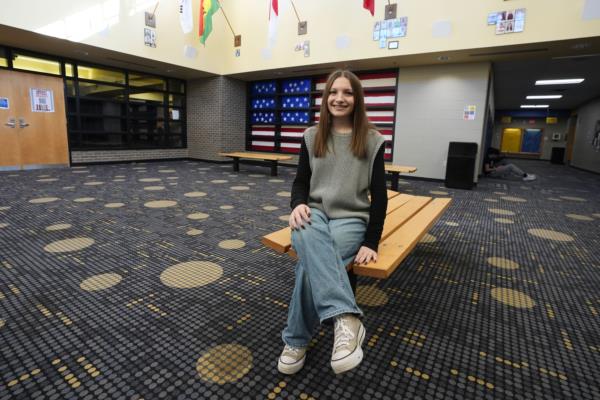
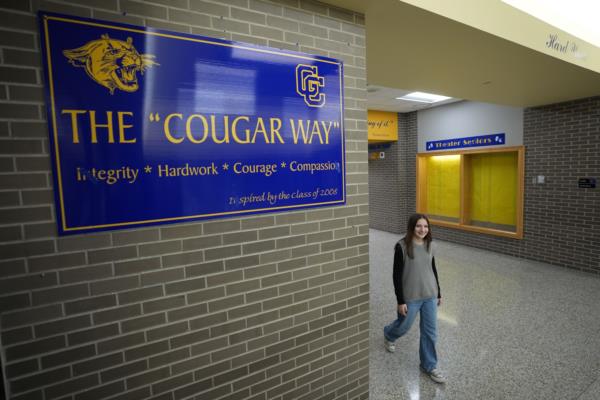
For many students like Makenzie Gilkison, who struggle with dyslexia, assistive technology powered by artificial intelligence is proving to be a game-changer. Makenzie, a 14-year-old from suburban Indianapolis, has found relief in AI tools that help her with spelling and comprehension, enabling her to excel academically.
AI holds immense promise in assisting students with various disabilities, including visual, speech, language, and hearing impairments. Schools are increasingly incorporating AI applications to support students with disabilities, recognizing the transformative impact it can have on their learning experiences.

The U.S. Education Department has emphasized the importance of providing students with disabilities access to tools like text-to-speech and alternative communication devices. New regulations from the Department of Justice are also pushing for greater accessibility of apps and online content for individuals with disabilities.
AI technology offers a range of benefits, from summarizing complex information to providing multiple explanations for challenging problems. Students like Ben Snyder have found AI particularly helpful in understanding concepts that are difficult to grasp through traditional teaching methods.
While AI tools can significantly aid students with disabilities, there are concerns about maintaining academic integrity and ensuring that students are actively engaged in the learning process. Schools are navigating the fine line between leveraging technology for support and ensuring that students are actively developing essential skills.
Despite the challenges, AI is increasingly being recognized as a tool that can level the playing field for students with disabilities. Efforts are underway to expand the use of AI in education, with ongoing research and development focused on creating more tailored solutions for students with diverse needs.
As schools continue to integrate AI technology, efforts are being made to streamline the selection and implementation of these tools. Organizations like the International Society for Technology in Education are working to simplify the process of vetting and acquiring AI solutions for educational institutions.
While some students may face obstacles in using AI tools, the overall impact is seen as overwhelmingly positive by educators and parents. The implementation of chatbots and personalized tutoring programs in schools is revolutionizing the way students with disabilities receive support, empowering them to navigate their educational journey with greater independence.
With ongoing advancements in AI technology and a growing focus on accessibility, the future looks promising for students with disabilities who are leveraging these innovative tools to enhance their learning experiences.









.jpg?w=600)



