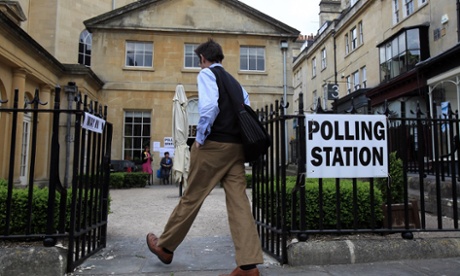
With one third of private sector turnover coming from small business [PDF], it goes without saying that the main political parties are eager to cultivate their support in advance of the May election.
The Federation of Small Businesses has claimed the success of the UK economy is based on the economic health of those companies and the 50% of private sector workers which they employ.
As the weeks tick down to polling day, the two government parties and Labour have started to set out their promises for what can be expected in key areas which affect small and medium sized enterprises, should they come into power.
Red Tape
The two coalition partners have been vocal about their desire to cut red tape with the Conservatives the most forthright on their plans, maintaining that small business is “disproportionately affected by regulation”.
The Tories claim they will save £10bn through cuts in red tape over the five year life of the government with any department which introduces a new regulation having to justify it with a double cost saving. A draft deregulation bill has also been introduced, which includes measures to remove unnecessary health and safety rules, said a party spokesman.
Uncertainty over regulations as well as a pledge to cut down on red tape has led to a promise from the Liberal Democrats that they will establish a Regulation Advisory Board. Regulations should be designed, according to the party, to promote low carbon and efficient innovation.
Labour has said repeatedly that it will set up a Small Business Administration (SBA) if elected. The body would be modelled on a US agency set up to assist entrepreneurs and small business. It has also committed to increasing competition in banking by bringing at least two “challenger” banks onto the high street.

Rates
Paul Statham, managing director of software development business Condeco, reflects the views of many business owners when he says that his company is hit with high business rates specifically because they are based in Canary Wharf.
“We don’t benefit from business rates because of where we are, so I think they are excessive for very high value areas and it is done because we rub shoulders with banks and the like and these companies. Ultimately in that sense, it becomes a hidden taxation because we don’t use any more per square foot than a business would in another part of the country,” he said.
Labour has committed to cutting business rates in 2015 and then freezing them in 2016 for over 1.5 million business properties.
The Liberal Democrats meanwhile have said that they will review business rates, which are a “disproportionate burden” on small businesses, and look at alternatives. “The review will cover the option of moving to site value rating within five years, and in the longer term land value taxation more broadly,” a spokesman said.
In the last Autumn statement, chancellor George Osborne said there would be a review of the rates system. The Tories say that rate relief has been doubled until April of next year.
There have been consistent calls among businesses for changes to the system which governs rates, to tackle discrepancies between bills depending on the size and location of businesses. Dan Wagner, the founder of mobile payments company Powa, said high street retailers should get tax credits from the government as they are providing an “infrastructure on the streets”.

“You can’t tax people on property any more, it dosen’t make any sense. Businesses don’t operate that way today, they operate [in] lots of different channels. You can be sitting at home and everything can be virtual and generate a very big business on the back of it and we can see that with the large internet players so it is completely unreasonable to have a large internet retailer being advantaged by not having to pay the rates that a physical retailer has,” he said.
Regional Development
Wagner is also critical of the amount of attention given to the regions, maintaining that many innovations emerging from the UK at present are coming from entrepreneurial hubs like Manchester, Liverpool and Leeds, which are in need of incentive schemes similar to those operating in London.
The Liberal Democrats have committed to growing manufacturing in areas such as motor vehicles, aerospace, low-carbon energy and chemicals to increase international trade. A spokesman said they will continue the Regional Growth Fund, which encourages investment in areas dependent on the public sector, through the next parliament if they are returned.
“We will invest in major transport improvements and infrastructure to create a ‘Northern Economic Corridor’; a focus for growth, innovation and prosperity across northern England,” said the party.
Labour has committed to creating a British Investment Bank and a series of regional banks in order to boost lending for small businesses and “powerhouse” economic regions with funds so that they can back local growth.
The Conservatives meanwhile have lauded the transfer of power and budgets to cities in the North. “We are transferring power in Manchester to a city-wide elected Mayor. This will give Mancunians a more powerful voice and bring practical improvements, such as better transport links, an Oyster-style travel card, and more investment in skills and the city’s economy,” a spokesman said. Similar to their coalition partners, the Tories have also pointed to the Regional Growth Fund as one their achievements and the backing of the proposed high speed rail route between Leeds and Manchester.
From the industry point of view, Statham said that more attention needs to be given to improve the apprenticeship scheme and eliminating what he describes as a two tier system which has developed between those with and without degrees.
Sign up to become a member of the Guardian Small Business Network here for more advice, insight and best practice direct to your inbox.