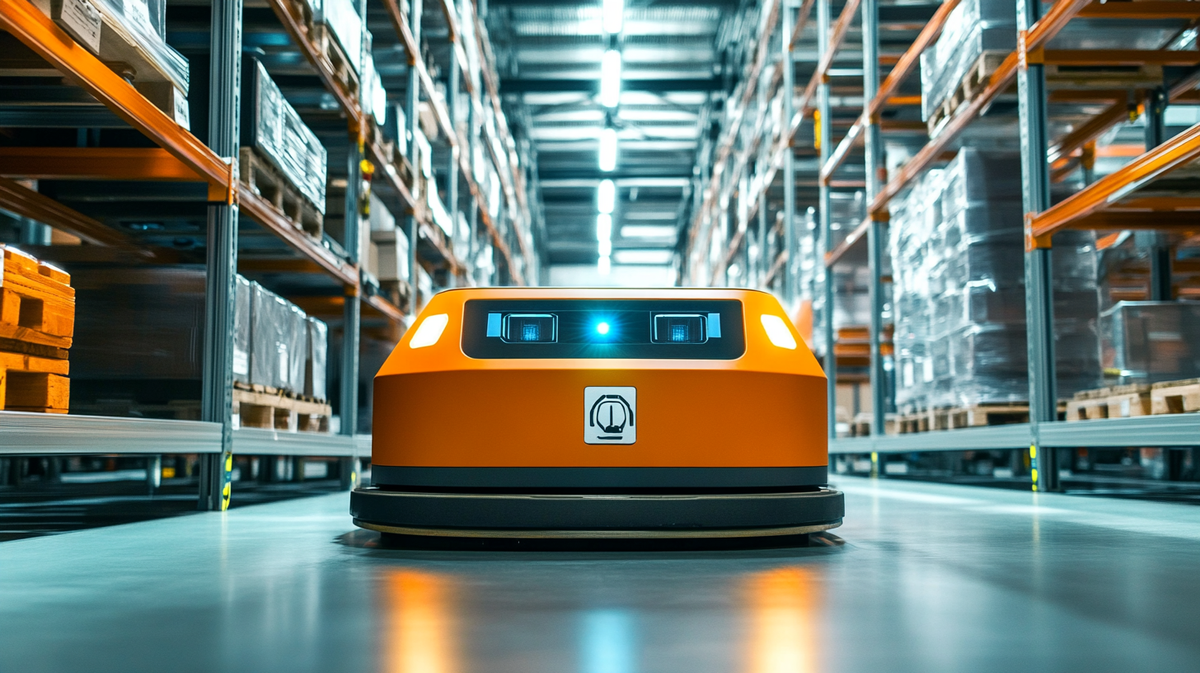
In the rapidly evolving landscape of modern logistics, the integration of advanced technologies is not just a trend but a necessity. Among these technologies, Automated Guided Vehicles (AGVs) and Autonomous Mobile Robots (AMRs) stand out as pivotal innovations driving efficiency and productivity. As businesses strive to meet the increasing demands of global supply chains, these robotic solutions offer unparalleled advantages in terms of automation, flexibility, and scalability. This article delves into the intricacies of AGVs and AMRs, exploring their roles as key solutions in contemporary logistics and how they are shaping the future of the industry.
Understanding Automated Guided Vehicles (AGVs)
Automated Guided Vehicles (AGVs) are a cornerstone of modern automated logistics systems. These vehicles are designed to transport materials around a manufacturing facility or warehouse without direct human intervention. AGVs follow predetermined paths, often guided by wires, magnetic strips, or sensors embedded in the floor. This precision in navigation makes AGVs ideal for repetitive tasks in controlled environments, such as moving goods between production lines or transporting pallets in a warehouse.
The primary advantage of AGVs lies in their ability to reduce labor costs and increase operational efficiency. By automating the transportation of materials, businesses can reallocate human resources to more complex tasks that require critical thinking and problem-solving skills. Moreover, AGVs contribute to workplace safety by minimizing the risk of accidents associated with manual material handling.
Despite their benefits, AGVs have limitations, particularly in terms of flexibility. Their reliance on fixed paths means that any changes in the layout of a facility require reprogramming and physical adjustments to the guidance system. This can be a significant drawback in dynamic environments where adaptability is crucial. Nevertheless, for operations with stable and predictable workflows, AGVs remain an invaluable asset.
The Rise of Autonomous Mobile Robots (AMRs)
In contrast to AGVs, Autonomous Mobile Robots (AMRs) offer a higher degree of flexibility and intelligence. AMRs are equipped with sophisticated sensors and onboard processing capabilities that allow them to navigate complex environments independently. Unlike AGVs, which require predefined paths, AMRs can dynamically adjust their routes based on real-time data and environmental changes.
This adaptability makes AMRs particularly suited for environments where the layout frequently changes or where there is a need to interact with human workers. For instance, in e-commerce fulfillment centers, AMRs can efficiently pick and transport items from shelves to packing stations, optimizing the order fulfillment process. Their ability to work collaboratively with humans also enhances productivity and reduces the likelihood of errors.
AMRs are powered by advanced technologies such as machine learning and artificial intelligence, enabling them to learn from their surroundings and improve their performance over time. This continuous learning capability is a significant advantage in fast-paced industries where operational demands are constantly evolving. However, the initial investment in AMR technology can be substantial, and businesses must weigh this cost against the long-term benefits of increased efficiency and flexibility.
AGVs and AMRs: Complementary Solutions for Modern Logistics
While AGVs and AMRs each have their unique strengths, they are not mutually exclusive. In fact, many modern logistics operations benefit from a hybrid approach that leverages the advantages of both technologies. By integrating AGVs and AMRs, businesses can create a more robust and adaptable logistics system that meets a wide range of operational needs.
For example, AGVs can be used for routine, high-volume tasks that require precision and consistency, while AMRs can handle more complex and variable tasks that demand flexibility and real-time decision-making. This combination allows companies to optimize their workflows, reduce downtime, and enhance overall productivity.
As the logistics industry continues to evolve, the demand for innovative solutions like AGVs and AMRs is expected to grow. Companies that embrace these technologies will be better positioned to navigate the challenges of modern supply chains and capitalize on new opportunities. For more information on AGV and AMR systems, visit https://etisoft.eu/pc/agv-amr-systems/.