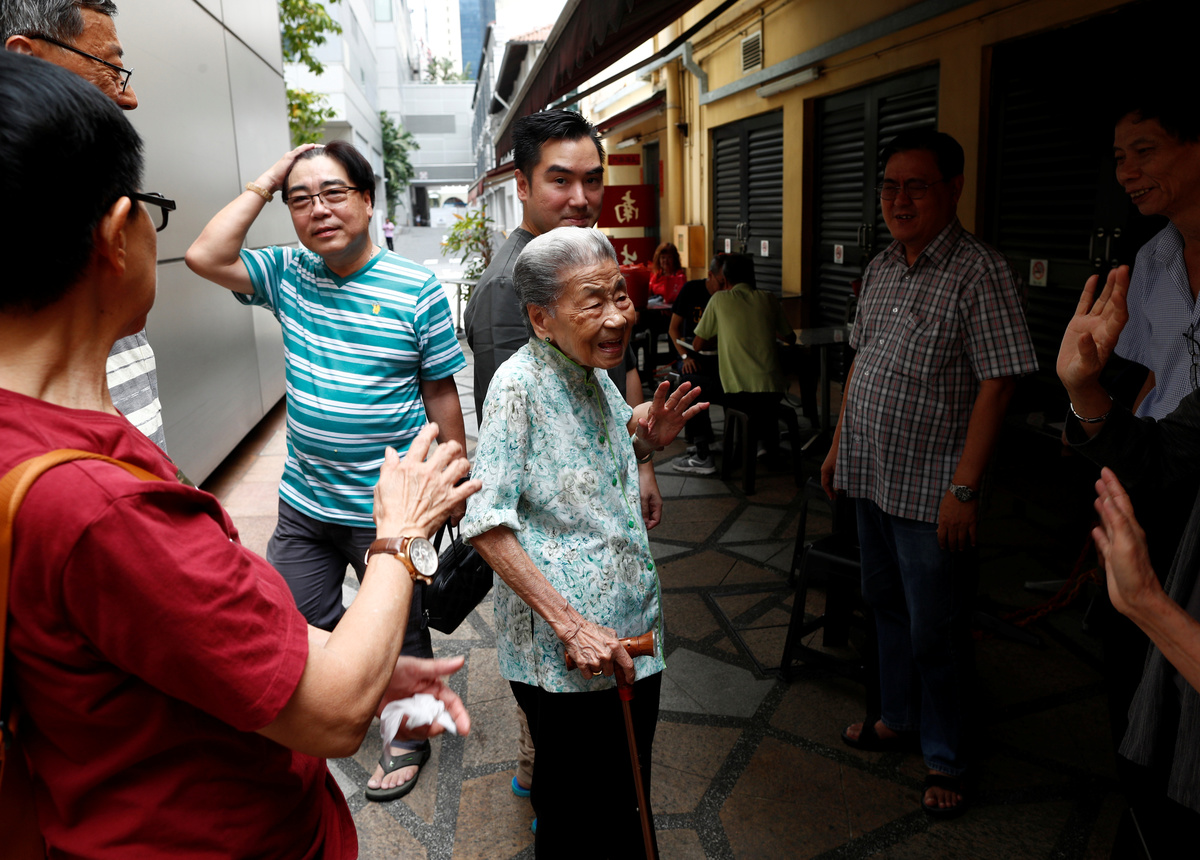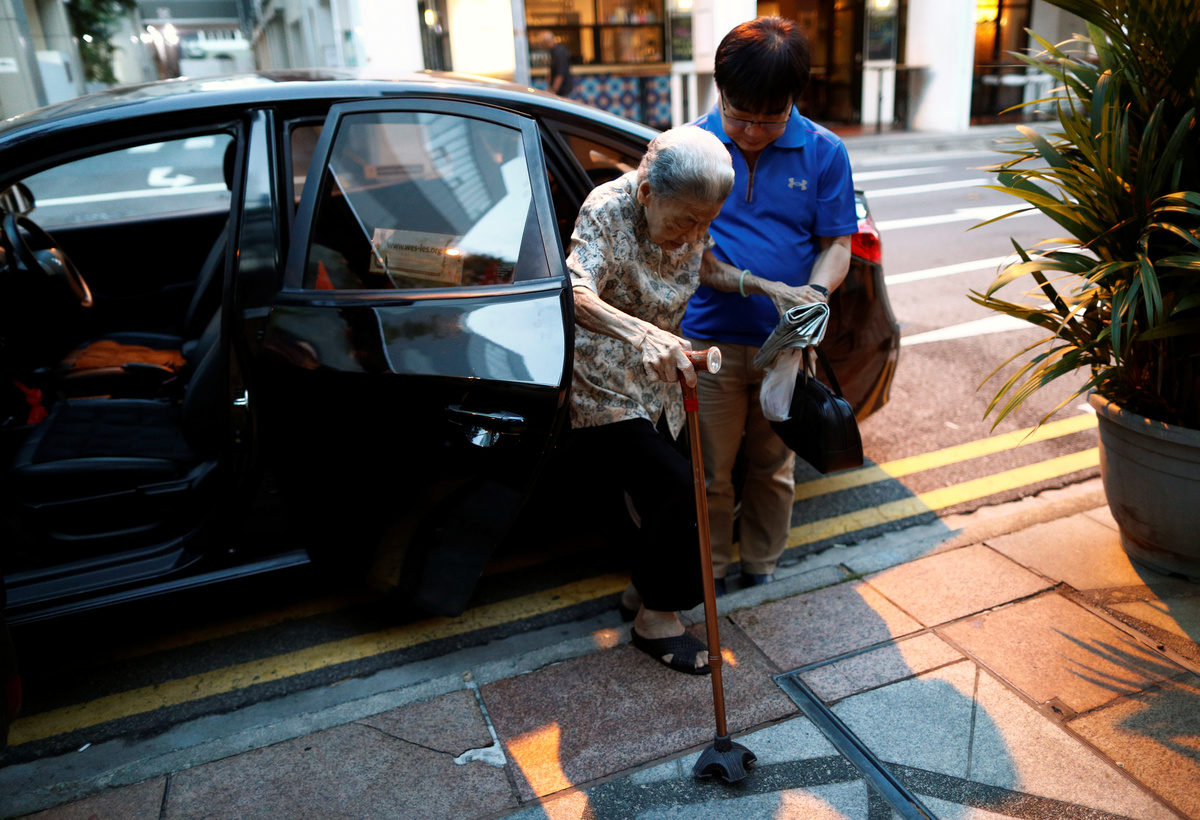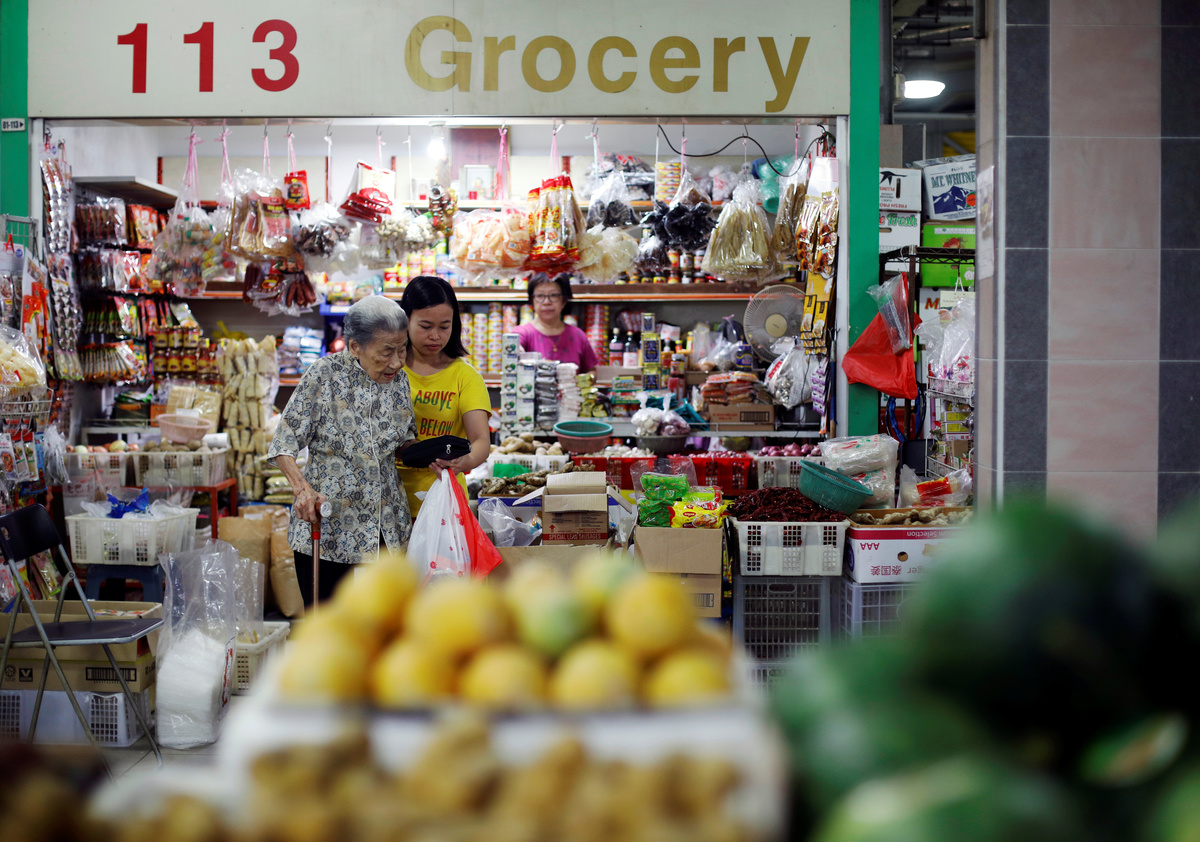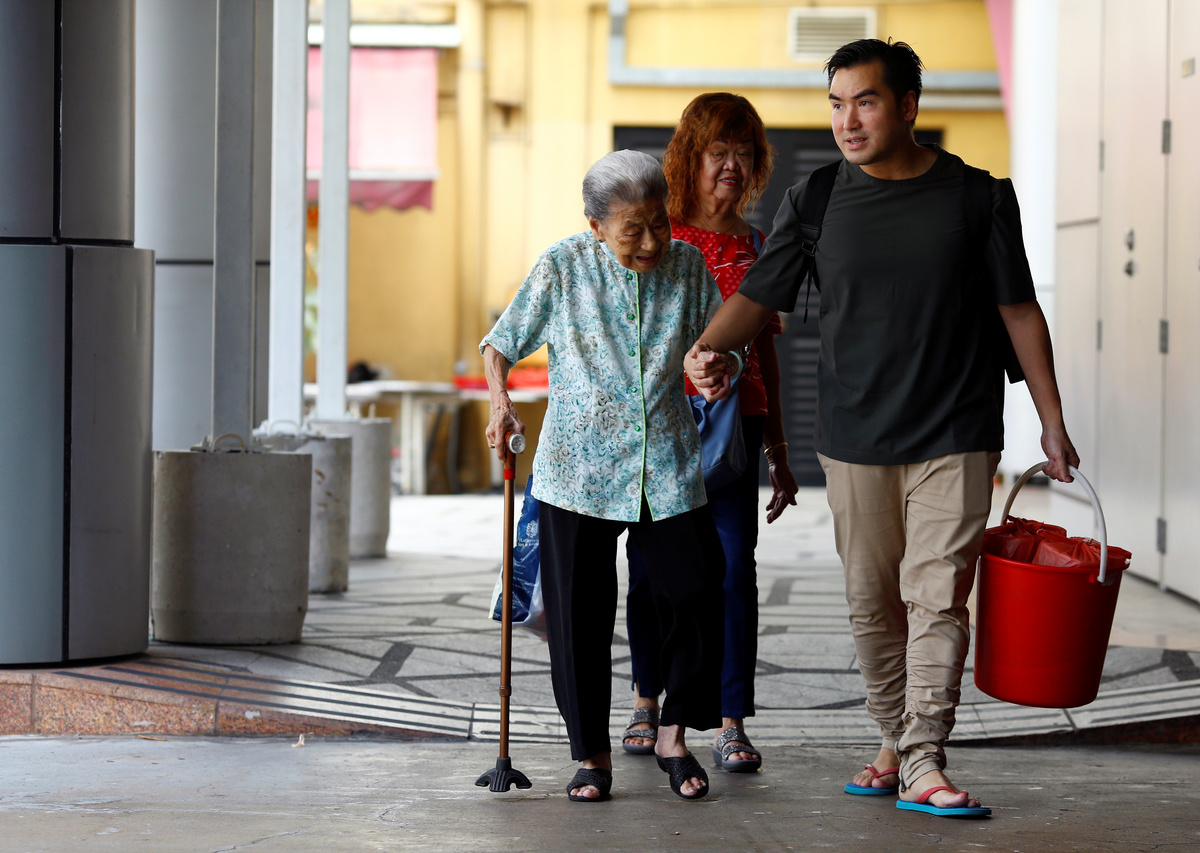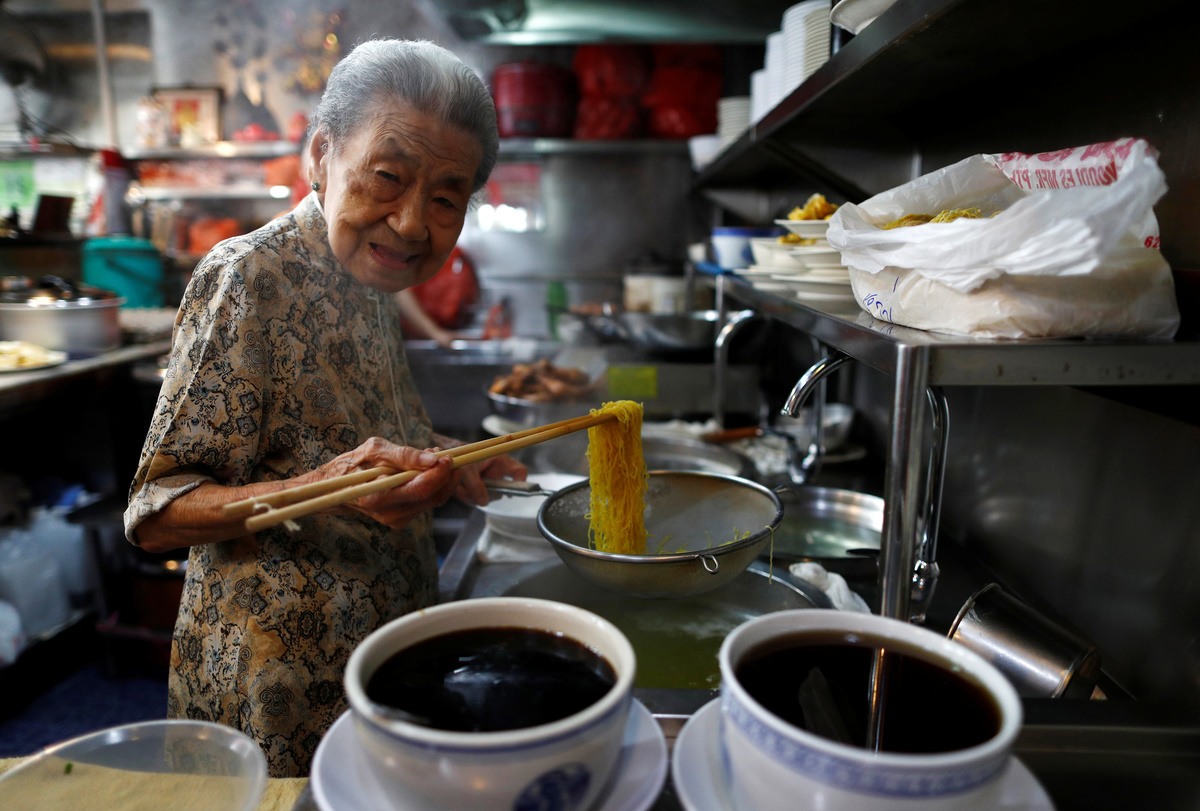
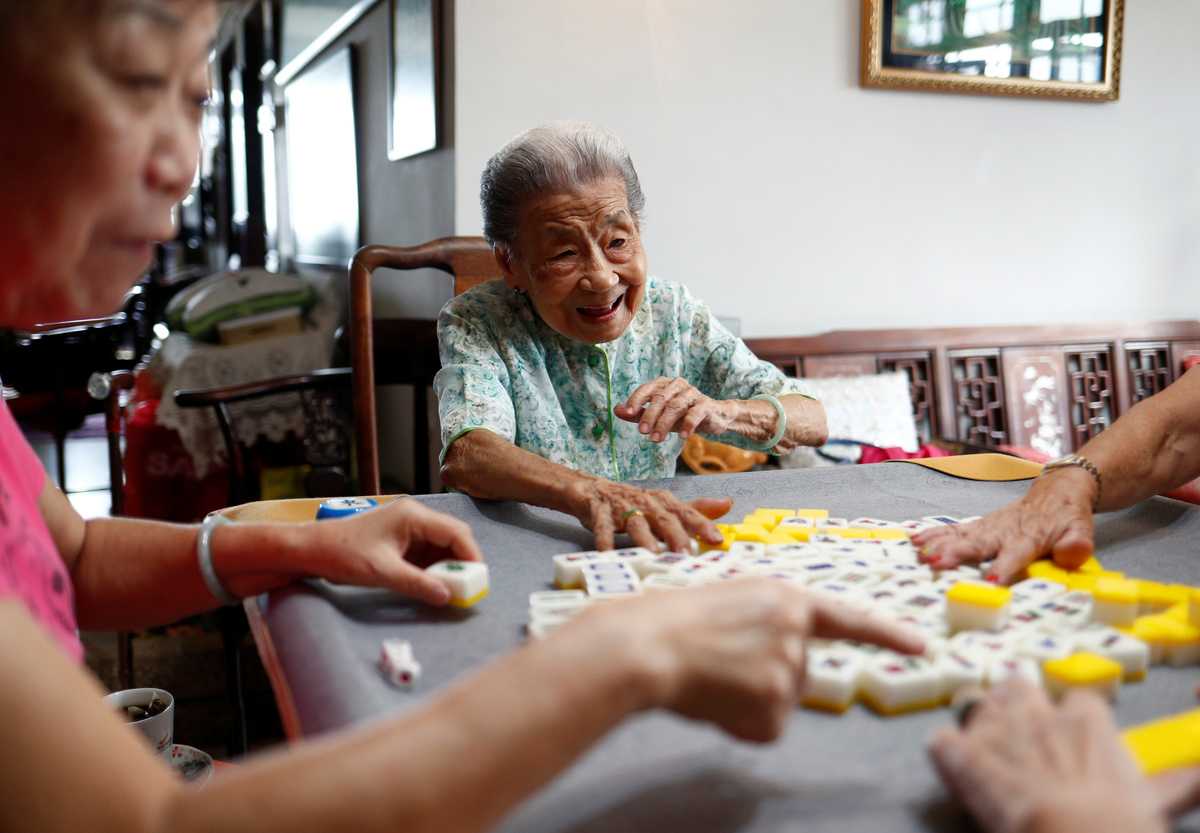
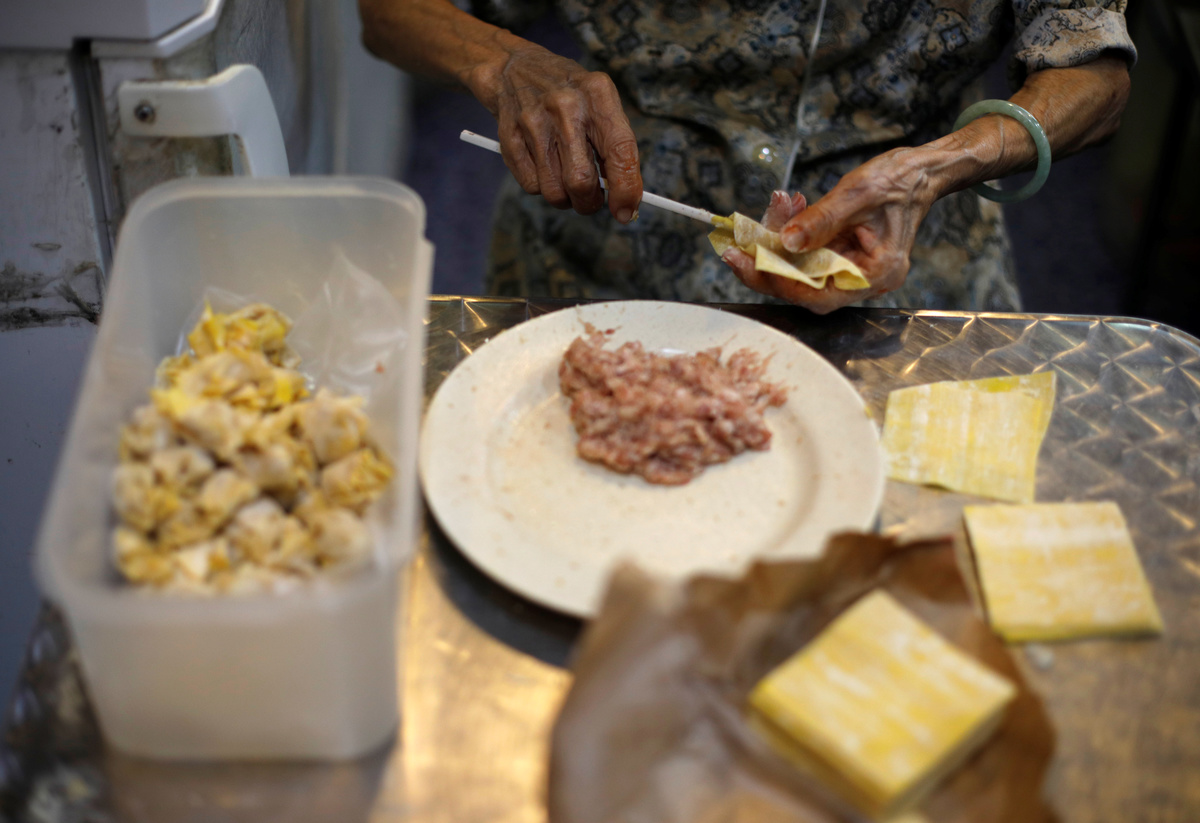
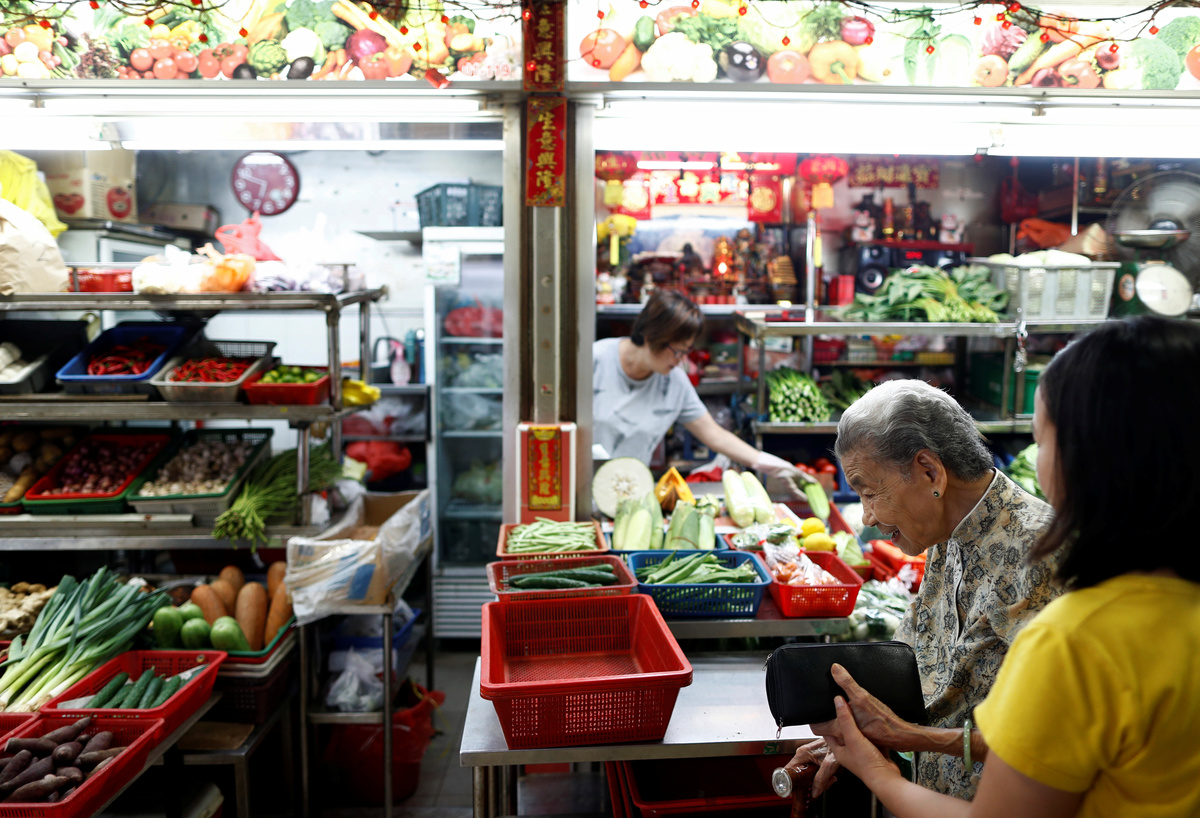
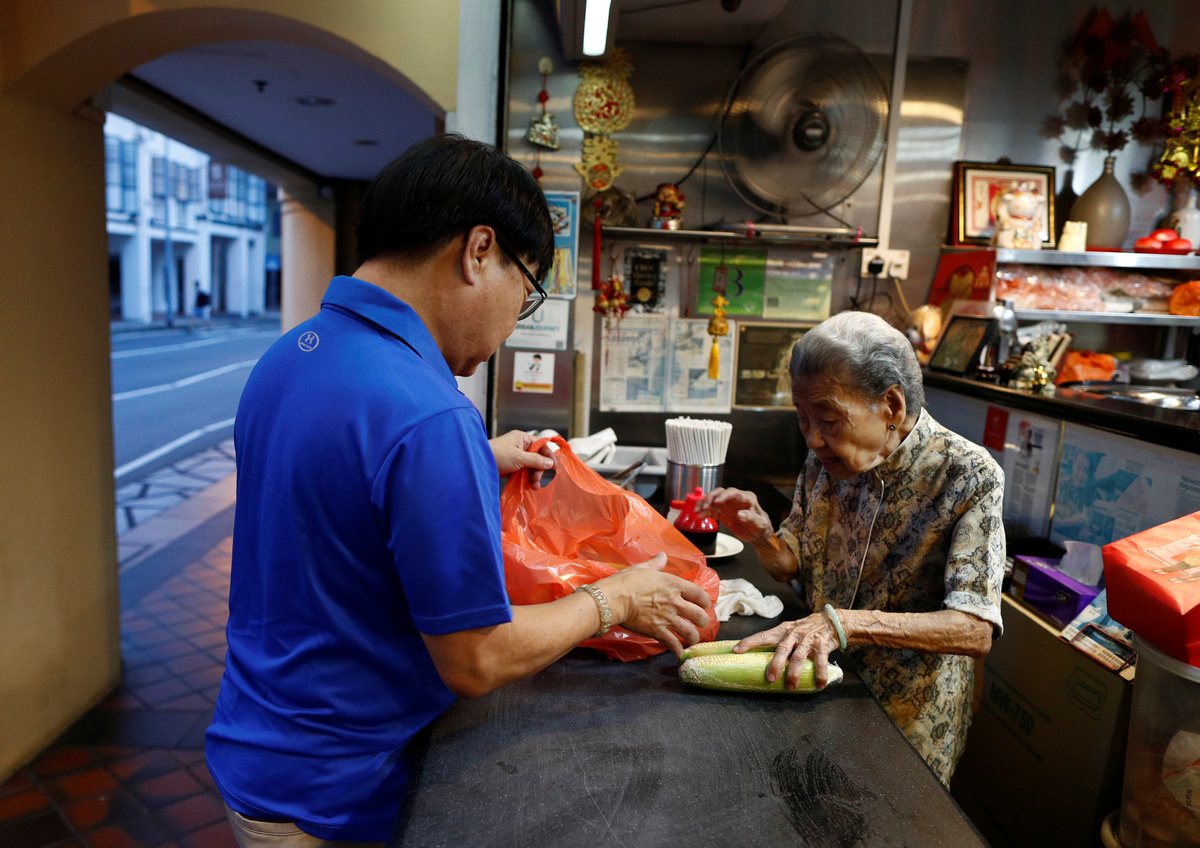
SINGAPORE (Reuters) - Leong Yuet Meng cannot walk more than 10 meters without assistance. Yet, the frail 90-year-old still runs a wonton noodle stall in downtown Singapore, selling at least 200 bowls on any given day.
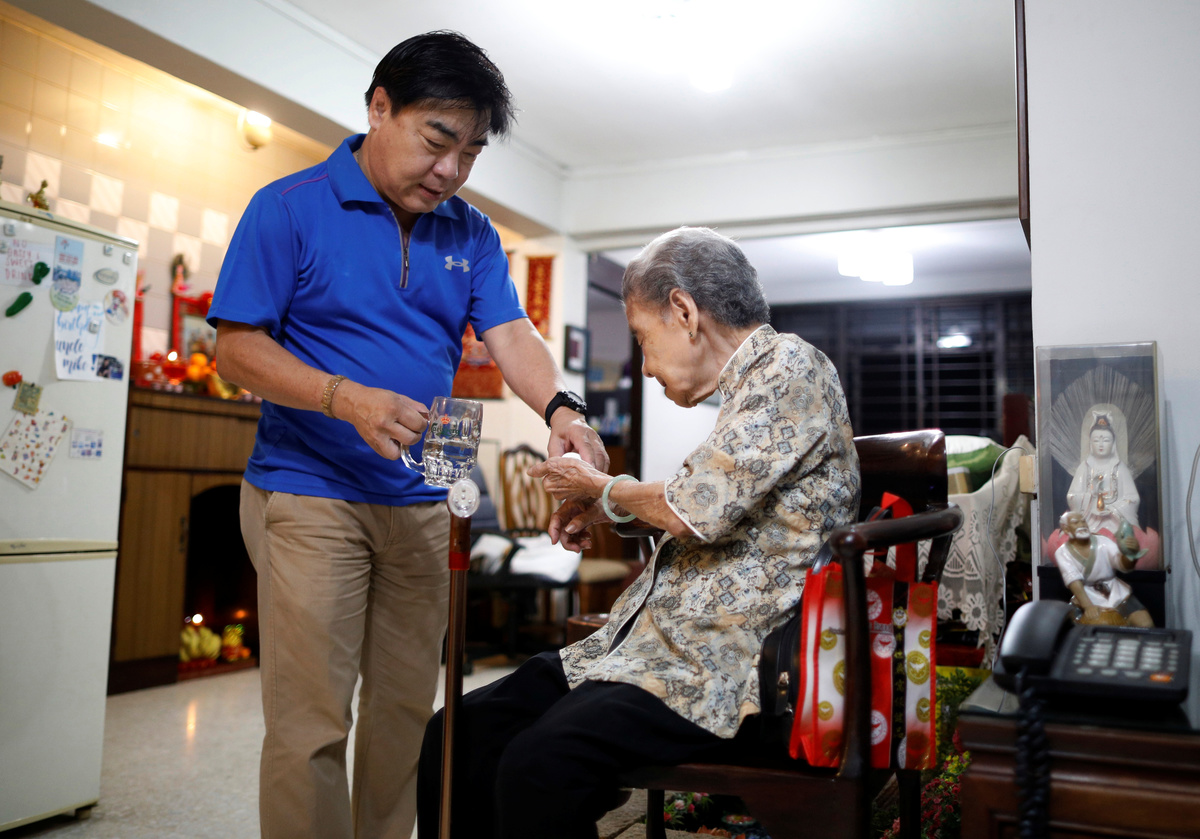
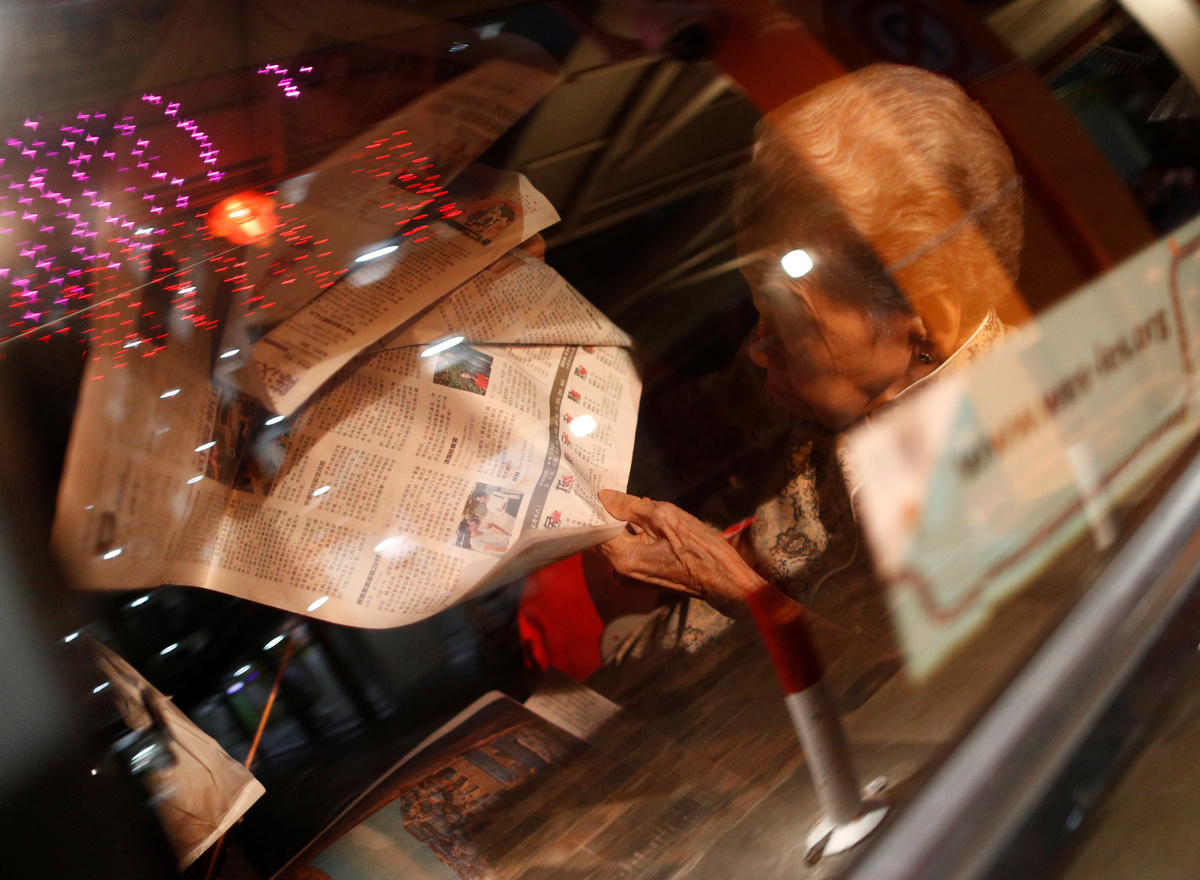
Leong rises around 4 a.m. to do some accounting and prayers before her son drives her to the local market to buy ingredients for the day ahead.
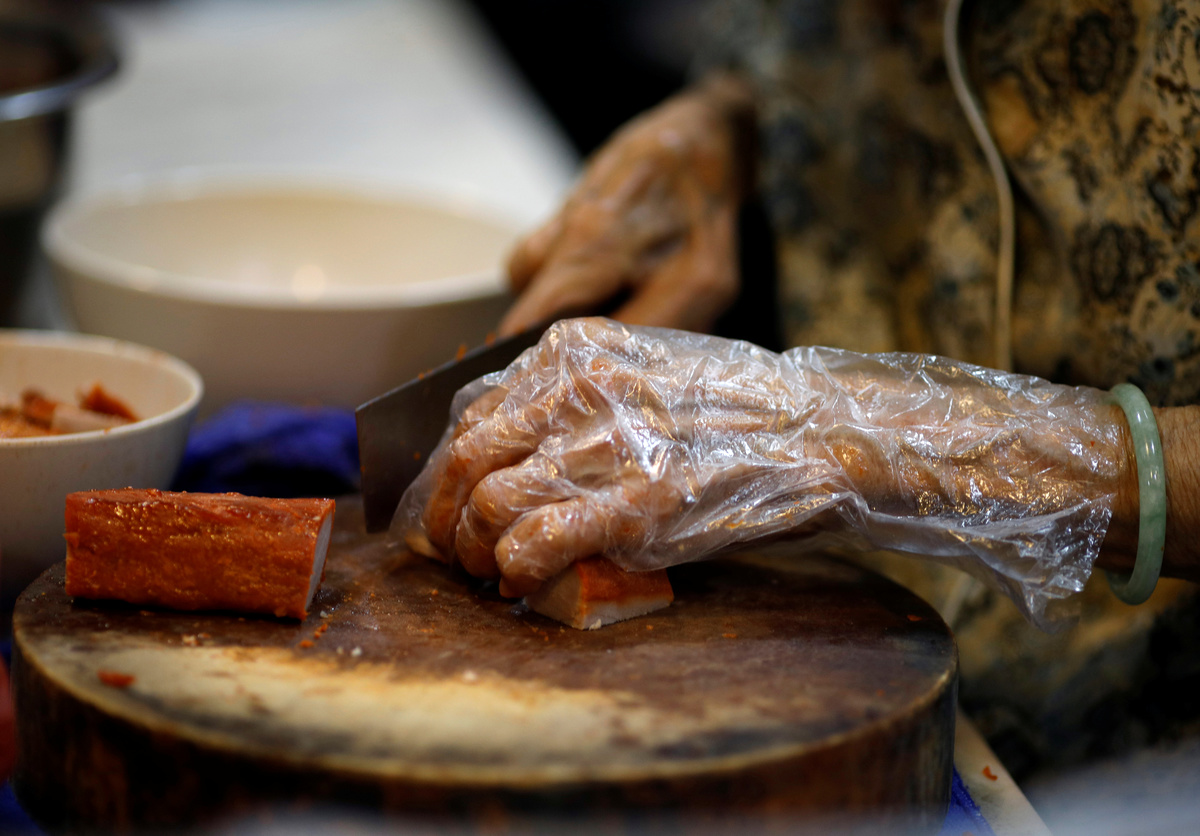
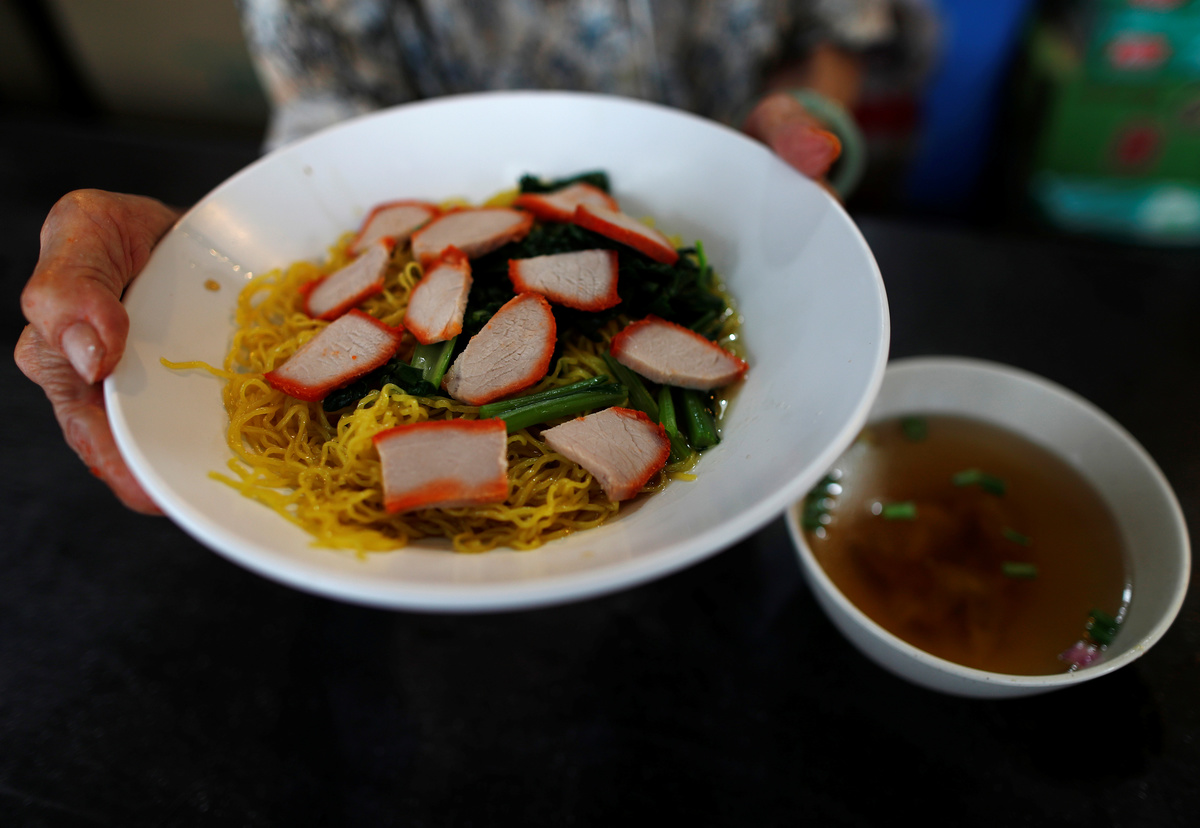
From 8 a.m. to 5 p.m., she is hunched over a pot of simmering noodles, slicing char siu - barbecued pork belly - or serving bowls of bargain-price hot food.
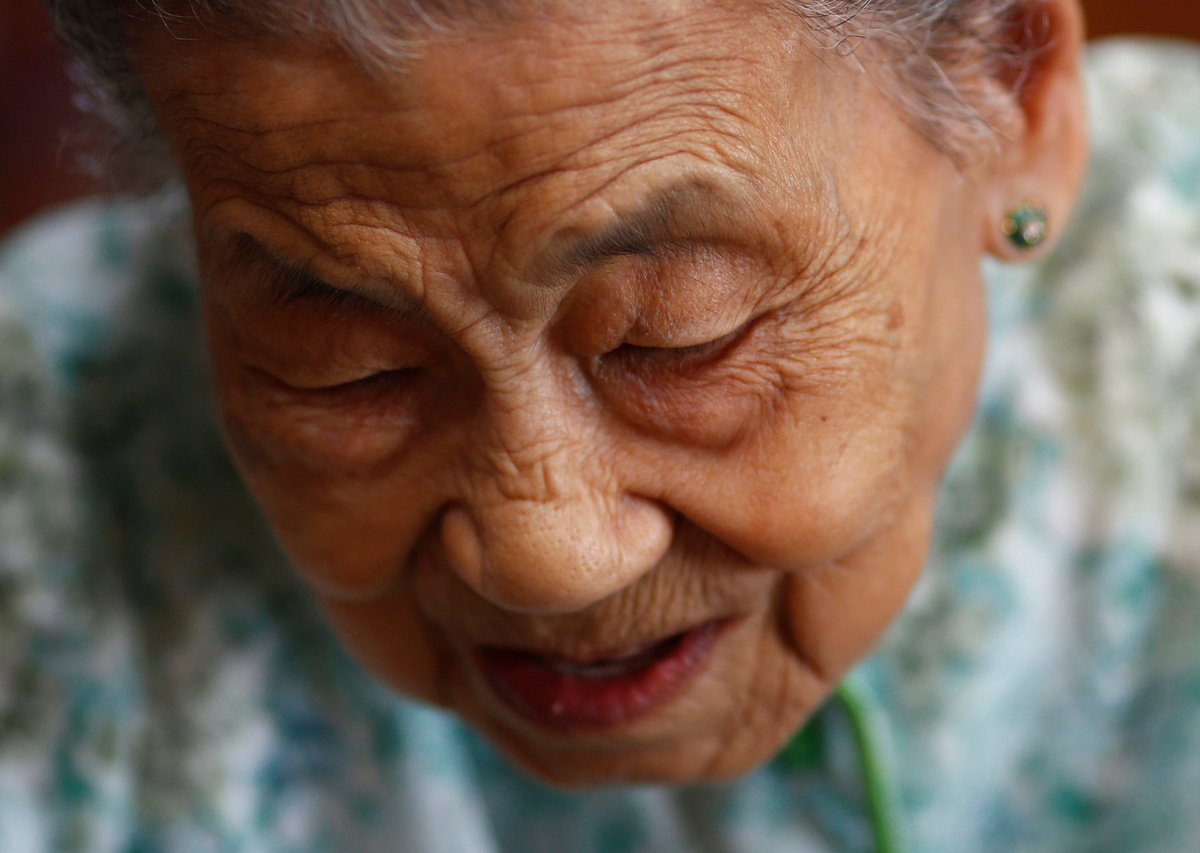
"I try to do this as long as I can, but I am old," said Leong, one of many older food vendors or 'hawkers' in the Asian city-state.
"I am afraid that all the experience that I have accumulated over the years will be lost. None of my children can take over."
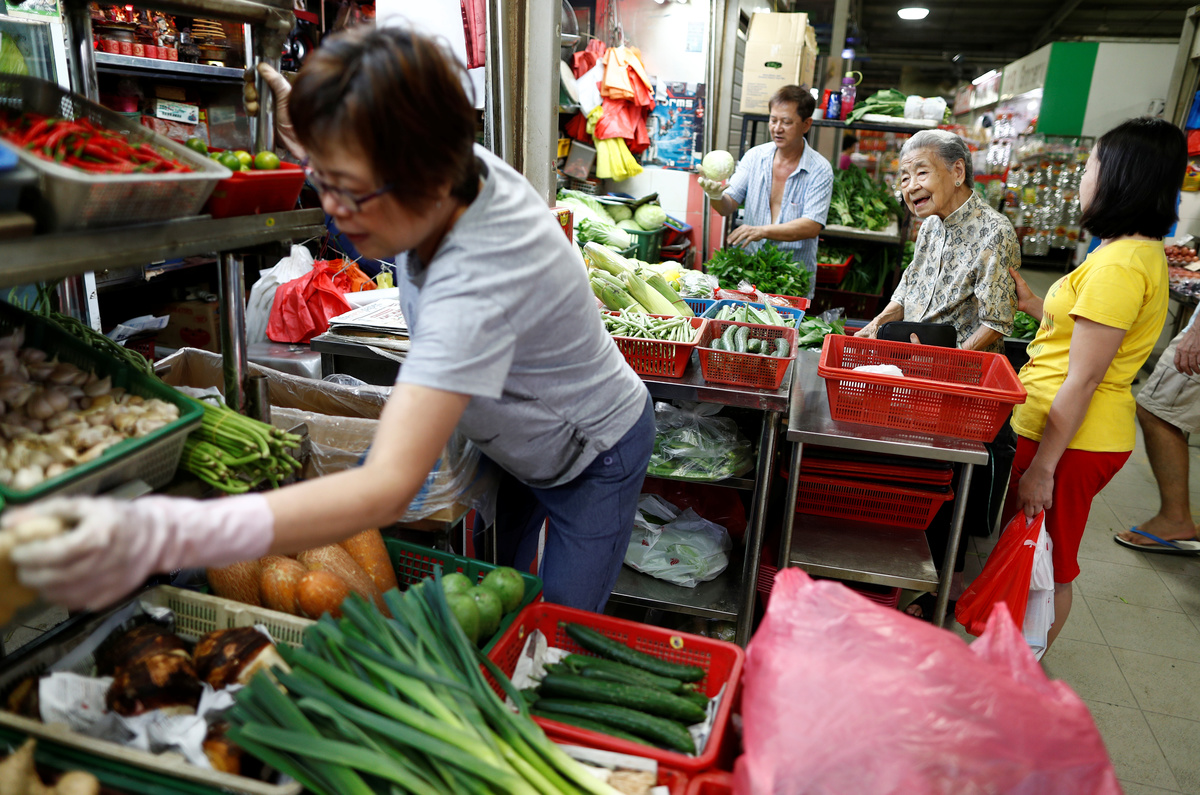
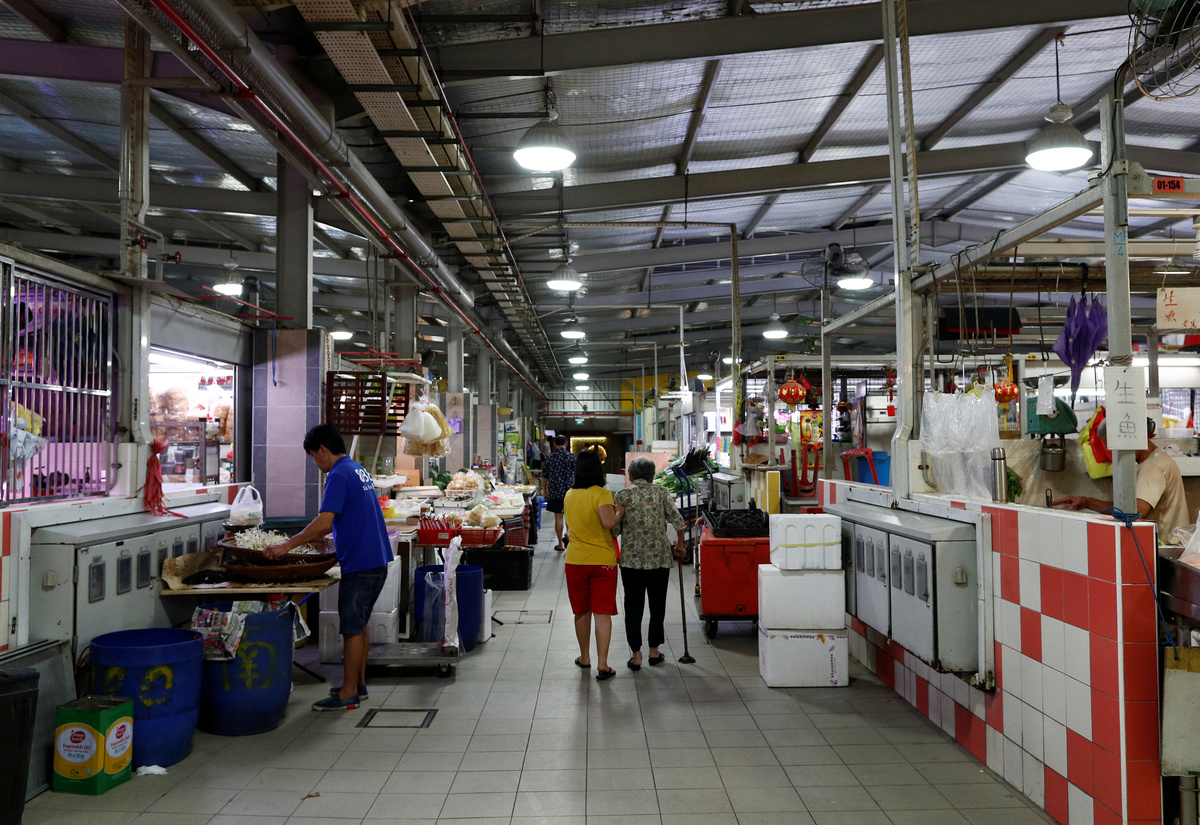
The city has about 110 hawker centers - open-air food courts set up to house former street vendors in an effort to clean up the island in the 1970s - and their over 6,000 stalls are mostly packed.
The government has said it will submit a bid this month to add its hawker culture to UNESCO's Representative List of the Intangible Cultural Heritage of Humanity.
"We're putting the finishing touches (on the nomination)," Yeo Kirk Siang, a director at Singapore's National Heritage Board, told Reuters. Nominations will be accepted until March 31 to be included on the list next year.
Celebrity chefs Anthony Bourdain and Gordon Ramsay have effused over typically Singaporean dishes like chicken rice; some hawker stalls serve up the cheapest Michelin star meals at $2; and last year's Hollywood hit film Crazy Rich Asians showed its stars tucking into heaped plates at a famous Singapore night market.
But the enthusiasm cannot mask one underlying problem - Singapore's hawkers are getting older and their better-educated sons and daughters are increasingly shunning cramped, sweaty kitchens for office jobs.
The average age of hawkers is 59, according to a government report, well above the national workforce average of 43.
"UNESCO is not a silver bullet, it is just one of the things we need to do... to keep hawker culture alive," said Yeo.
FACING EXTINCTION?
To encourage Singapore's street hawkers to resettle into the centers in the 1970s, the government heavily subsidized hawker rentals.
While around 40 percent of older hawkers still enjoy low rents, new hawker stalls are sold in an open bidding process, often making rentals much more expensive, especially at popular sites.
One hawker, 38 year-old Lance Ngo, said that finding hawkers in their 20s "is more difficult than finding gold".
The government has introduced schemes in recent years to get veteran hawkers to pass on their skills to the next generation, teach business skills and subsidize equipment and rent to reduce overhead costs.
This has attracted some young hawkers looking for an escape route from dead-end office jobs.
"A lot of young people do see it as an avenue to be able to create and be their own boss," 32 year-old coffee stall owner Faye Sai said. "This has attracted younger hawkers and career switchers but that's a minority."
But others say more needs to be done to make the business more lucrative longer term.
"Before applying for that (UNESCO), I think they have to settle the problems in front of them first. Twenty years down the road when all the older generation pass away, who is going to take over?," said Alan Choong, a 24-year-old owner of Sino-Japanese fusion food stall Prawnaholic.
Lee Sah Bah, a hawker in his late 60s who sells Chwee Kueh rice cakes at less than S$2 a portion, says he also faces the prospect of his legacy dying out.
His two daughters - one a lecturer at a university in Melbourne and the other an accountant in Singapore - won't take over his business.
"I don't think hawker centers will exist in the next 50 years," Lee said. "It's too much hard work, we have to put in 16 hours a day sometimes. It's hot. Kids nowadays wouldn't want to work here."
(This story has been refiled to correct spelling of wonton in paragraph one)
(Reporting by Fathin Ungku and John Geddie, Additional reporting by Edgar Su,; Editing by Raju Gopalakrishnan)