The Nuclear Regulation Authority (NRA) on Wednesday approved a report confirming that safety measures at a nuclear fuel reprocessing plant run by Japan Nuclear Fuel Ltd. (JNFL) comply with new regulatory standards.
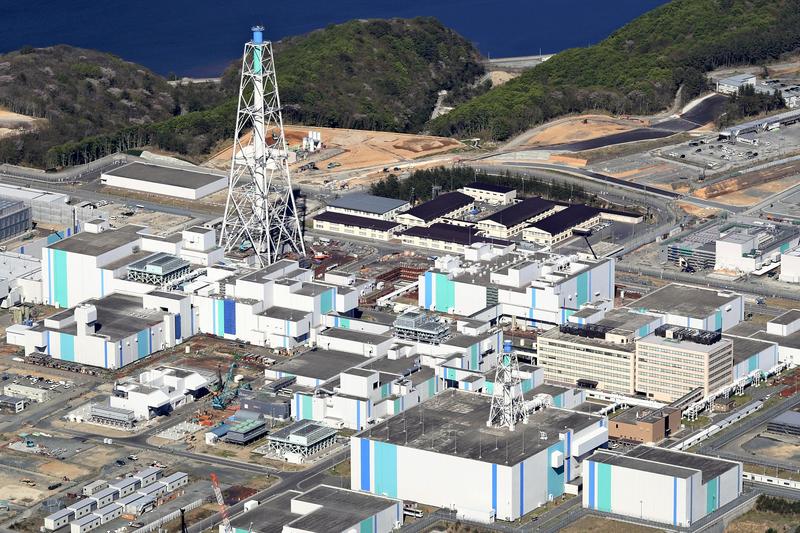
The Rokkasho Reprocessing Plant in Rokkasho, Aomori Prefecture, is the core facility of the nuclear fuel cycle and central to the nation's energy policy to reuse nuclear fuel. Having got through the screening process, the plant has cleared a major hurdle in the process for beginning operations 27 years after the start of construction in 1993.
Prior to approval, JNFL announced a plan to complete the necessary construction work by September 2021 and start operations in January 2022 with the approval of the prefecture and Rokkasho village. The NRA will simultaneously carry out a further screening process to check the details of the construction work, but this process is expected to take more than a year. JNFL will likely delay the target date for the plant's start.
At reprocessing plants, uranium and plutonium are extracted from spent nuclear fuel through complex chemical processes. The reprocessing plant needs different safety measures from nuclear plants, as it has a total of six main buildings to handle radioactive materials, connected by 1,300 kilometers of pipes.
In its safety measures, JNFL assumes there could be an accident in which high-level radioactive effluent generated in the reprocessing process boils and leaks steam containing radioactive substances. The NRA approved a measure suggested by JNFL to introduce a special device to collect water vapor.
As for measures against natural disasters based on excavations of land on and off the site, the basic earthquake ground motion -- the maximum tremor that could be expected in an earthquake -- was estimated with strict standards. Reinforcement work to protect buildings from tornadoes was also included.
In the wake of the 2011 nuclear accident at Tokyo Electric Power Company Holdings, Inc.'s Fukushima No. 1 nuclear power plant, the NRA introduced new regulatory standards with stricter safety measures for nuclear facilities and spent more than six years reviewing the reprocessing plant, from January 2014 onward.
In a test operation prior to the screening process, trouble occurred in the equipment during a process to solidify highly radioactive effluent using glass. JNFL will conduct another test run before the plant goes into full operation to see if any problems arise.
To date, JNFL has reviewed the construction schedule 24 times, and the total cost has increased to nearly four times the original estimate to reach 2.9 trillion yen.
For Japan, which has few natural resources, the nuclear fuel cycle is indispensable for energy security. Uranium fuel was once thought to be depleted in the future, but as the world's estimated reserves of uranium have been reviewed, there is less concern over this.
Read more from The Japan News at https://japannews.yomiuri.co.jp/