At 11.30 on Monday morning, there was a queue of cars, two vehicles deep and several miles long, for the Greater Pittsburgh Community Food Bank in Duquesne, Pennsylvania, waiting for the two boxes of food offered when it opens at noon. Every week the lines get longer.
Two days later, Bernie Sanders, the left-wing challenger for the Democratic presidential nomination, withdrew from the race and vowed to back the presumptive nominee, former Vice-President Joe Biden.
America on the edge
The coronavirus has made the case for universal health care, a welfare state and tackling inequalities in a manner that Mr. Sanders was unable to. Even before the pandemic struck, a significant portion of the country was on the brink: four in ten American adults could not withstand an unexpected $400 expense. Now they have been pushed over the edge.
The trouble, for Mr. Sanders, is the lesson came too late and too few people believed that he was either capable of defeating President Donald Trump or getting his agenda through Congress or both. Put bluntly, in a moment when progressives believe American democracy is in peril at the hands of an egomaniacal right-wing demagogue, too many liberals thought it was too great a risk to stand a septuagenarian Jewish socialist from Vermont who had a heart attack six months earlier.
That concern was not entirely justified. Throughout February, Mr. Sanders led Mr. Trump in every poll by between 2% and 8%. The early States he performed well in — Iowa, New Hampshire, Nevada — were all the kind of swing States Democrats need to win in November.
Editorial | Victory in defeat
But the more he won among Democrats and threatened to break the mould the more those who had been set in that mould, insisted he would lose against Mr. Trump. The confidence in his unelectability sat somewhere between a script and an incantation, recited dutifully and earnestly by the media and political establishments, most of whom had insisted that Mr. Trump could never win the presidency.
If he won the nomination not only would he be running against Mr. Trump but the Democratic machine. After he won Nevada and it looked like no clear contender had yet emerged, Matt Bennett, of the moderate group, Third Way, told Politico: “It’s this incredible sense that we’re hurtling to the abyss. I also think we could lose the House. And if we do, there would be absolutely no way to stop [Trump]. Today is the most depressed I’ve ever been in politics.”
Cornerstone constituency
There was no justification for this bed-wetting. But concerns about his electability were not entirely unjustified either. Despite considerable and concerted efforts, he failed to convince African Americans that his candidacy was viable. That is no small thing. African Americans are the cornerstone of the Democratic coalition: the party has only won the presidency with the white vote alone once — in 1964 — since the Second World War.
It was not his programme they did not like. African Americans were more likely to support universal health care and free college tuition than any other ethnic groups. It was either him or his capacity to achieve those goals, they were unconvinced by.
Analysis | What’s next for Bernie Sanders’s ‘revolution’?
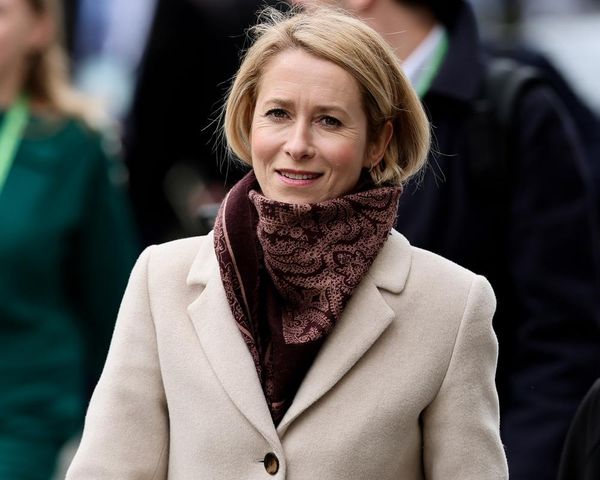
“I think African Americans, particularly older ones, have learned not to expect too much from Democratic politicians,” explains Keeanga-Yamahtta Taylor, a Princeton professor in African American studies. “Because that’s what they usually get.”
His other key vulnerability was younger voters, who did back him — including, it should be noted, younger African Americans — but did not turn up in sufficient numbers to make a difference. Mr. Sanders had predicated his potential on his ability to change the electorate by galvanising non-voters. If they were not going to show up then a crucial part of his coalition would be missing.
In this sense, Mr. Sanders’ precarity was, at its root, similar to that of his counterpart in the United Kingdom, the former left-wing leader of the Labour Party, Jeremy Corbyn. Their ascent was disorganic. They did not emerge from a deeper movement seeking electoral representation that could sustain them, but were, instead, the product of a broad, amorphous, alienated sentiment that sought electoral remedy through them but had no infrastructure to make that happen. Given his agenda, Mr. Sanders’ appeal was considerable: but it did not take sufficient root beyond his base.
His prospects went south when the voting went South. The first state in the former Confederacy to vote, South Carolina, was the first in which the African American vote was decisive. Mr. Biden won handily. Democratic grandees would have settled for anyone but Mr. Sanders. The trouble is, until South Carolina, they did not have anyone.
U.S. Presidential Election 2020 | Biden vs. Trump: stage set for November
As Mr. Biden rose, other centrist candidates — some of whom had been outperforming him — pulled out and endorsed him. After Super Tuesday, when, apart from the big prize of California, Mr. Sanders won little else, his candidacy was effectively over.
But the political questions it raised are more pertinent than ever. That line in Duquesne, which is more than five times bigger than it was at the start of the pandemic, illustrates the transformative nature of this crisis. The day after Mr. Sanders withdrew, unemployment rose by 6.6 million bringing the number who have lost their jobs in the last three weeks to 16 million. Recovering from the global economic depression, we are about to experience demands of a thoroughgoing structural alternative to neo-liberalism. That is what Mr. Sanders was suggesting: that is why the establishment was so desperate for him to lose.
On Biden
Clearly, that alternative is by no means the only scenario; Mr. Trump could win and things can get even worse.
But a Biden candidacy is by no means a risk-free proposition. Far from it. There is a reason why South Carolina was the first State he has won in the three times he has run for the presidency in 32 years (1988, 2008, 2020). At the best of times he is a terrible candidate. On the stump he rambles hopelessly, losing himself midsentence, wandering into rhetorical cul-de-sacs and is overly tactile with women. He told a crowd in Houston he was looking forward to Super Thursday and once confused his wife and his sister, who were both on the stage with him.
And these are not the best of times. The trouble is not just his performance but his politics. He was an enthusiastic backer of the North American Free Trade Agreement, the Iraq war, deregulation and social security freezes, which does not leave him with much to take on Mr. Trump with.
And so it is that after three-and-a-half years that have seen the largest demonstrations in U.S. history, including two women’s marches and a youth-led protest against gun control, we end up with a 77-year-old man who is to the right of Hillary Clinton.
U.S. Presidential Election 2020 | Joe Biden’s next big decision: Choosing a running mate
Mr. Biden won the nomination by not being Sanders; but not being Trump may not be enough to seal the deal in November. A poll two weeks ago showed he attracted the lowest recorded amount of ‘strong enthusiasm’ among his own supporters for any Democratic presidential hopeful in the 20 years of polling. Mr. Trump’s base remains fired up.
Coronavirus has made a volatile electorate and a fragile political culture even more unpredictable. Anything could happen. Both Mr. Biden and Mr. Sanders represented a risk. But Mr. Sanders was a risk worth taking; Mr. Biden is the risk we are now stuck with.
Gary Younge is a professor of Sociology at Manchester University and the former U.S. correspondent for The Guardian