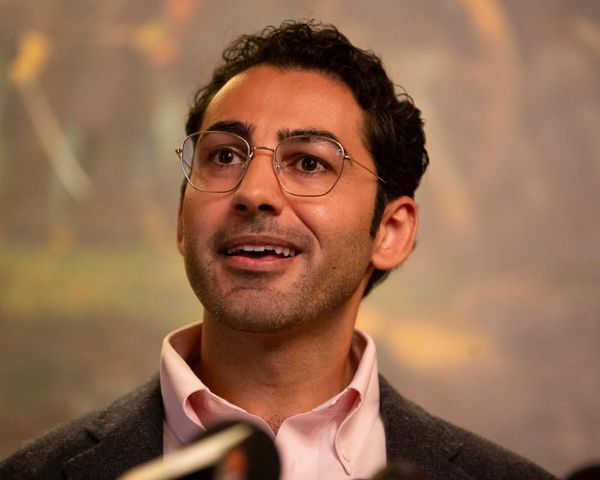
Stagecraft or scene-stealing? ... A portrait of Juan Diego Flórez.
Opera is in many ways an exemplar of artistic compromise, so it seems odd that so many have always held such strict views on it. By compromise I don't mean that it's crap - although some opera most certainly is crap - but rather that the competing interests of composers, singers, writers, directors, designers and choreographers (not to mention audiences, critics, academics, impresarios) all collide when it comes to constructing and performing opera, with no guarantee of a peaceful conclusion.
A stricter view than most has been enshrined in law at the New York Metropolitan Opera since 1994. According to this law, conceived in the interests of critics' and academics' notions of artistic integrity, singers should not repeat themselves. No matter how rapturous and overpowering the applause with which an audience might greet a lively number, the amendment to Met law stated, encores were strictly out.
Until two nights ago that is, when Peter Gelb, the Met's general manager, decided that encores are back in vogue and revoked the law until further notice. In a carefully choreographed representation of spontaneity, Gelb monitored the audience's reaction to Juan Diego Flórez's rendition of Ah! Mes Amis, Quel Jour de Fête! (famous, partly, because it makes enemies of many lesser tenors), and indicated to Flórez that he should reprise the number. Audience, impresario, singer, critics, all were delighted. And quite right too.
Encores used to be a regular part of operatic life. For most of the eighteenth century, in fact, encores were standard practice in any performance, regardless of the gravity of the dramatic content. Opportunities for repeated displays of the vocal wares on display served perfectly the interests of the all-powerful star singers and their adoring fans.
But even then singers and their audiences, as eager for sensation and spectacle as any today, were ridiculed for the practice - by Pope, among others: "To the same notes thy sons shall hum or snore / And all thy growing daughters cry encore") - and accused of disregarding the importance of dramatic continuity.
Later, composers rebelled against the masses, led initially by the good knight Gluck, and musico-dramatic considerations grew in influence until the position was reached that held sway for much of the last century, which was that all that mattered in opera was the music. Which is how the Met ever got itself into the sorry state it was in, until Tuesday night.
That is not to say that the music doesn't matter. Obviously it does. But, simply, only a very few operas answer to the kind of all-embracing, second-to-second sense of aesthetic necessity that holds sway over, for example, a Beethoven string quartet. Our sense of what most operatic works are is easily flexible enough to incorporate digressions, diversions, repetitions, even changes of cast. Operatic dramaturgy rarely has much truck with realism - despite what those who coined the term "verismo" might have supposed - and our sense of an opera's dramatic arc is fed by a plethora of unfolding structures.
Audiences tend to know best what they want, anyway. In the grip of Tristan and Isolde's world-shattering Act II duet - a moment as suffused by anti-realism as any in the history of art - even the stone deaf would realise this is no moment to cry out for more. But in Donizetti's La Fille du Régiment, an opera clearly conceived in terms of "number arias" which punters could "take home", to prevent an encore goes as much against the work's artistic spirit as an attempt to repeat its denouement would offend the dramatic coherence of Hamlet.

.jpg?w=600)