
Many COVID-19 patients are suffering aftereffects despite subsequently testing negative. There are also many cases of young people seeking treatment although they were considered to have a low risk of developing severe COVID-19 symptoms, before the spread of mutated variants of the novel coronavirus.
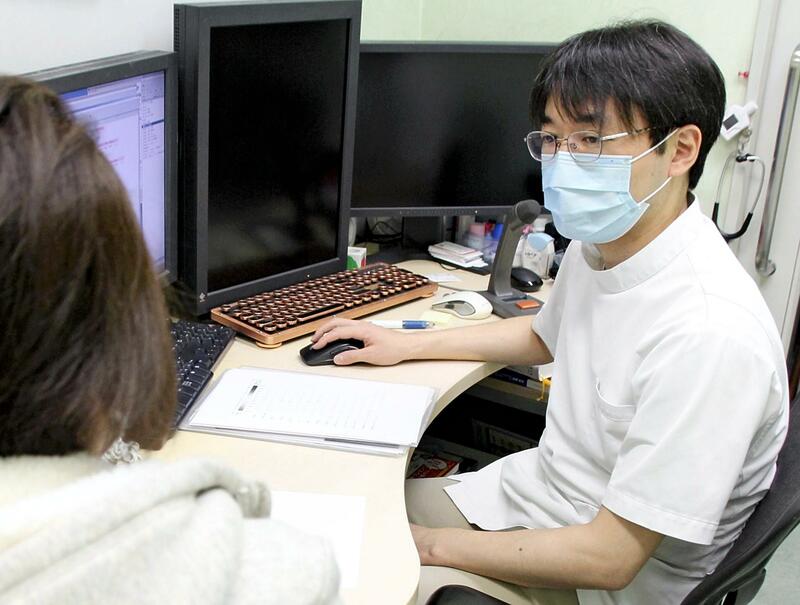
In mid-March, Dr. Koichi Hirahata examined a female Tokyoite in her 40s at his Hirahata Clinic in Shibuya Ward, Tokyo. The clinic has outpatient services dealing with the aftereffects of COVID-19.
"You're getting better, but have not fully recovered yet," Hirahata said. "Take it easy and don't make yourself tired."
The woman was infected with the novel coronavirus in November last year. She has a chronic illness as well, so she was hospitalized for 10 days to receive treatment.
After she was discharged from the hospital, she continued to feel malaise and to have a dull pain in the back of her head.
She also continued to feel abnormalities related to her senses of taste and smell. She said that coffee and her favorite barbecued meat dishes only smelled as if something was burning.
By the end of the last year, she found clumps of her hair fall out as she brushed, so she went to the Hirahata Clinic.
She began taking Chinese herbal medicine prescribed by Hirahata and the symptoms gradually subsided, but she said she still feels lethargic.
In February, she quit her job to focus on her treatment. She is now worried about her future financial situation.
"It's hard to understand the pain and distress caused by the aftereffects unless you experience them yourself." she said. "I want the government to provide support to those suffering from the aftereffects of COVID-19 as well."
-- 74% in 20s to 40s
Hirahata's clinic specializes in internal medicine, but after receiving many consultations about COVID-19 aftereffects, he opened started the outpatient services in October last year. Currently, he examines more than 60 such patients a day, including those seeking treatment information online.
Recently, patients infected with mutated variants of the coronavirus have also started visiting the clinic.
"I can't catch up to all the patients that need to be seen, even though I've given up my days off," Hirahata said.
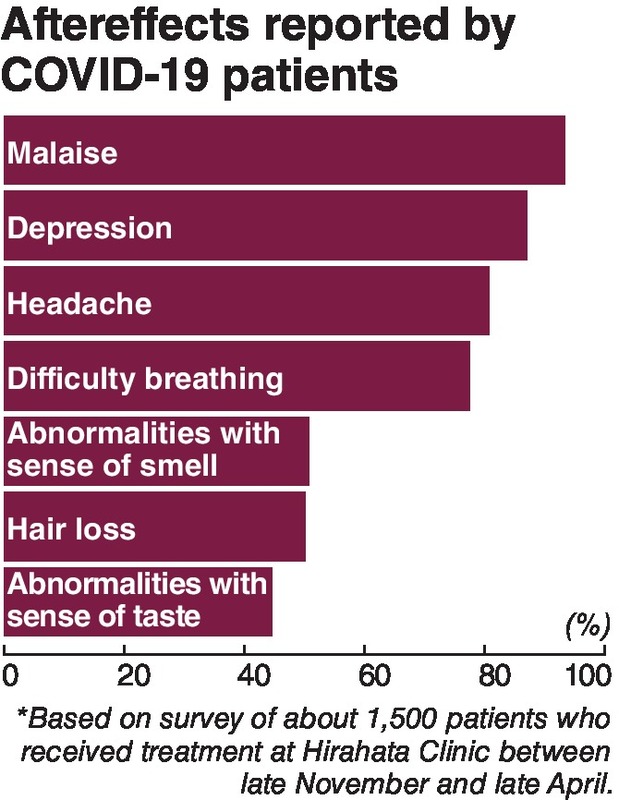
Of about 1,500 people who used Hirahata's special outpatient services through late April, 74% were in their 20s to 40s. When asked to list all the symptoms they felt they had, 93% said malaise, 87% cited depression, 83% said impaired thinking and 81% reported headaches. Abnormalities with their sense of smell was cited by 51% of patients and hair loss was reported by 50%.
These long-term effects have affected employment, too. Of the outpatients Hirahata examined, 343 people, or 40% of the 862 people who had jobs, were forced to take a leave of absence even after completing treatment. There were also 34 who were laid off, resigned or closed their businesses.
-- Even 4 months later
A survey was conducted by the National Center for Global Health and Medicine in Shinjuku Ward, Tokyo, on 63 people who were discharged from the medical institution between February and June last year after receiving medical treatment for COVID-19. Of these people, 48% continued to experience aftereffects two months after the onset of the disease and 27% did so even four months after onset.
According to Norio Omagari, director of the center's Disease Control and Prevention Center, there are cases where even young people have developed severe COVID-19 symptoms because of the mutated variants, but the details of the aftereffects remain unclear.
"We need to keep a close watch on future cases of infection with the mutated virus," Omagari said. "Although the detailed mechanism of the aftereffects is not known, there have been reports of damage to lungs, the heart and other organs. The most important thing is to not be infected with the virus."
Read more from The Japan News at https://japannews.yomiuri.co.jp/






.jpg?w=600)



