If Cambodian government officials thought Meach Sovannara would stay quiet after they threw him in prison, they were wrong.
From behind the walls of Prey Sar _ a crowded lockup in Phnom Penh _ Sovannara wrote a critical article this year about Cambodian Prime Minister Hun Sen, who has ruled the Southeast Asian nation for decades in what human rights activists often describe as a dictatorship masquerading as a democracy.
Sovannara said he wrote the article by hand and had it smuggled out of the prison. A few days later, the article questioning the outsize influence that the Chinese and Vietnamese governments seem to hold over Hun Sen was published on Facebook.
In Cambodia, political dissidents are often the victims of swift and brutal reprisals, and Sovannara had suffered them before. In 2003, he and his family fled to Long Beach, Calif., under threat of death. He was sentenced to 20 years in Prey Sar in 2015, for speaking out against the government during a public protest. After the article's publication, Sovannara said he was made to suffer once more.
The months that followed were "misery," Sovannara said. He and other political prisoners were jammed into a tiny cell as punishment, he said. They shared one toilet and spent their days with barely enough room to stand, much less sleep.
But Sovannara had been gambling with his own safety for years, and incarceration wasn't going to change that.
"Either we die, we are put in prison, or we escape," he said through a translator.
Sovannara, who was released from Prey Sar this summer, has held dual citizenship in Cambodia and the U.S. since he was granted asylum here 15 years ago and said he plans to continue his activism from afar, even though it may never be safe for him to return to his homeland.
A former teacher and journalist, Sovannara, 53, was working as a spokesman for the Cambodia National Rescue Party, which opposed Hun Sen's Cambodia People's Party, when he was arrested in 2014 after giving a speech at a protest in the nation's capital. He was convicted of attempting to incite an insurrection in 2015 despite no evidence being presented at his trial, according to Amnesty International.
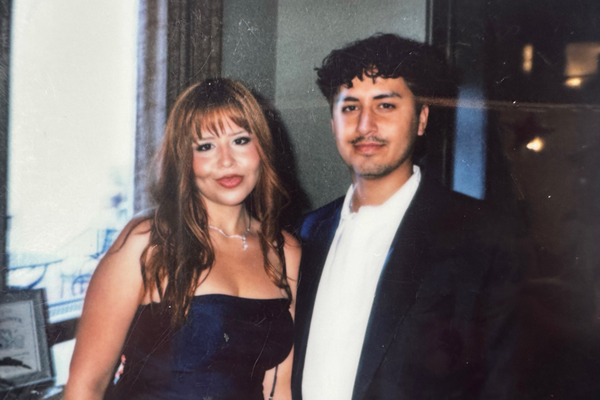
Sovannara's wife, Jamie Meach, and other activists in Long Beach's Cambodia Town neighborhood fought for his release for years through demonstrations, lawsuits and appeals to Hun Sen himself. Few, however, thought they would see him back home.
Sovannara's release was met with relief by his loved ones _ who joined him for a tearful reunion at Los Angeles International Airport last month _ and skepticism from experts on Cambodian politics. Some, like Occidental College professor Sophal Ear, say Hun Sen released Sovannara only because the activist and other members of the opposition party were no longer a threat to him.
Hun Sen dissolved the CNRP last year, and the Cambodian People's Party won every seat in the National Assembly after an election that most observers have dismissed as rigged. Kem Sokha, who led the opposition party, remains under house arrest in Cambodia and the government has either shut down or financially crippled most independent media outlets in the country, leaving little organized resistance to Hun Sen's rule.
Sovannara said he wants to continue his activism, whether he does so from California or by returning to Cambodia. He is planning to write a book about his time in Prey Sar and will probably continue to publish his views on Cambodia's political situation via social media and other outlets.
With Hun Sen's power solidified in Phnom Penh, experts say, a return home could be dangerous for Sovannara. But if he chooses to remain in Long Beach, his ability to broadcast his message in his native land would be muffled at best. After the shutdown of the country's last independent news outlet, the Cambodia Daily, in 2017, virtually all forms of media in Cambodia now have a pro-government slant, which would leave Facebook as one of the few ways Sovannara could communicate in the largely rural country.
"He can continue to have an impact through the kind of public commentary that would be carried on social media," Ear said. "Obviously that is going to be limited."
While Sovannara's status as an opposition party leader helped land him in prison, that reputation may have also kept him safe inside Prey Sar. Sovannara said he received routine visits from human rights advocates and U.S. Embassy officials, and Ear said his notoriety in Cambodia probably afforded him some protections from Prey Sar's otherwise rancid conditions.
"General population conditions in Prey Sar are terrible," Ear said. "But I'm sure that, as a dual U.S. citizen, they couldn't have made it the most horrible conditions."
But while Sovannara's visibility may have protected him from outright violence, it didn't earn him any favors from the prison staff either.
Shortly before he was jailed, Sovannara sustained a serious head injury in a car accident. During his first few months in Prey Sar, Sovannara said the effects of the crash caused persistent migraines and a fever that sometimes caused him to shake.
He repeatedly asked to be taken to a hospital, but the guards refused. It would take months before Sovannara was granted a one-hour stay at a Phnom Penh medical facility.
That lack of concern for Sovannara's well-being stretched to the end of his prison stay as well, he said. After learning that he managed to publish an article critical of Hun Sen from within the prison walls, police officials launched an effort to determine how he was communicating with the outside world in March 2018.
In public, the effort produced a laughable explanation. A prison spokesman told the Phnom Penh Post that Sovannara used a television to "speak online to the outside."
The punishment Sovannara received was cringe-inducing. He was shoved into a small cell along with 14 other opposition party members. As their months-long stay in the tiny space stretched into the summer, Sovannara said he was often slick with sweat and covered in mosquito bites as the temperatures climbed into the triple digits.
"It was very difficult, so cramped," he said. "Fifteen people living together ... we didn't even have space to sleep."
In the weeks since his return to the U.S., Sovannara has tried to focus on spending time with his wife and children. But even after being ripped away from them and subjected to the conditions inside Prey Sar, Sovannara said he hasn't ruled out the possibility that he might return home.
"My body, my conscience, would like to go back. This time, not to join in the opposition party but to work as an activist for human rights, for freedom. I would go to villages, to towns, and talk about the value of freedom ... that's my passion," he said. "But I would have to wait and see the political climate in Cambodia first."