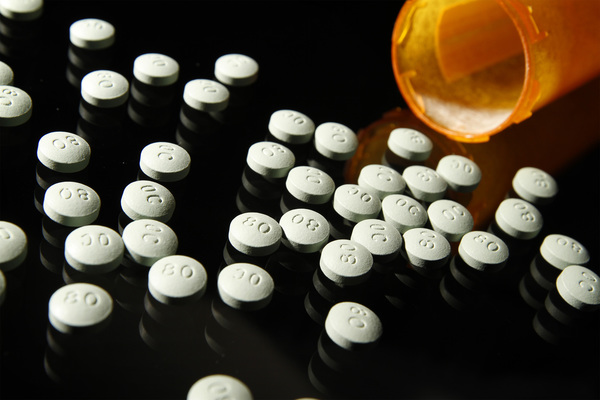
America's opioid crisis is fueled by prescription painkillers. Medications such as oxycodone, fentanyl and morphine were responsible for nearly half of the 33,000 overdose deaths recorded in 2015, according to the Centers for Disease Control and Prevention.
How did Americans get their hands on so many opioid pills? A new study suggests that surgical patients have plenty go to around.
Among 810 people who were operated on and sent home with a prescription for opioids, more than two-thirds wound up with unused painkillers in the weeks after their procedures, according to a report published Wednesday in the journal JAMA Surgery.
The researchers, from Johns Hopkins University, examined data from six previously published studies and organized it into seven categories according to the type of surgery the patients had.
At the low end of the spectrum, 67 percent of patients who went under the knife to treat kidney stones, prostate cancer or other urologic conditions had unfilled prescriptions or leftover pills from prescriptions that were filled. On the high end, 92 percent of general-surgery patients had excess pain medication, the researchers found.
In fact, in five of the seven surgical categories, more than 80 percent of patients had surplus opioids at their disposal. These included thoracic surgery (81 percent), dermatologic surgery (89 percent), cesarean sections (90 percent) and dental surgery (91 percent), in addition to general surgery. The only category besides urologic surgery to miss the 80 percent mark was orthopedic surgery (77 percent).
The researchers also sorted the patients based on whether their surgeries required a hospital stay. Between 67 percent and 90 percent of those who were checked into a hospital had extra prescription painkillers weeks after they'd gone home. Among those who had outpatient procedures, 77 percent to 92 percent had surplus opioids, the researchers found.
When patients were asked why they hadn't used all of their prescription pills, the most common answer _ given 71 percent to 83 percent of the time _ was that their pain was already under control. One study specifically asked patients if they were worried that the opioid pills would become addictive; 8 percent acknowledged that this was a concern.
Two of the underlying studies queried patients about where they kept their medication. About three-quarters of those who answered said it was stored in an unlocked compartment such as a medicine cabinet, cupboard or dresser.
Patients in five of the studies were asked about their plans for leftover pills. In 70 percent of cases, patients said they hadn't given the situation any thought at all. Only 4 percent to 9 percent used _ or even considered using _ a disposal method endorsed by the Food and Drug Administration. (These include bringing unused medicine to a "take-back" event or mixing it with kitty litter in a ziplock bag and throwing it away.)
"The combination of unused opioids, poor storage practices, and lack of disposal sets the stage for the diversion of opioids for nonmedical use," the study authors explained. "These findings are important because of the magnitude of injuries and deaths attributable to the nonmedical use of prescription opioids."