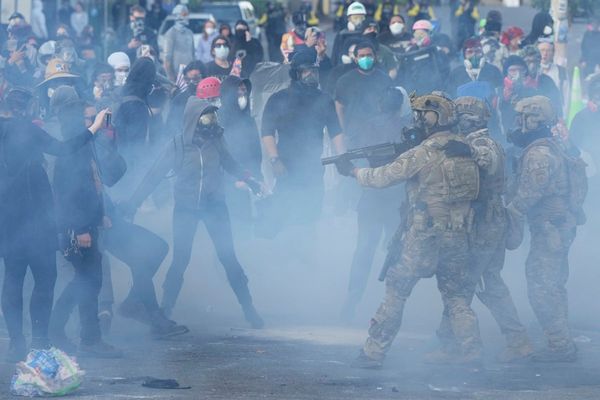
Winning political blocs in Iraqi elections stepped up efforts to form the largest parliamentary alliance after the outbreak of unprecedented demonstrations and protests and warnings from religious authorities.
The move to form a bloc came after Shiite Religious Authority Ayatollah Ali al-Sistani strongly warned during a sermon last Friday that failure to meet the people's demands would have bad consequences. Sistani’s representative indicated that demonstrators have the ‘green light’ to diversify their protest methods, provided they remain peaceful.
Meanwhile, head of Sadrist movement Moqtada al-Sadr called for halting the negotiations of the largest coalition until people's demands are met.
Shiite leaders did not comment on their movement to form the largest union, a source close to the negotiations told Asharq Al-Awsat that Fatih bloc led by Hadi al-Amiri and State of Law Coalition headed by Nouri al-Maliki have made important progress now on the formation of the largest alliance.
They moved in two directions: they negotiated with three Shiite blocs; Saeroon, al-Nasr, and al-Hikma and then they held talks with Sunnis and Kurds to include them in this coalition, according to the source.
The source, who preferred to remain anonymous, explained that Fatih bloc insists on including Saeroon in the large alliance, which is against the State of Law’s desire.
Sadr refuses to join a bloc that includes State of Law after all mediation efforts have failed to bring him and Maliki together.
“Abadi’s bloc is the weakest link,” said the source, adding that Abadi remains a strong candidate for a second term, but Fatih, which named Hadi al-Amiri for heading the new government, conditioned that Abadi must be one of the candidates and not the only one.
While the source pointed out that the meeting held by Maliki two days ago with a delegation from the people of Anbar province- headed by governor Mohamed al-Halbusi- is a renewal of an old alliance between al-Hall bloc led by Jamal Karbouli and State of Law.
Karbouli told Asharq Al-Awsat that the meeting did not hold any political meaning and was not related to alliances, but “rather a meeting to discuss the situations in Anbar.”
When asked whether Sunni leaders agreed on a candidate for the presidency of the parliament, Karbouli noted that it was agreed that Halbusi, member of Hall Bloc, be the candidate for the speaker of parliament, a nomination which is accepted by other political blocs.
Sunni top official of al-Qarar Bloc, Atheel al-Nujaifi, indicated that Sunni winners in latest elections are now represented by two groups: al-Qarar, led by Osama al-Nujaifi and Wataneyya led by Iyad Allawi, among others, while the second group is formed of al-Karabla Alliance, which includes al-Anbar: Our Identity and al-Hall, and Saladin governor Ahmad Abdullah al-Jubouri.
Nujaifi told Asharq Al-Awsat that "each of these groups is forming their alliances with different Shiite and Kurdish forces and blocs."
Member of Iraqi Parliament, Naim Aboudi, told Asharq Al-Awsat that statement of the Reference was clear in the importance of accelerating the ratification of the election results and the formation of the government.
“It is well known that most of the demonstrators’ demands can't be met by the current government given that it is a caretaker government,” he added.
Aboudi, who is also a member of Fatih Bloc, noted that -Amiri is still Fatih’s candidate as prime minister, but it is within the rights of each bloc to nominate those whom they deem best to take this post.
The MP expects matters to become clearer on the formation of the largest alliance within two or three days.