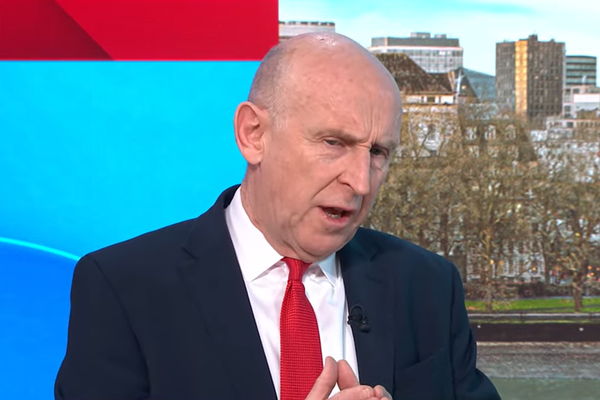
Compared with the chaos of 12 months ago, this year’s exam season has been smooth sailing for Gavin Williamson, the education secretary – who has been so relaxed that he couldn’t even remember his own A-level results when asked twice on Tuesday.
In 2020, as parents of sixth formers will clearly recall, the structure designed to award grades by the exam regulator Ofqual and the Department for Education collapsed amid an outcry over the unfairness of distributing results to pupils using the previous year’s evidence.
But this summer Williamson and Ofqual prioritised efficiency over micromanaging who got what grades. The sharp increase in results across the board mean there will be more celebrations than complaints this summer. But now the government faces managing next year’s hangover.
Simon Lebus, the departing chief regulator of Ofqual, said on Tuesday that exams would return next year because they were “proven to consistently be the best way of assessing what a student knows, understands and can do”.
Even if that is true, bringing them back won’t be simple. For the past two years, state schools have enjoyed a remarkable improvement in A-level results. The remaining maintained comprehensives outstripped even independent schools as their proportion of top grades jumped by 95% – from just 20% of entries to 39% in the space of two years.
Sharon Witherspoon of the Royal Statistical Society said there needed to be “an open discussion” about next year’s exams. She said: “Exams are statistically ‘norm referenced’ – the cutoffs between different grades are partly set by prior decisions about what grading results should look like. Is the plan to revert in one fell swoop to 2019 grade profiles, or to adjust them more slowly?
“This is an issue at the intersection of statistics and policy, and the public needs to be part of this conversation.”
But next year’s A-level cohort starts from an even worse position than this year’s, according to David Robinson of the Education Policy Institute.
While this year’s sixth formers had pre-pandemic GCSEs to show employers and admissions officers, the 2022 A-level candidates won’t even have that. Their GCSE grades were awarded during Williamson’s 2020 debacle and over the past 18 months they have endured all the chaos of pandemic lockdowns and burst bubbles. Next year’s sixth formers deserve a break just as much as this year’s did.
Politicians like to refer to A-levels as the “gold standard” of qualifications, an ironic reference given the pain the actual gold standard caused sterling and the British economy in the 1920s and 30s. Abruptly rejoining the gold standard of norm-referenced A-level outcomes will cause massive deflationary pain for students: in 2018, just over 2,600 students got three A*s; this year it was nearly 13,000.
It would help if the government had a properly funded catch-up plan for pupils, but it doesn’t – at least not at the scale demanded by its former catch-up tsar, who resigned in disgust.
It would also help if ministers this time had a developed and articulated plan B in case of who knows what. But, as was effectively concluded in an investigation last week into the government’s lack of education contingency planning, plans are for losers apparently.